


Every afternoon, about two dozen people cutting across communities and genders gather on the banks of the Kaladan River at Paletwa town in Myanmar’s Chin State. They gaze at all the boats coming in from the border with India; most of them sail downstream to different townships in neighboring Rakhine State.
After a while, a bigger boat laden with commodities and covered with a blue tarpaulin sheet docks nearby. Two more boats over-packed with goods arrive in quick succession at the same spot. A crowd of mostly shopkeepers and traders, heavily dependent on the commodities smuggled from Mizoram in India, heads toward the boats and begins to untie the ropes holding down the tarpaulin sheets. The cargo is transferred to some vehicles and motorbikes that have also arrived to transport the items to other destinations near the town.
Source: Wikipedia
As at Paletwa in southern Chin State, people in Rakhine State depend on commodities smuggled from neighboring India and Bangladesh as supply routes from mainland Myanmar are blocked. Owing to a lack of motorable roads in Arakan, the region held by the Arakan Army in Rakhine and southern China states, commodities are mostly ferried in boats.
Why Does Arakan Need Smuggled Commodities?
Among the tactics adopted by Myanmar’s military regime against the resistance groups and the regions they control is the blocking of supply routes to deprive them of essential commodities, including basic foodstuffs. This tactic, which was adopted in Arakan as well, was intensified after the Arakan Army (AA) launched an offensive on November 13 last year. In response to its rapid battlefield gains, which have since brought more than half of the state’s 17 townships under its control, the junta has closed the supply routes from the mainland and the southern part of Rakhine State, compelling residents and the AA to rely heavily on the arteries ferrying goods from India and Bangladesh.
However, unlike the hilly borderlands elsewhere in Myanmar, Arakan is well endowed with arable land, a favorable climate, and plentiful water resources for agricultural production. This has given the region self-sufficiency in rice production.
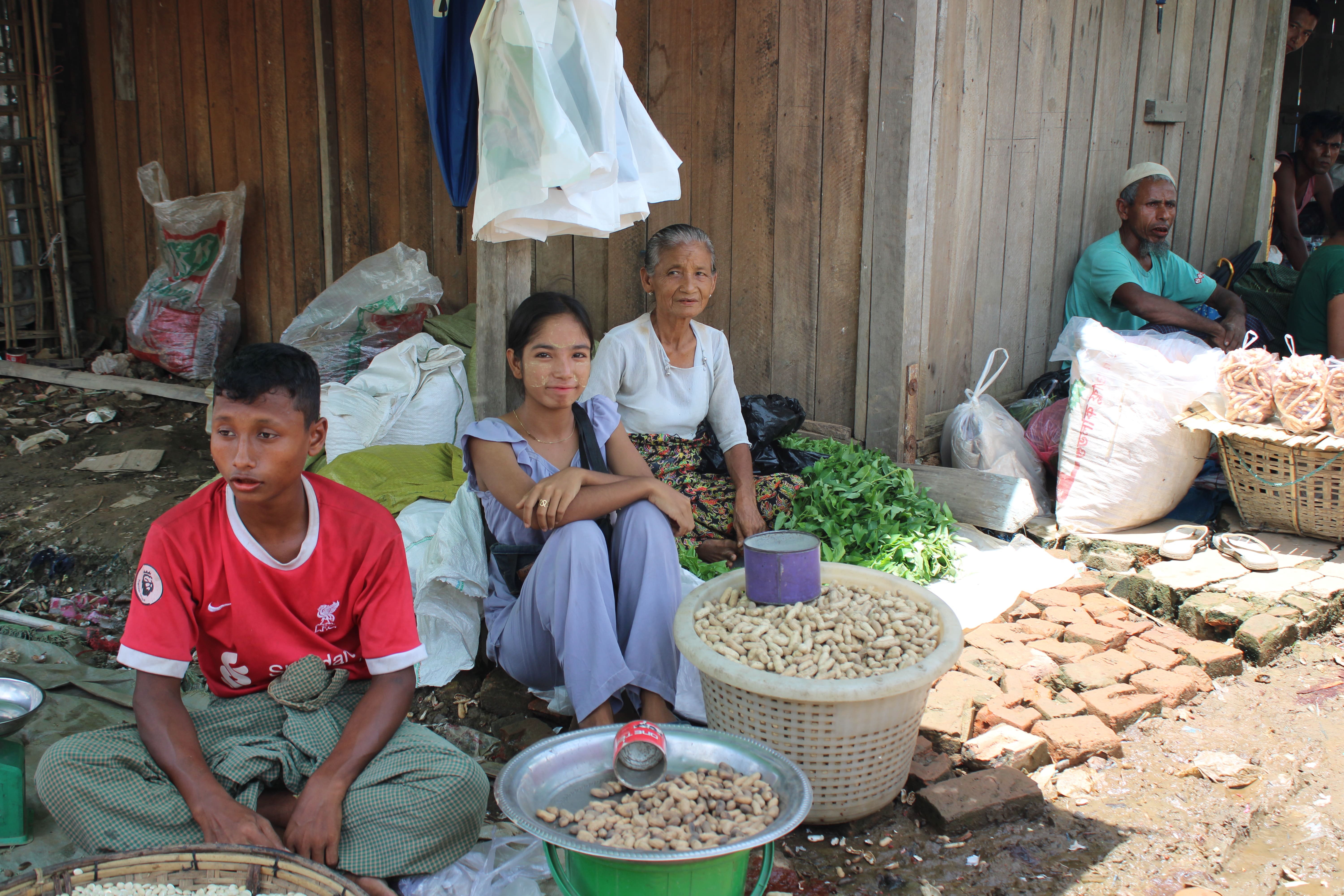
A market at Rathedaung in Myanmar’s Rakhine State where local products are sold. Credit: Rajeev Bhattacharyya
The United League of Arakan (ULA), the political wing of the AA, keeps a tab on the transportation of commodities in the region. Kyaw Zaw Oo, the ULA’s political commissar for Paletwa, told The Diplomat that Arakan also grows “sufficient quantities” of vegetables, rendering unnecessary the import of these commodities from other regions. “So far, Rakhine State is not dependent on any other region for rice, vegetables, fish, salt and sugar. Barring these commodities, however, there is a need for almost everything else [to be brought in] in greater or lesser quantities,” he said.
A range of items, including cooking oil, biscuits, soaps, washing detergents, utensils, flour, garments, and batteries, is smuggled from India and Bangladesh into Arakan through riverine and land routes that crisscross the region. These items are sold at shops in the seven townships – Paletwa, Kyauktaw, Ponnagyun, Minbya, Rathedaung, Buthidaung, and Mrauk U – that I visited during a recent reporting trip.
Dharman Jalraj, the son of Hindi-speaking immigrants from India, is a daily wage laborer living on the outskirts of Kyauktaw town. He is regularly engaged by a Rakhine Buddhist trader to transport goods from the river bank to different shops in the town. “Many residents from our locality are heavily dependent on the goods coming from India,” he said. “We will starve to death if the flow of commodities comes to a halt.”
According to Jalraj, the flow of goods increases during the winter season when more than 40 big and small boats reach Kyauktaw on the Kaladan River from the border with India. This drops to around 15 boats during the rainy season. Jalraj’s views were echoed by other laborers in the township belonging to different ethnic groups, including a few Rohingya Muslims.
Informal discussions with AA and ULA functionaries and a few shopkeepers revealed that the region is most dependent on India and Bangladesh for fuel (diesel and petrol) and medicines. They pointed out that the junta has taken additional measures to ensure that these two items are not ferried from Myanmar’s mainland to Arakan through the secret hilly routes.
“Supply of Medicines is Erratic”
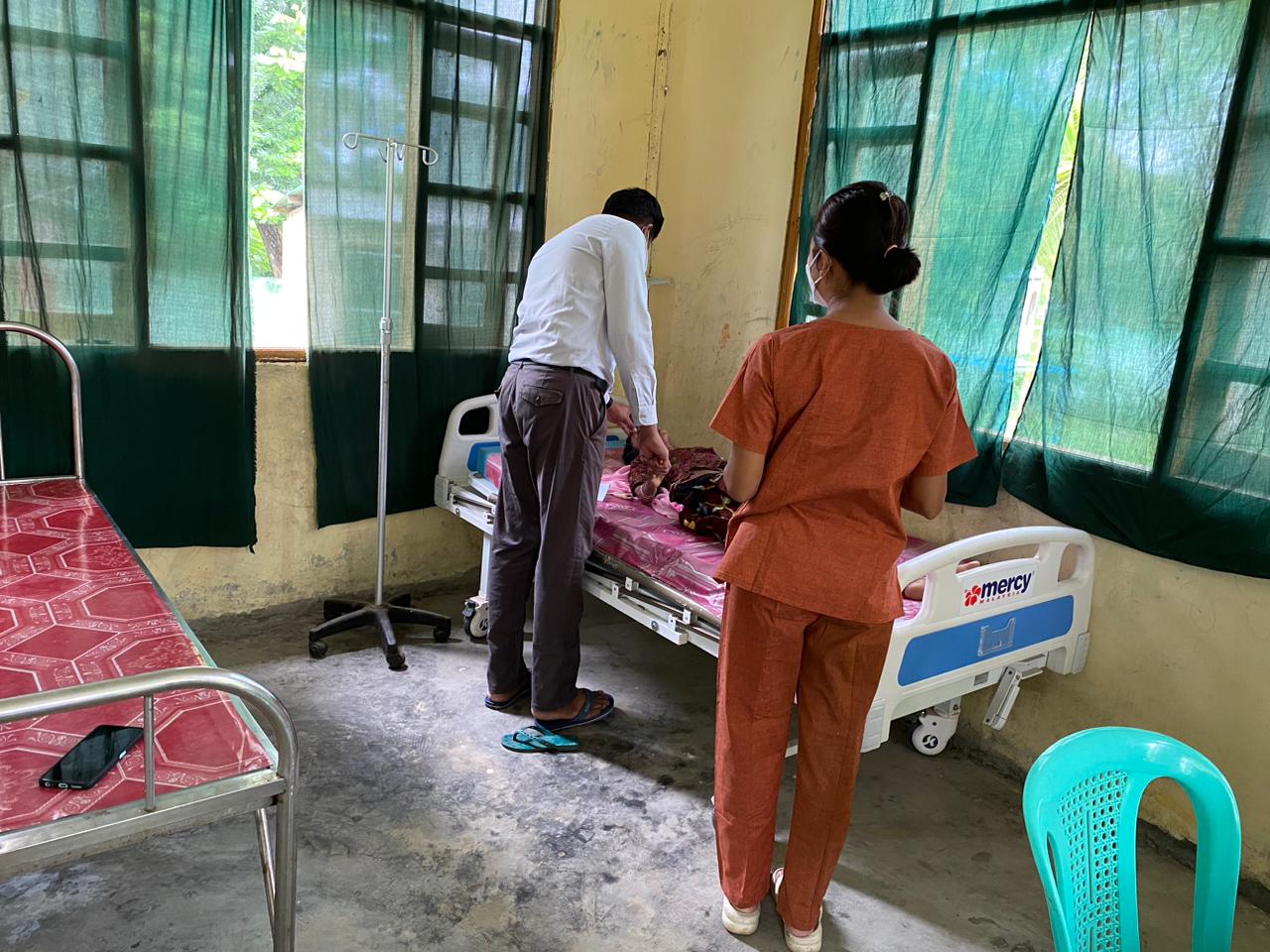
A doctor examining a patient at a health center in Myanmar’s Rakhine State. Credit: Rajeev Bhattacharyya
The scarcity of medicines was evident at a hospital I visited in Rakhine State on June 17. The middle-aged doctor in charge of the unit agreed to meet me on the condition that neither his name nor the location of the hospital would be revealed. The reason, he explained, was the “high vulnerability” of health centers to aerial strikes by the military. He cited six instances of such establishments being bombed by the military regime over the past three months, including one located between Kyauktaw and Ponnagyun that I visited.
Situated in the heart of a town, the health center has two doctors and 50 assistants, including nurses and lab technicians. The ULA has been administering it since it liberated the township from the military in early April after an intense battle of three weeks. When I visited the center, six patients with varied ailments had been admitted there.
The doctor pointed out that providing healthcare services was an “incredible challenge” as there is an “extreme scarcity” of health workers and medicines. “Currently, there are only about 20 doctors in the liberated areas of Arakan,” he said.
“Where do you get the medicines from?” I asked.
“From India and Bangladesh. In this region, they are more from India. The supply of medicines is erratic. Consignments have to come a long way from the borders, which means that vehicles and boats are needed to ferry them to the destinations. Most of the medicines we have now were stocked before the war. There is a great scarcity of every medicine. For instance, in a cesarean surgery, three types of threads are used normally but now we are making do with only one,” he replied.
“Have the prices of medicines spiraled over the past year?”
“Yes, and it is shooting up at an incredible pace. People of lower-income groups cannot afford to purchase some medicines and they are wholly dependent on us,” the doctor said. Pointing to the depleting stock of medicines on a table, he pointed out that he has been “awaiting the arrival of medicines for the past three days.”
“What are the common diseases that residents are afflicted with in this region?”
“Mainly water-borne diseases like diarrhea and dysentery. We have also been receiving cases of malaria, dengue and fever regularly. And sometimes of stomach cancer as well.”
“Besides the shortage of medicines, what other problems do you encounter in providing health care services to the residents, and especially in remote locations?”
“The health care system has almost collapsed in this region. Residents are afraid of coming to the medical centers for treatment as they fear these centers can be bombed anytime. We are hopeful of more health workers joining us soon. We send nurses and medics to remote areas and to places from where people cannot come to hospitals.”
“What about the IDP camps? What I observed so far was quite gloomy…”
“Yes, the situation in the IDP camps is not very encouraging. There is a scarcity of medicines in the camps. They are entirely dependent on us.”
Dire Conditions in IDP Camps
Than Tin Hlaing, 25, is an inmate of the IDP camp in Buthidaung town. He was writhing in pain when I met him there on June 24. His right leg had been blown away when he stepped on a landmine while escaping from a military establishment three days after he was picked up on suspicion of being an AA functionary. Splinters also pierced his right shoulder and left leg. The wounds had still not completely healed. His house had been burnt by the military compelling his parents to relocate to the camp as well.
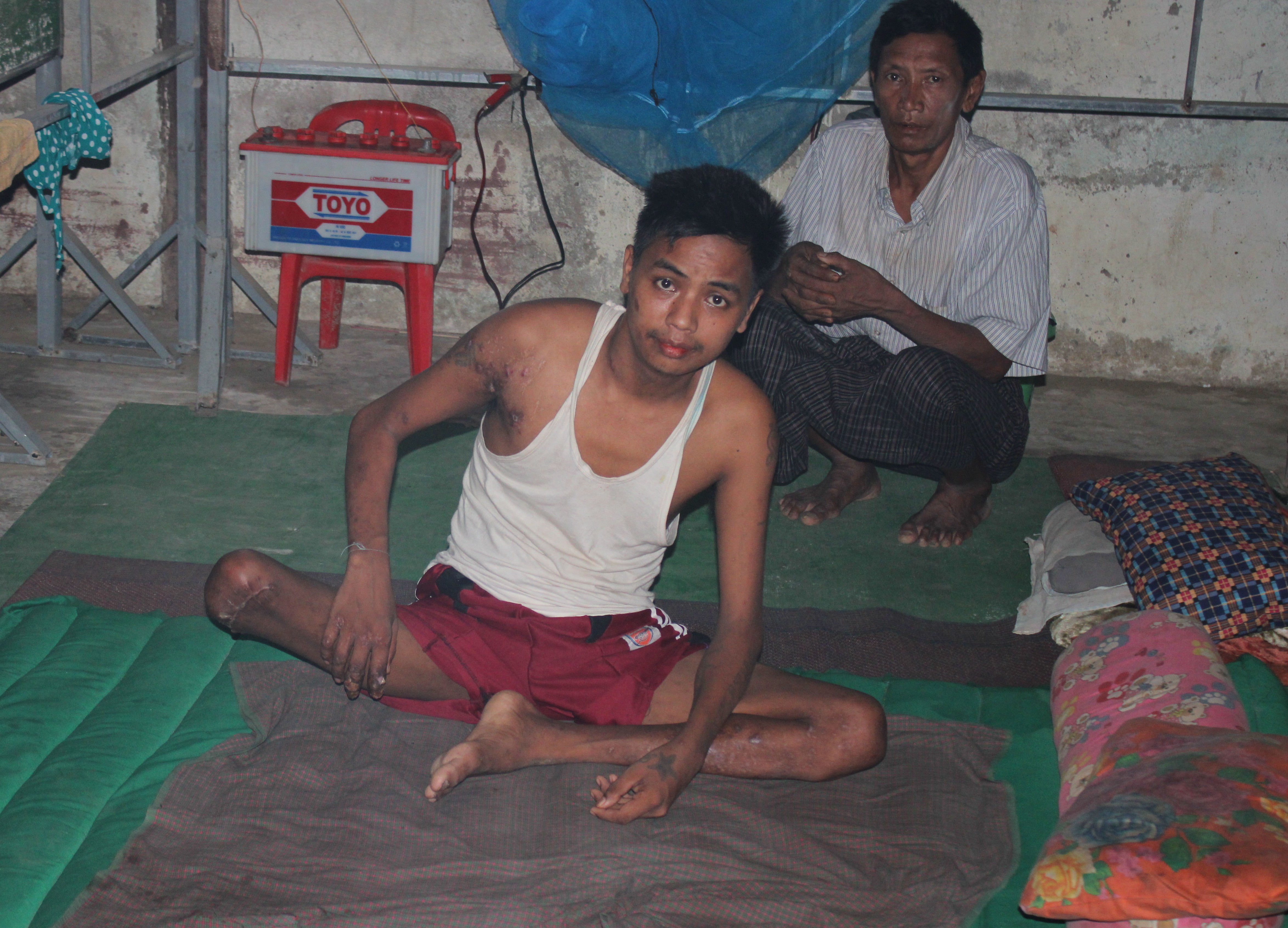
Than Tin Hlaing, who lost his right leg after stepping on a landmine, lives at an IDP camp in Buthidaung town in Myanmar’s Rakhine State. Credit: Rajeev Bhattacharyya
“The pain in his shoulder is so intense that he cannot sleep at night,” said Than Tin Hlaing’ father, adding that a doctor had given him some medicines, which are now “exhausted.” “We are waiting for more,” he said.
I observed at least six sick patients waiting for medicines at the camp that housed around 100 people. I was told that two elderly people and two newly born infants had died due to lack of medical treatment.
I saw a large number of sick people at three other IDP camps, one in Ponnagyun and two in Buthidaung townships, which I visited during my travels in Arakan. As the doctor had told me, they were afflicted by a range of diseases. And all the camps suffered a shortage of food and medicines. As in other parts of the country, the military regime has barred local and international organizations from providing humanitarian aid to the camps in Arakan.
There are 553,696 IDPs in Arakan with women comprising 57 percent of the total, according to a report released by the ULA’s Humanitarian and Development Coordination Office (HDCO) last month. The report underscored the urgent need for food, medicines, healthcare services, and life-saving materials for the inhabitants of the region.
Besides the IDPs, I met about a dozen people with injuries, and groups of civilians across the townships who were in desperate need of medicines and treatment. According to a report by the Rakhine State Disabilities Organization, there were 500 civilians across Ponnagyun, Kyauktaw, Mrauk-U, and Minbya townships who were injured during the war between the military and the Arakan Army. It has appealed to neighboring countries and global agencies for humanitarian aid.
There are regular reports of civilians dying due to a shortage of medicines in the liberated areas. Government hospitals and healthcare centers are functional only in Sittwe, Kyaukphyu, Gwa, and Manaung, which are still under regime control. Residents from the territories occupied by the AA usually do not visit these centers for fear of persecution.
Fuel as Vital as Medicines
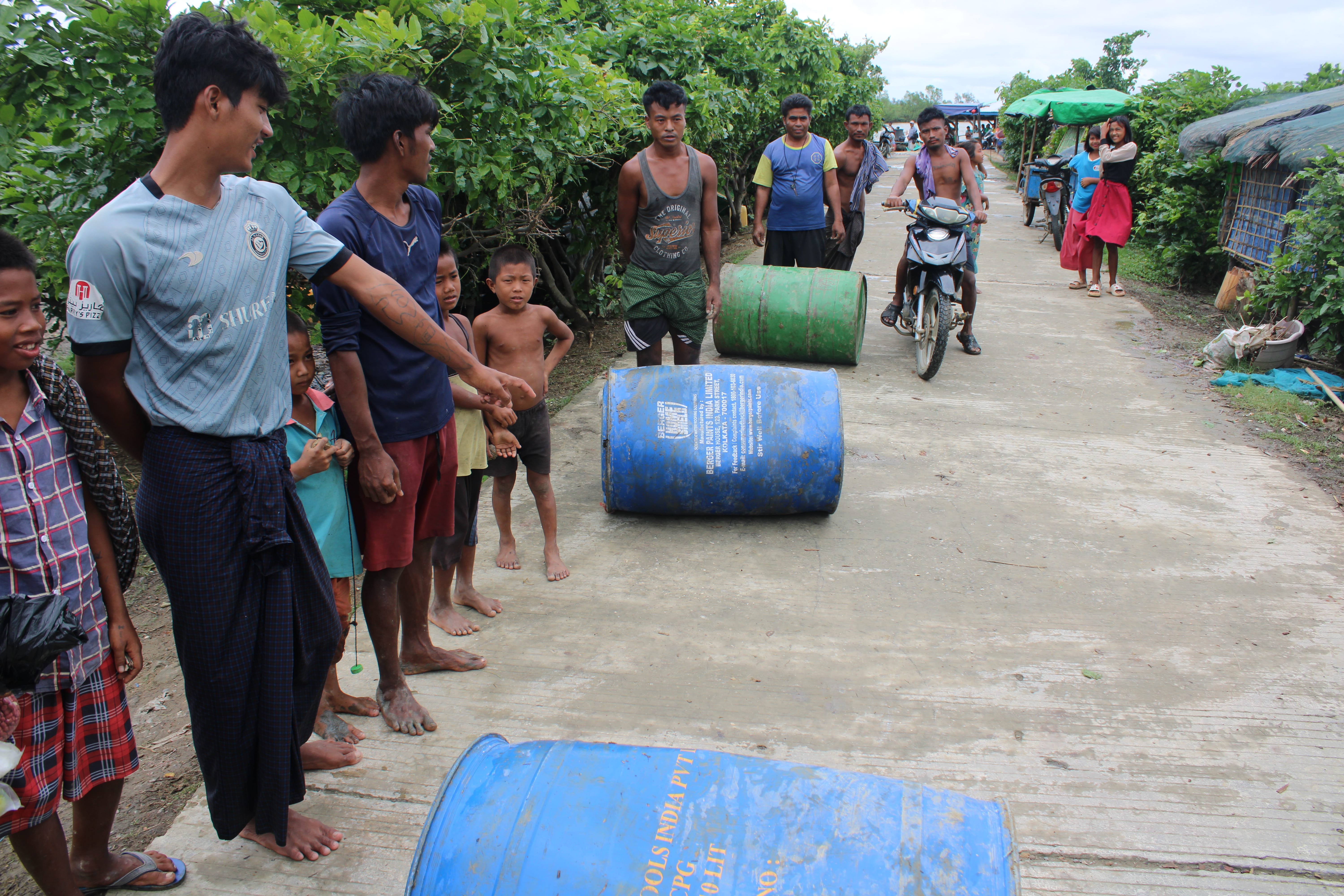
Barrels of petrol and diesel arrive from India at Minbya in Myanmar’s Rakhine State. Credit: Rajeev Bhattacharyya
The availability and price of medicines are dependent upon the supply of fuel from the neighboring countries. Medicines, like the other items, are transported over long distances via rivers in boats equipped with motors. This means that the price of all commodities is directly proportional to the cost of the fuel and the quantity of fuel consumed by the boats.
According to Aung Thaung Shwe, the ULA’s chief administrator of Buthidaung, the price of diesel has escalated from 12,000 kyats ($5.71) per liter last year to 40,000 kyats ($19.06) and that of petrol from 1,000 kyats ($0.48) to 19,000 kyats ($9.05). “The price of all commodities coming from India and Bangladesh has spiraled. The cost of fuel has gone up almost ten times after the coup. The rates are different across the townships and higher if the goods travel a longer distance,” he said.
Incidentally, petrol and diesel are sold for less at 11,000 kyats ($5.24) and 8,500 kyats ($4.05) per liter in Paletwa, which is situated 109 kilometers from the border with India.
Residents inhabiting remote regions in Arakan seem to have suffered the most from the increasing price and erratic supply of fuel. Journeys are appallingly expensive for residents who live in villages and towns far-off from the rivers. They have to travel over long distances either on foot or on motorbikes over potholed roads to reach the docking points for boats.
San Tha Kyaw is a petty trader I met on July 3 while traveling from Kyauktaw to Paletwa on a mid-sized boat that carried 15 passengers on a long journey of 13 hours. He claimed to have waited for a week to undertake the journey since petrol was not available in his village located 35 kilometers from Kyauktaw town. He then traveled on a friend’s motorbike to a place on the bank of the Kaladan River, where boats pick up passengers.
A junior functionary of the AA claimed they were able to anticipate the problems of irregular supply of fuel and other essential commodities. “We would have suffered severe reverses in the war without fuel and medicines. So, the ceasefire period with the military was utilized to stock large quantities of these items at convenient locations,” he said.
I found several IDP camps and healthcare centers to be dependent on the AA for medicines and fuel.
Uncertainties of Supply Routes from India and Bangladesh
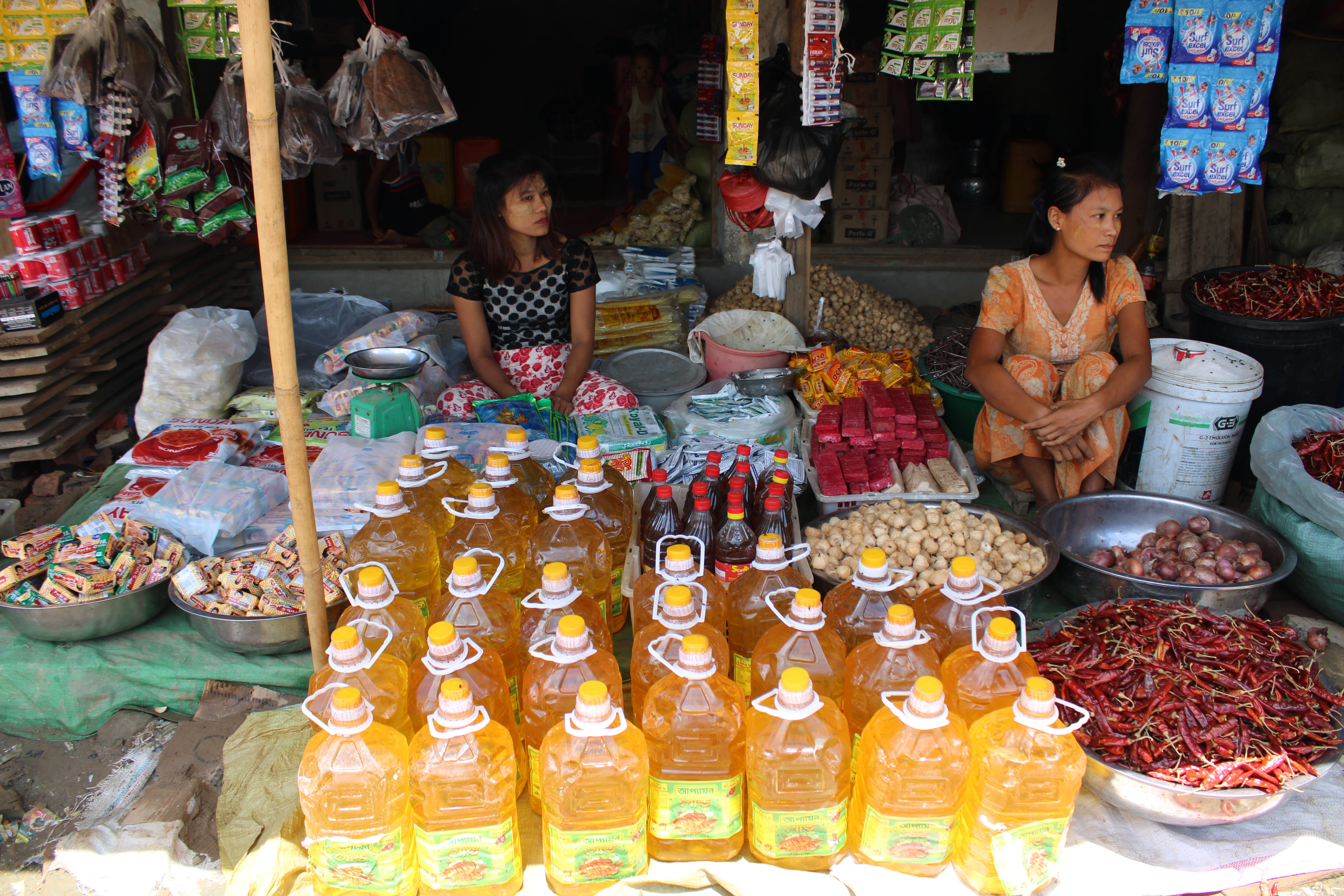
A shop selling products from India and Bangladesh at a market in Buthidaung Township in Myanmar’s Rakhine State. Credit: Rajeev Bhattacharyya
Supply of fuel and other commodities to Arakan was been halted sometimes due to disturbed conditions along Myanmar’s borders with India and Bangladesh. Rohingya-majority Maungdaw in Rakhine State, which lies near the border with Bangladesh has been disturbed over the past several years. Still, gaps along the land and river border allow goods to flow from Bangladesh to Myanmar. Shops at Buthidaung (in Maungdaw district) and in the contiguous Rathedaung sell more commodities from Bangladesh than from India.
On December 8, the AA successfully captured the last remaining outpost (BGP-5) of the military at Maungdaw after months of fighting. On the same day, the AA imposed an indefinite suspension of transportation on the Naf River due to “military necessities” and “public security concerns.” Apparently, the ban was imposed to curb the activities of Islamist terror groups in the region that were trained by the military.
Such curbs have reduced the flow of goods from Bangladesh.
According to some reports, Bangladesh’s intelligence agency, the Directorate General of Forces Intelligence is supporting the Rohingya Solidarity Organization’s armed campaigns in Arakan. This could prompt the AA, which has leveled such allegations as well, to carry out aggressive counter-terrorism operations against the Islamist outfits, plunging the already restive areas bordering Bangladesh into greater instability.
The border region with India offers a contrasting picture of peace and stability. The area came under the control of the AA and its allies from the Chin Brotherhood Alliance around four years ago. Consequently, the quantum of commodities flowing from India far exceeds that from Bangladesh.
However, the border with India is also not entirely free from challenges. In July, the Central Young Lai Association enforced an embargo in the Indian border state of Mizoram on fuel exports to southern Chin State. The Mizoram government issued prohibitory orders in three border districts arguing that transportation of fuel to Myanmar had resulted in an “acute shortage” of the commodity for the local population and construction firms.
ULA functionaries allege that the blockade in Mizoram was an outcome of the ethnic ties between the Mizo and Chin and the “strained relations” between the AA and Chin National Front (CNF). The CNF, which is the biggest ethnic armed outfit in Chin State, has been opposed to AA’s occupation of Paletwa, which has a sizeable Chin population and non-Rakhine ethnic groups. In addition, the CNF is opposed to the AA’s alliance with the Chin Brotherhood Alliance, a conglomerate of six rebel outfits in Chin State.
According to AA and ULA functionaries, the flow of commodities, including fuel and medicines from Mizoram to southern Chin State and Rakhine State, which stopped in July, resumed in September. Still, the supply of commodities from Mizoram to Arakan remains tenuous.
Mizoram, like the other border states in India’s northeastern region, sporadically faces shortages of essential commodities as these are transported over long distances from the Indian mainland. Last September, vehicle owners refused to ferry goods from Assam to Mizoram owing to the deplorable condition of the highway. Floods and landslides have also occasionally snapped links between Mizoram and the rest of the states, hitting supplies to Myanmar.
“Arakan Could be Overwhelmed by a Humanitarian Crisis”
While the flow of essential goods from India and Bangladesh is a huge relief for Arakan, this may not be able to avert a humanitarian crisis looming over the region, say a section of traders, restaurant owners and ULA functionaries.
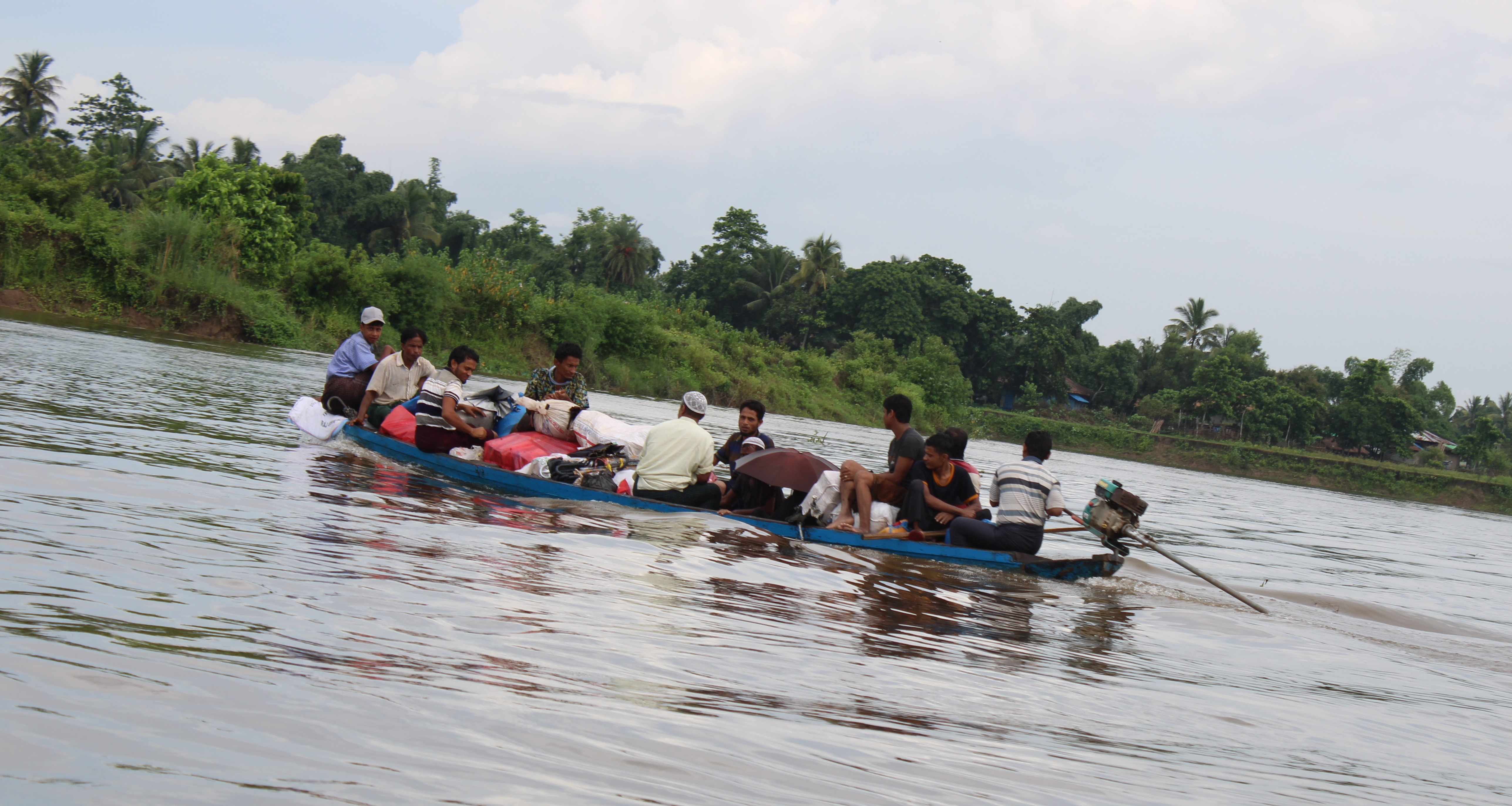
Commodities being transported on a tributary of the Mayu River in Buthidaung Township in Myanmar’s Rakhine State. Credit: Rajeev Bhattacharyya
Phroe Zaw, deputy director of ULA’s HDCO in Regional Office 2, was categorical about an impending calamity in the region. “Arakan is staring at a humanitarian crisis,” he said, which could be triggered by the “soaring prices of essential commodities, shortage of medicines and declining food production.” Speaking to The Diplomat in Rathedaung on June 28, he said that efforts are on “to receive aid from global agencies, which we have been trying for the past several months.”
Phroe Zaw’s concerns have been reaffirmed by a UNDP report released early in November that painted a grim picture of an approaching famine. The report warned that domestic food production would cover only 20 percent of the Rakhine State population’s needs next year.
Rakhine State is among the poorest regions in Myanmar, with 78 percent of its population living below the poverty line as of 2019, according to the World Bank. The region was devastated by Cyclone Mocha in mid-2023 before the war commenced in November last year. Figures released by the AA suggest that the cyclone destroyed over 2,000 villages and 280,000 homes in the state. The war has worsened the situation with the military cutting off electricity, shutting down internet and cell phone connections, and closing public and private banks across the Rakhine State, all of which have caused greater hardships. Petty traders and ULA functionaries say that the closure of banks has hampered the flow of funds from expatriates abroad besides giving a fillip to a thriving black market. In addition, the closure of banks has compelled residents to pay high commissions of 8-20 percent to withdraw and transfer money through mobile banking agencies.
These restrictions coupled with the limited supply of commodities from the neighboring countries have sent commodity prices soaring across the region. At Ponnagyun, for instance, a bag of rice (50 kilograms), which was sold at 20,000 kyats ($9.52) before the coup cost 40,000–60,000 ($19.04-28.56) kyats in June this year; one viss (1 viss = 1.25 kilograms) of salt has gone up to 2,000 kyats ($0.95) from 200 kyats ($0.10) earlier; and 3,000 ($1.43) kyats for a 600 ml bottle of packaged water from 200 kyats ($0.10).
In all likelihood, the AA will continue the war until the entire region is liberated, which means that the military’s blockade of supplies from mainland Myanmar will continue indefinitely. Expansion of trade with India and Bangladesh could have lessened the hardships but these countries have not been as eager so far to engage Myanmar’s ethnic armed groups as Thailand or China.