

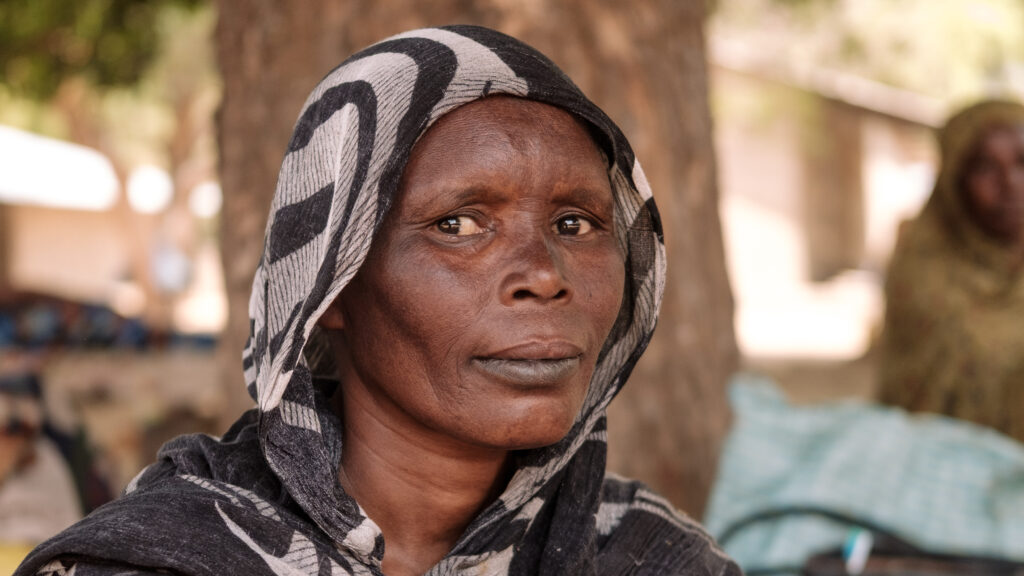
HEIBAN DISTRICT, Sudan — For more than a decade, medical missionary Tom Catena has run the largest hospital in the Nuba Mountains, a rugged territory the size of Austria, most recently in the midst of a brutal civil war.
There is no oncologist on staff at Mother of Mercy, but as the war destroys much of the country’s health care system, patients like Fatouma Mahdi Ahmed Saeed, who has cervical cancer, keep turning up at his door.
Diagnosed last year by a private doctor in her home city of Nyala, the capital of South Darfur, Saeed had no choice but to make a dangerous trip of hundreds of miles to Catena’s hospital in central Sudan.
“I was in a lot of pain and desperate to get treatment,” she said. “The journey was very difficult, but I was not scared. I kept going. I know my day will come when God decides.”
Sudan’s civil war began in 2023, as two rival factions clashed for control of the nation’s military.
Some 13 million people have been forced to flee their homes in Sudan, according to the United Nations, in what is currently the world’s largest displacement crisis. Both sides have been accused of indiscriminately targeting hospitals and health clinics, with 205 attacks on health care facilities since the start of the war, according to the U.N. International aid cuts have added to these challenges, “forcing the collapse of an already fragile health care system,” Doctors Without Borders said in a statement this month.
As a result, it’s now difficult for people with cancer and other long-term illnesses to receive treatment that was once readily available. “They’re indirect casualties of war,” said Catena of the cancer patients recovering alongside wounded civilians in his crowded wards. He originally trained in family medicine, and is now the only permanent surgeon in the Nuba Mountains.
“If there was peace, they would have gotten treated in Khartoum, Darfur, or El Obeid. Now those hospitals are gone,” Catena added.
There are no recent numbers available for cancer deaths in Sudan, but the situation is not unlike the challenges faced by patients with long-term illnesses living through other wars. “Take any conflict in the world — Gaza, Ukraine — all those sick people are still there,” Catena said.


Before the war, Nyala had good hospitals, facilities where Saeed could have been diagnosed and treated, but many have been destroyed or badly damaged in the fighting. Even with the support of international health charities such as Doctors Without Borders, essential services have been slow to return.
When STAT visited Mother of Mercy hospital earlier this year, Catena and his staff had administered some 15 doses of chemotherapy in a single day to patients with nowhere else to go.
Saeed said she had to sell one of her calves and seek help from her family to pay the private doctor for her cancer diagnosis.
She first travelled from Darfur to the neighboring country of South Sudan in search of care last year, avoiding strikes from drones that buzzed like bees overhead. Her sister and son accompanied her, subsisting only on flour cooked into simple meals. Sometimes, they were stopped at checkpoints manned by menacing soldiers. When Saeed became tired, she lay down in the dirt to rest.
Turned away, the family traveled on to the Nuba Mountains, where Catena treated her at Mother of Mercy. Receiving any care at all makes Saeed one of the fortunate ones.
When STAT spoke with her, she had come back to the hospital for a follow-up appointment, making the trip through war-torn Sudan a second time. Afterward, she went home to Darfur, only to return again to the hospital, where she is currently undergoing another round of chemotherapy. Catena does not know if he will be able to cure her.
The World Health Organization WHO reports that some 37% of Sudan’s health care centers have been destroyed by fighting, while attacks on civilian doctors, clinics, and ambulances are frequent. African countries already face a particularly high cancer burden. The WHO recorded 560,000 deaths from cancer across the continent in 2022.
According to a paper published in 2025 in the American medical journal Global Oncology, Sudan was once a regional leader in cancer care. But now, chemotherapy medication and other essential drugs are hard to come by, and normal supply chains have been disrupted by conflict.
Without an oncologist on staff and lacking the equipment needed to review biopsies, Mother of Mercy must send tissue samples to the United States, and it can take as long as six months to receive an answer. As a result, Catena must often make diagnoses based on a clinical exam, looking for cancers already evident. He estimated that the nearest hospital capable of delivering cancer care is in Port Sudan, some 700 miles away, across an active frontline.
Last year, one of the warring factions, the Rapid Support Forces, announced an alliance with the Sudan People’s Liberation Movement-North, the rebel group that controls the Nuba Mountains. Now, these once-secluded hills have become a staging ground for RSF militants as they attempt to fight their way back to Khartoum, the nation’s capital, which is held by the rival Sudanese Armed Forces.
By the time people reach Catena, their cancers are often far advanced.


Ifrah Ahmed, who suffers from osteosarcoma, a type of bone cancer, is 10 years old. Just as Saeed could not get proper care in Darfur, Ahmed had no choice but to leave her hometown of Babanusa, in West Kordofan, where the health care system has broken down.
Friends and neighbors told her family about Mother of Mercy, so Ahmed made the journey by rickshaw with her grandmother, pain spreading through her right leg. When she arrived, it had to be amputated at the hip. Catena also administered two doses of chemo to the girl.
With tight curls and a bright pink shirt, Ahmed smiled shyly. “I wish to be healthy and with my mom in a safe place,” she said.
Ahmed has since returned home, but Catena said that osteosarcoma has a high chance of spreading to the lungs, and she must return for a check-up before the end of the year. Fighting is fierce, making travel difficult.
There are others whom Catena can’t save.
Abasst Abonja and his family came from South Sudan, another sign of how far resources are stretched in this region.
The 76-year-old spent two weeks in the hospital, unable to eat for his last four days. Skeletal and weak, he died the day STAT visited.
At his bedside, his wife wept. “What have you done to deserve such a death?” she asked.
Reporting for this story was supported by The Pulitzer Center.