

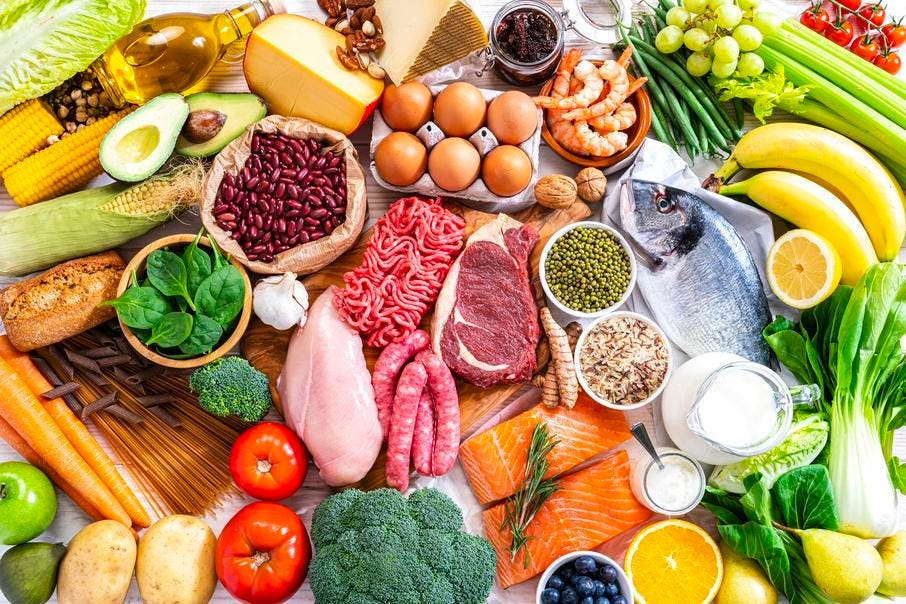
Food backgrounds: overhead view of a large group of food. The composition includes ground meat, beef steak, sausages, salmon steak, eggs, beans, shrimps, wholegrain pasta, vegetables like broccoli, carrots, Bok Choy, green beans, celery, avocado, corn, lettuce, garlic, potatoes, tomatoes and spinach. Fruits like bananas, grape, fig, orange, lemon, apples, pears and berries. Some nuts like walnut, pistachio, pecan and almonds. Dairy products like milk, yogurt, eggs and cheeses. Olive oil. High resolution 42Mp studio digital capture taken with SONY A7rII and Zeiss Batis 40mm F2.0 CF lens
getty
A recent conversation underscored how new federal nutrition guidance clashes with the everyday reality for some Americans. During a discussion about diabetes, a woman shared that while she loves apples and oranges, fresh fruit is unavailable at her nearest corner store and is simply too expensive. Recommending people “eat real food” when it’s inaccessible sets an unrealistic, impractical standard for many Americans.
New Food Pyramid. Available at realfood.gov.
USDA
The U.S. Departments of Health and Human Services and Agriculture released the Dietary Guidelines for Americans, 2025–2030, calling it the most significant reset of federal nutrition policy in decades. The new guidelines elevate proteins, dairy, healthy fats, vegetables and fruits while deprioritizing refined carbohydrates and ultra-processed foods. These guidelines are not dissimilar from a wealth of existing food advice from experts, but the recommendations are geographically and financially out of reach for millions of Americans.
According to the USDA, 39 million Americans live in low-access areas where they have limited ability to obtain affordable, nutritious food. Millions of Americans have no access to a nearby grocery store, so they rely on corner stores, carry-outs, and convenience marts. The government provides little guidance for how people living in these communities, with these food access options should adopt and sustain the new dietary recommendations.
Food Deserts Are a Longstanding Problem in America
A food desert is a low-income neighborhood far from a supermarket or large grocery store. The most widely used definition from the USDA identifies areas where at least 33% of the population lives more than one mile from the nearest supermarket and rural areas where that distance exceeds 10 miles.
States in the South and Midwest have significantly more people living in low-income, low-access areas and this geographic pattern aligns with epidemiological data showing a disproportionate burden of chronic diseases in these areas. For example, in Bolivar County, Mississippi, the location of a Food As Medicine intervention, where 65% of residents are Black and 30% live at or below the poverty level, obesity rates are high and the rate of diabetes is nearly double the national average. How do people in communities like this eat according to the new food pyramid? This raises the question of whether the architects of the new federal food policy deeply engaged with or fully considered the limitations of these communities when creating the recommendations.
Food and Health Are Inextricably Linked
The chronic disease crisis in America is multifactorial and shaped by environment, genetics, physical activity and socioeconomic conditions. But the link between food and chronic disease is not debatable. Nearly 90% of U.S. healthcare spending supports treatment of chronic diseases associated with diet and lifestyle. More than 70% of American adults are overweight or obese, and nearly one in three adolescents has prediabetes.
The “Food is Medicine” framework is increasingly adopted by clinicians, health plans and researchers. These efforts reflect growing recognition that nutrition interventions function as clinical tools to improve health and outcomes. There is also growing demand for physicians and other health care providers to incorporate nutrition counseling into clinical care. But as with the woman who loves fruit but cannot afford it, clinical guidance is useless when it collides with a food environment consistently devoid of fresh, nutritious food. The disconnect between federal dietary recommendations and the food realities of low-income communities warrants urgent attention and action.
Balancing Reality and Food Choices
Despite the new federal recommendations, families and communities with limited food access need actionable strategies tailored to their circumstances. Solutions may include investing in grocery infrastructure in underserved areas, expanding produce prescription programs, supporting corner store conversions to stock fresh options and creating economic opportunities for those living below the poverty line.
Communities should also be supported with programs that improve food and nutrition literacy. These should include culturally relevant, plain-language education about macronutrients, food selection, label reading, meal planning and practical cooking with accessible ingredients. Organizations like Feeding America are addressing these issues locally but these programs need sustained, scalable infrastructure to reach those most in need.
The Bottom Line
For decades, the US has observed, researched, analyzed and debated escalating healthcare costs and chronic disease burden. Now, the government has introduced a new food pyramid and declared that Americans must “eat real food.” The irony is the new guidelines offer no plan for the 39 million people who don’t live near a place that sells it while simultaneously cutting the food assistance that helps millions in these communities afford it.
Until federal guidelines are matched by federal investment in the food environments and infrastructure where the sickest, most underserved Americans live, national adoption of these new guidelines beyond the wealthy is impractical and impossible. Only by partnering with impacted communities and directly investing in these food environments can federal nutrition policy become actionable for everyone.