

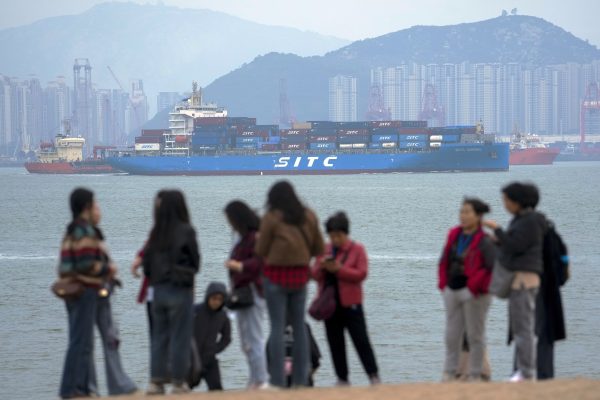
China presents a compelling case of the growth paradox, where robust economic indicators mask underlying disparities and societal sentiments. The dichotomy between China’s impressive economic figures and the lived realities of its businesses and people indicates how these contradictions coexist. Understanding these divides and seeking solutions to bridge them can have a significant impact on the nation’s economic trajectory and its global standing.
A Growth Paradox
On January 17, the National Bureau of Statistics announced that China’s GDP growth for 2023 reached 5.2 percent, a growth rate that is highly commendable and ranks prominently on the global stage. That figure would suggest that the Chinese economy has achieved stable and rapid growth, again.
However, the reality shows clear signs of strain: Consumers are saving their shrinking disposable incomes instead of spending them, and enterprises are suspending their investments due to fear of declining profitability and company value.
In 2023, the total market value of A-shares in China decreased by approximately 8.5 trillion yuan, an amount equivalent to the total cost of the Belt and Road Initiative over its lifetime (estimated to be between $1.2-1.3 trillion, or about 8-9 trillion yuan). This decline occurred against the backdrop of growing capital markets in the United States, various European countries, and India. In the first trading week of 2024 alone, an additional 7 trillion yuan was lost. Stock markets mirror the collective sentiments of investors, currently indicating a loss of confidence in China’s growth prospects.
People I talked to during my recent trip to China shared these sentiments: The rich have little confidence in growing or even sustaining their wealth; the poor have little hope of upward mobility. Two phrases, “involution” (内卷) and “lying flat” (躺平) encapsulate what happened over the past year. Involution is a sociological term describing a state of excessive and ineffective competition, leading to a zero-sum game where resources are redistributed but minimal genuine value is created. Lying flat, an internet slang term, characterizes the attitude of those who opt out of this relentless competition, choosing instead to accept their circumstances and leave their fate to time.
In socioeconomic terms, the “growth paradox” describes a phenomenon where there is an inconsistency between the statistical data of economic growth and the actual economic welfare of the general populace. This disparity involves complex structural issues that require comprehensive policy adjustments and socioeconomic development strategies for resolution.
Unequal Benefits of Economic Growth
The growth paradox is primarily due to the unequal distribution of economic growth benefits. Large enterprises and the urban elite disproportionately accumulate wealth, benefiting from the country’s economic growth. Their success overshadows the slower growth and constrained opportunities for private businesses, particularly small- and medium-sized enterprises (SMEs), and rural residents.
Despite SMEs in China representing 99.8 percent of all business entities and employing nearly 80 percent of the workforce, they face a contraction phase marked by limited access to capital, complex regulatory hurdles and excessive competition in a shrinking market. The Purchasing Managers’ Index (PMI) data from October 2023 underscored this divide: Large enterprises posted a PMI of 50.3 percent, with state-owned enterprises at 50.0 percent and large private enterprises at 50.7 percent, all indicating expansion. In contrast, medium-sized enterprises experienced a PMI of 48.6 percent, and small enterprises were at 47.5 percent, both in the contraction zone.
This pattern reflects broader industrial output differences in China. State-controlled enterprises saw a 7 percent growth in 2023, compared to a modest 5 percent for private enterprises, most of which are SMEs. Given the large number of employees in the SME sector, more people felt the strain of an economic downturn.
Overcapacity vs Lack of Capacity
As the world’s factory, China’s production capacity was tailored to supply the global market during the golden age of globalization, from 1999 to 2018. However, since the onset of the trade war between the United States and China, efforts to de-risk dependency on China’s supply chains have particularly impacted China’s manufacturing sector.
SMEs, the backbone of China’s export-oriented manufacturing sector, are encountering severe profitability challenges, with many on the brink of bankruptcy. A sharp reduction in sales for an export-oriented company can significantly affect not only its own profitability, valuation, and stock price but also the financial health of many SMEs on the entire supply chain. This situation has created a vicious cycle where reduced profits hinder investment in R&D, production growth, and job creation, while intensified price competition from an involution-style rivalry further diminishes profits and, in some instances, leads to business shutdowns. This self-reinforcing cycle underscores the difficulties of operating in an economy facing declining demand, which results in serious overcapacity and unemployment.
On the other hand, China’s rapid advances in manufacturing have led to a dilemma in geopolitics. The country has ascended the global value chain, modernizing its industrial sector. This rise has been accompanied by an assertive recalibration of its international standing, aiming to reflect its burgeoning economic clout, especially in negotiations with the United States. However, this upward trajectory is tempered by a vulnerability due to its dependence on imported technologies and access to an open global market for its production capacity. This leaves China susceptible to U.S. sanctions on advanced technologies and to shifts in supply chains away from China toward the nearshoring and friend-shoring partners of the United States.
The semiconductor sector illustrates this point vividly. China faces significant “chokepoints” imposed by the U.S. and its allies in chipmaking, leading to shortages in high-end, especially AI, chips. Concurrently, China’s substantial investments in mature-node chipmaking risk creating internal competition and overcapacity, which could potentially result in anti-dumping trade restrictions from other countries.
Domestic vs Geopolitical Challenges
The disconnect between economic growth, as suggested by statistical data, and the collective sentiments arise from a misalignment between macroeconomic trends and microeconomic activities within China. Government policies might focus more on long-term structural and quality improvements of the economy rather than on short-term employment and income growth, which may not be immediately understood or accepted by the public. Policy-driven GDP growth in large projects or investments in certain areas or industries may not directly translate into job opportunities or income increases for average citizens.
On one hand, sectors like renewable energy, electric vehicles, and high-tech manufacturing – considered the three new engines for China’s GDP – continue to offer promising growth avenues. On the other hand, businesses face significant challenges due to unpredictable policies, contracting export markets, reduced government spending, and cautious consumption by local consumers. These challenges cascade down the economic value chain.
The collapse of several high-profile real estate companies last year has triggered a domino effect across supply chains, resulting in decreased production within upstream industries such as steelmaking, cement, and construction, as well as affecting downstream sectors like furnishing and furniture. A fear of widespread economic instability and loss of investor confidence may ensue. At the societal level, collective sentiments include lowered expectations for future earnings; rising unemployment, especially among the youth; growing income inequality due to the concentration of wealth in certain industries and regions; and increasing costs (visible and invisible) in education, healthcare and aged care.
Globally, China is facing an increasingly hostile geopolitical landscape, where, as shown in the semiconductor sector, geopolitical pressures result in critical technology shortages and push China toward developing a self-reliant ecosystem to mitigate foreign influence and secure its economic future.
The China-U.S. relationship is at the core of China’s geopolitical complexity. Over nearly half a century, the relationship between China and the United States has evolved from diplomatic engagement to deep economic cooperation, and now to a state of strategic competition. Since the establishment of diplomatic relations, trade between the two countries has grown more than 200-fold over 45 years, with bilateral investment exceeding $260 billion, and over 70,000 American companies investing and operating in China.
Recently, the economic relationship between the two countries has shifted into a new era of technology rivalry, marked by strategic competition for control over global supply chains of critical technologies and minerals. This rivalry can potentially lead to technology decoupling. Such developments have profoundly impacted China’s economy, with export-oriented SMEs being particularly affected due to U.S.-led reshuffling of the global supply chains.
A More Reclusive China?
Facing such challenges, China is pivoting toward an inward-looking strategy. It is cultivating a self-reliant ecosystem focused on bolstering its large domestic market and internal circulation, aimed at becoming less susceptible to foreign influences.
China isolated itself for three years during the COVID-19 pandemic. In the post-pandemic era, China has cautiously opened its borders. Yet, wandering through the bustling streets in China, even in large cities like Beijing and Shenzhen, one notices a curious absence: Foreign faces are markedly sparse.
In 2023, China reported its first negative foreign direct investment (FDI) since 1998. Inward FDI has played a significant role in China’s economic growth, employment, productivity, and technological innovation. However, foreign enterprises and their foreign employees are either rushing out of China or have not yet returned post-pandemic.
China’s advanced digital infrastructure has become a virtual barrier for foreigners. Chinese citizens have embraced technology with fervent zeal. China has leapfrogged into a cashless society where QR codes serve as the magic wand of commerce. They enable the easy acquisition of goods and services, including public services such as those in hospitals, schools, and customs at the borders, with a simple scan. However, for outsiders, especially those without a Chinese residential permit – which is required for foreigners to open a bank account and thus set up a QR code for mobile payments – life in China can be disorienting.
Beyond this virtual barrier, the digital divide is perhaps the most striking for foreign visitors. The Great Firewall, now AI-enhanced, looms large, segregating the online world. Efforts to breach this digital barrier, even via VPNs, are often futile.
The Way Forward
China’s economic reality, through the lens of the growth paradox, reveals the disparities between economic numbers and the sentiments of the people and businesses. These disparities underscore the need for more inclusive growth strategies. As China navigates the choppy waters of domestic challenges and geopolitical uncertainty, the true measure of its economic success will be how well it bridges these divides, ensuring that the fruits of growth are more evenly distributed across all strata of society.
The path forward calls for a balanced approach that harmonizes state-led development with market-driven entrepreneurship, fostering an environment where foreign and private businesses and entrepreneurs regain their confidence to invest for the future, and to grow their wealth through innovation and hard work. For confidence to return, they need not just growth opportunities but also stable and predictable policies, as well as a friendlier and more open global market.
Specifically, shifting the focus from prioritizing infrastructure investment toward increasing investment in areas that contribute to social security, healthcare, and education will foster confidence among average citizens regarding their future. This approach may boost domestic consumption.
Expanding high-level openness to the international community and continuously creating a market-oriented, law-based, and internationalized business environment are crucial to achieve this goal. Effectively removing barriers for foreign nationals coming to China for business, study, or tourism, and enhancing the convenience of living, traveling, and working in China are essential first steps.