

By Stephen Culp and Medha Singh
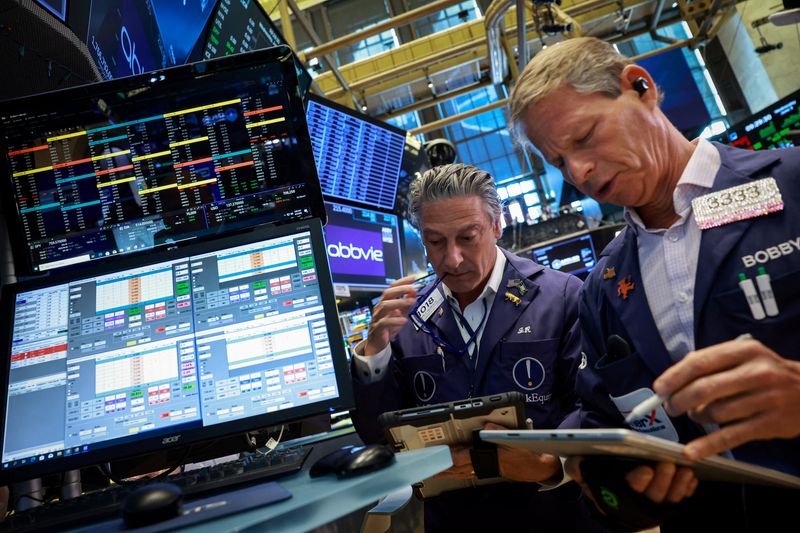
NEW YORK, June 5 (Reuters) – Wall Street’s nine-week winning streak ended with a thud on Friday, as red-hot technology stocks suffered their largest daily decline since April 2025 after a hot May jobs report fueled fears of a hawkish policy pivot from the U.S. Federal Reserve.
Selling was concentrated among chip stocks and other technology favorites that have surged higher in recent weeks as the Nasdaq Composite Index and S&P 500 rose repeatedly to fresh highs.
All three major U.S. stock indexes closed sharply lower, with plunging chip stocks dragging the tech-laden Nasdaq down by its largest one-day percentage loss since April 2025.
The Philadelphia SE Semiconductor Index suffered its largest one-day percentage plunge since March 2020, erasing more than $1 trillion in stock market value.
The S&P 500 ended its nine-week run of Friday-to-Friday gains, its longest weekly winning streak since one that ended in December 2023.
“After the record run we’ve seen the last nine weeks in equities, specifically tech and semiconductors, the dam just broke today,” said Ryan Detrick, chief market strategist at Carson Group in Omaha. “Obviously, the stronger-than-expected jobs report puts the Fed in a tough spot regarding any interest rate cut for the rest of the year. And the market is throwing a fit by hitting the big winners so far this year.”
Rising interest rates and the Iran war weighed on sentiment heading into the weekend, but many investors said they expected tech stocks to continue rallying.
“The market reaction today was more driven by positioning rather than fundamentals,” said Ohsung Kwon, chief equity strategist at Wells Fargo. “The semiconductor sector was way overbought. That’s why we’re seeing the selloff. I don’t think it’s the end of the semi bull market.”
The U.S. economy added 172,000 jobs in May, according to the Labor Department, more than double analyst expectations, while the unemployment rate held firm at 4.3%. The robust report was double-edged: it provided reassurance of U.S. economic health, but all but killed any hopes of an interest rate cut from the Fed in the near future.
Financial markets are pricing in a 42.7% likelihood of a rate hike at the conclusion of the Fed’s December meeting, according to CME’s FedWatch tool.
Fading hopes for a near-term resolution to the Middle East war and reopening the Strait of Hormuz are stirring fears that energy price pressures could morph into wider, systemic inflation.