

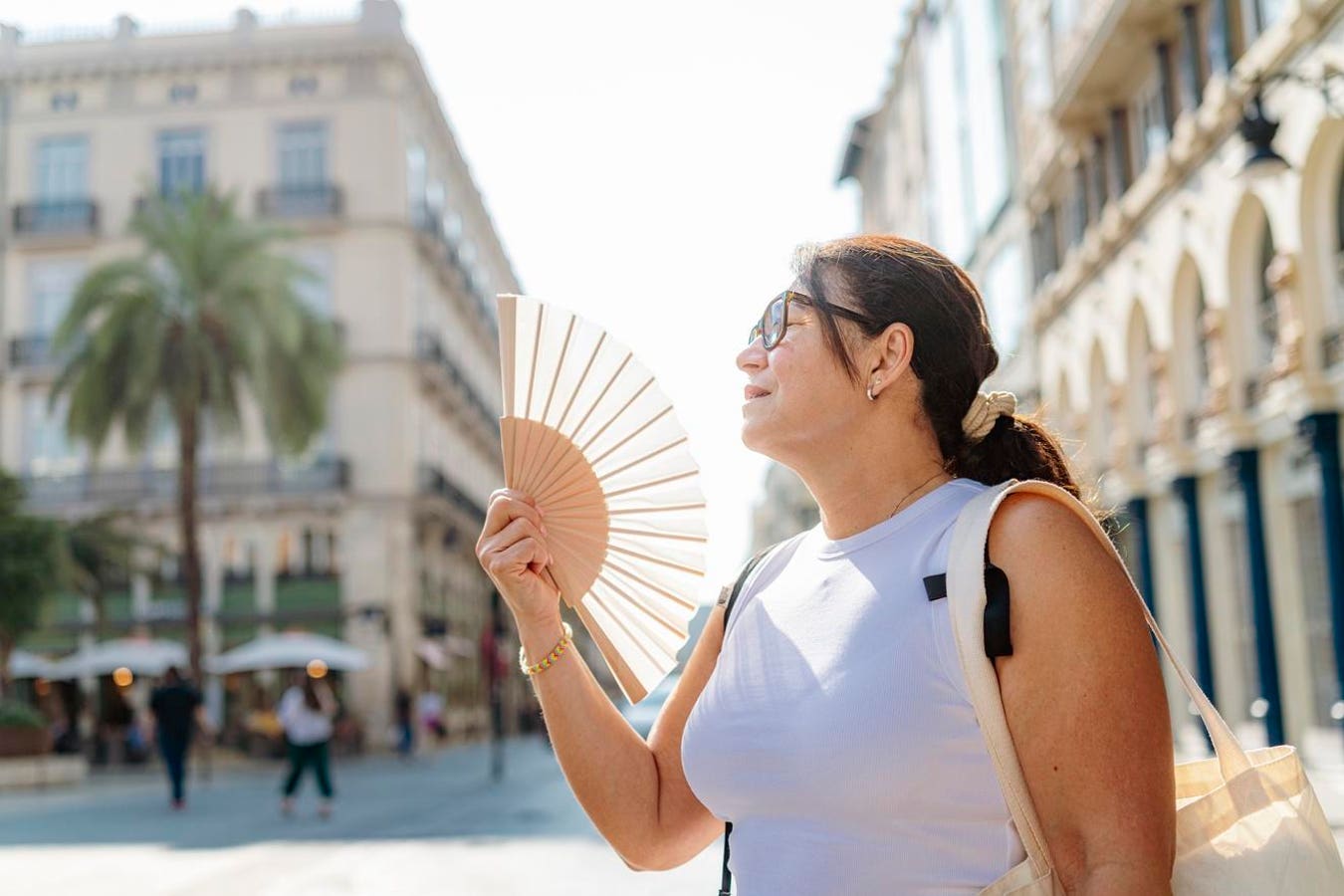
Woman waves fan while traveling in the summer due to the heat. When traveling during a heat dome, preparation and precaution can help you stay safe.
Getty
If it seems like every summer brings another headline about a record-breaking heat dome, you’re not imagining it. From Europe’s historic cities and Mediterranean hotspots to the American Midwest and southeast, travelers are increasingly finding themselves vacationing during prolonged periods of extreme heat.
That doesn’t automatically mean it’s time to cancel your trip, but it does mean you’ll need to rethink how you experience it. A walking tour through Rome, a hike in Arizona or a day exploring ancient ruins can become far more physically demanding when dangerous heat lingers for days instead of hours.
Fortunately, a little preparation—and a willingness to adjust your itinerary—can go a long way toward keeping your vacation both safe and enjoyable. Here’s what a meteorologist, travel advisor and emergency medicine expert say every traveler should know before visiting a destination experiencing a heat dome.
What Is A Heat Dome And Why Does It Matter For Travelers?
A heat dome is a large, persistent area of high pressure that traps hot air over a region for days or even weeks, creating prolonged periods of extreme heat that can disrupt transportation, impact health and change how travelers experience a destination.
“The persistence and long-lasting nature in a particular area is the key difference between the impacts of a heat dome and a typical stretch of hot weather which might last a shorter duration,” says Jonathan Porter, chief meteorologist at AccuWeather. “Heat domes can prevent clouds from forming, resulting in abundant sunshine that boosts temperatures, potentially toward record levels.”
As the atmospheric pressure remains high, it suppresses clouds, rain and thunderstorms while preventing cooler air from moving into the region. That allows temperatures to climb day after day. Heat domes also dry out the soil, which causes the sun’s energy to warm the ground instead of evaporating moisture. The result can be rapidly developing drought conditions and, because winds are typically light, worsening air quality as pollutants become trapped near the surface—particularly in urban areas.
Meteorologists are also seeing these events evolve. “We have observed over the last 10 years or so that heat domes are becoming more intense, often breaking records in recent years,” Porter says. “There is growing research that points toward increased persistence of blocking patterns associated with heat domes in a warming atmosphere, which allows a hot pattern to linger for longer periods.” He adds that unusually hot temperatures are also arriving earlier in the year and lingering later into the fall, expanding the traditional heat wave season.
How To Stay Safe In Extreme Heat
While you can’t predict the weather when you book a vacation months in advance, you can monitor forecasts and heat advisories as your departure date approaches and adjust your plans if dangerous heat is expected. Preparing for a heat dome isn’t just about staying comfortable—it’s about recognizing that prolonged periods of extreme heat can place cumulative stress on your body.
“The danger of a heat dome is that your body never gets the overnight reset it depends on,” says board-certified family nurse practitioner Bidwell Cranage, APRN, FNP-C, founder of Bidwell Health. Normally, evenings cool off enough that your core temperature drops and you recover while you sleep. During a heat dome, nighttime temperatures often stay elevated, so the stress just keeps accumulating day after day.
The good news is that with the right preparation, you can reduce your risk while still enjoying your destination.
1. Plan Around The Heat, Not Against It
Think your only options during a heat dome are to push through the heat or abandon your plans altogether? Travel advisor Angie Rice, owner of Boutique Travel Advisors in Scottsdale, AZ, says there’s a better approach.
“The goal is not necessarily to cancel the experience,” she says. “It’s to rethink the day intelligently.” Instead of spending hours sightseeing in the afternoon sun, Rice recommends shifting outdoor activities to the early morning or evening and reserving the hottest part of the day for an air-conditioned lunch, a museum, or a mid-day shower and siesta.
Rice uses this philosophy for her own clients by urging them to skip southern Italy during peak summer in favor of cooler lakes and mountain regions, rescheduling walking tours for sunrise or sunset, and replacing long outdoor stretches with indoor cultural experiences. “Extreme heat does not have to ruin a trip, but it does require strategy,” she says. “Do not be afraid to change the plan.”
2. Pack For Extreme Heat, Not Just Warm Weather
Packing for prolonged extreme heat goes beyond shorts and sunscreen. A few smart additions to your suitcase can help you stay cooler, spend more time outdoors comfortably and reduce your risk of heat-related illness.
In addition to lightweight, breathable clothing made from natural materials, Cranage recommends packing UPF-rated apparel, a wide-brimmed hat, a refillable water bottle, electrolyte packets, cooling towels or a personal fan and sunscreen. If you’ll be spending long periods outside, these simple additions can make a noticeable difference in how well your body handles sustained high temperatures.
3. Know Your Personal Risk Factors
“The travelers I worry about most are older adults, young children, pregnant travelers and anyone with chronic heart, lung, kidney or metabolic disease, including diabetes,” says Cranage, noting that if you’re traveling with pets, they need watching too.
Another consideration is prescription medication and specific health conditions. For instance, he says anticholinergic drugs (read: antihistamines, bladder medications, certain antidepressants and the scopolamine patches used for motion sickness) can cut down on sweating, which is one of the body’s main cooling systems.
Cranage also names beta-blockers, diuretics and ADHD medications as potential concerns because they can cause dehydration or raise body temperature. “Anyone with heart disease, kidney disease, diabetes, high blood pressure or a fluid or salt restriction should run a hot-weather trip past their own clinician first,” he says. Finally, heat damages medications too, so insulin, inhalers and epinephrine auto-injectors should never sit in a hot car or direct sun.
4. Make Your Hotel Part Of Your Heat Strategy
During periods of extreme heat, a hotel is more than a place to sleep—it’s where you’ll recover, cool down, and potentially spend more time than you originally planned.
“When I plan trips for clients, I look carefully at the logistics,” says Rice. “Is the hotel in a location that minimizes unnecessary walking during the hottest part of the day? Does it have strong air conditioning, a pool, shaded outdoor areas or easy access to transportation?” She also recommends looking for properties with wellness amenities, such as spas and comfortable indoor lounges, that make it easier to enjoy a slower pace if temperatures become dangerous.
5. Recognize The Signs Of Heat Stress
“The earliest signs of heat exhaustion slip past people because they feel like ordinary vacation tiredness,” cautions Cranage. “Heavy sweating, headache, dizziness, nausea, muscle cramps, unusual weakness and a heart that won’t settle are all warning signs.”
Those symptoms are easy to blame on a long flight, jet lag or a busy day of sightseeing, but they’re often your body’s first warning that it’s struggling to keep up with prolonged heat. Cranage says paying attention to subtle changes—like noticing if you haven’t gone to the bathroom in hours, or you feel unusually irritable or foggy—can help prevent heat exhaustion before it becomes more serious.
If someone you’re traveling with begins showing signs of heat-related illness, act quickly. Move them out of the heat and start to cool the body immediately to help prevent heat exhaustion from progressing into a life-threatening emergency.
One of the clearest differences between heat exhaustion and heat stroke is a person’s mental state. “The brain is where I draw the line,” says Cranage. “With heat exhaustion, a person feels miserable but still acts like themselves. With heat stroke, the mind goes.”
He explains that someone with heat exhaustion may be sweaty, weak, dizzy, nauseated or unusually fatigued but still responding normally. Heat stroke, on the other hand, can cause confusion, slurred speech, strange behavior, fainting, seizures, trouble walking or an inability to drink safely. “Here’s the rule I give people: confusion in someone who is overheated is heat stroke until proven otherwise,” he says.
If someone develops heat-related symptoms while sightseeing, Cranage says to stop what you’re doing immediately and get out of the heat. “Shade is better than sun, and air conditioning is better than either.” Sit or lie the person down, loosen or remove extra layers of clothing and begin cooling the skin with cool water, wet towels, misting, a fan or cold packs placed at the neck, armpits and groin. If the person is alert, not vomiting and able to swallow normally, offer small sips of cool water or an electrolyte drink.
If symptoms aren’t clearly improving after about 30 minutes of cooling and rest—or if the person becomes confused, faints, has a seizure, repeatedly vomits or grows weaker—seek emergency medical care immediately. “The 30-minute mark isn’t a stopwatch, it’s a gut check,” Cranage says. “If something feels badly wrong before then, act sooner.”
You can’t control the weather, but you can control how you travel through it. With a little extra planning and a willingness to adapt, it’s possible to safely enjoy your destination—even during periods of prolonged extreme heat.