

Get your daily dose of health and medicine every weekday with STAT’s free newsletter Morning Rounds. Sign up here.
Today’s newsletter answers some pressing questions — what is optogenetics? When should I get my flu shot, as cases rise in parts of the United States? And perhaps most importantly — why do longevity clinics include scratch-and-sniff smell tests as part of their treatments? All will be revealed if you read on.
The story of optogenetics, and how it has reshaped brain science
The brain is wildly complex. So it makes sense that the tools required to study it must be remarkably complex as well. As newsletter readers know, one of those foundational tools — optogenetics — won the Nobel Prize for medicine yesterday. (Karl Deisseroth, who shared the prize with two other scientists, is pictured above.) The discovery was decades in the making, STAT’s Megan Molteni and Annalisa Merelli write, born out of a scientist’s curiosity about how a single-celled alga is able to swim toward light.
The answer turned out to be channelrhodopsin, a protein that makes any cell it is inserted into light sensitive. The discovery “jumpstarted the development of a whole range of new tools that let us selectively turn on and off brain cells with incredible precision. It has let us go from a Rand McNally road atlas of the brain to something more akin to Google Earth,” one professor told Megan and Annalisa.
Read more about the incredible history and impact of this innovation.
What to know about when to get your flu shot
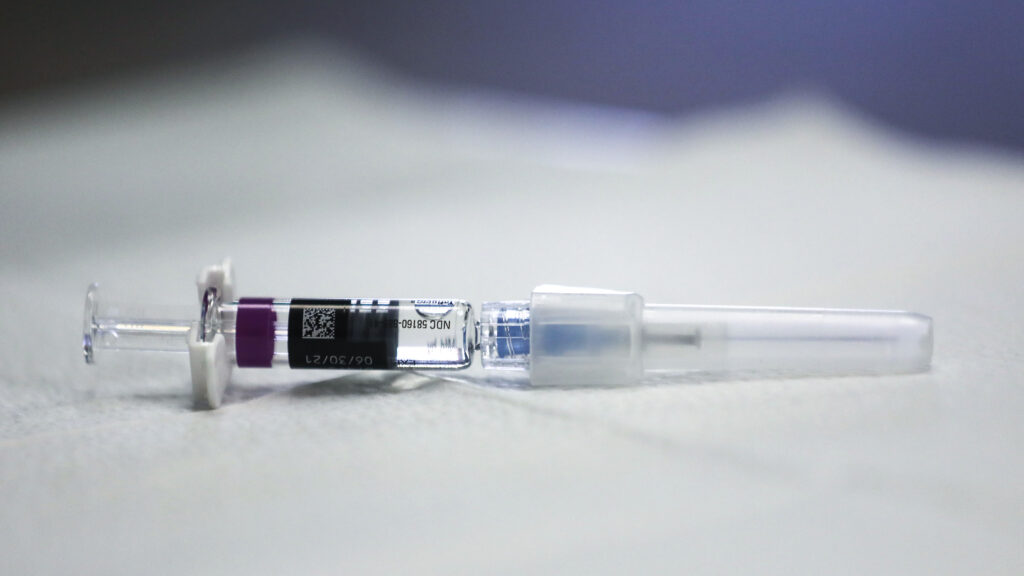
It’s the perennial fall question for those of you who get flu shots: When’s the best time to be vaccinated? Predicting what this mercurial virus will do is always tough. But here are some thoughts that may help you make your decision.
There’s been a ticking up of flu activity in the Pacific Northwest, which is leading to some calls for people to get vaccinated now. But the latest national data from the CDC still shows minimal activity in the vast majority of the country.
Michael Osterholm, director of the University of Minnesota’s Center for Infectious Disease Research and Policy, says people in the west or those who have plans to travel there should probably think about getting vaccinated now. And people in other parts of the country should make arrangements to get their shots within the next two or three weeks, because booking appointments will get more challenging as flu activity starts to heat up elsewhere. But there’s nothing to suggest this is unusual or alarming at this point. “What I see now is a flu year starting out as a pretty normal flu year,” Osterholm said. — Helen Branswell
Pulse oximeters are unreliable in different ways, new study finds
Pulse oximeters gained prominence during the Covid-19 pandemic as an easy way to track oxygen levels in the blood. But studies have shown they can be unreliable, especially at estimating the oxygen levels for people with darker skin.
A recent paper adds another layer, finding that over five years, pulse oximeters went from overestimating blood oxygen levels to underestimating them at one hopspital. One of the authors of the paper called the device a “black box,” saying “I have no idea why we found what we found in this paper, and why it’s changing year over year.” Read more about this strange finding and what it means for standards of care.
A STAT reporter’s day at the longevity clinic: Treadmill tests, fancy snacks, and a scratch-and-sniff test
STAT reporters will do a lot to get the story. Sarah Todd, for example, recently subjected herself to a barrage of tests and treatments at one of the longevity clinics popping up in medical centers across the country.
Sarah ran on a treadmill to the point of exhaustion (to find her VO2 max); tested her sense of smell (since olfactory loss is a sign of rapid aging); and sat through all manner of scans and blood draws. She wanted to understand what these nonprofit hospitals — which receive tax benefits and other perks in exchange for nominally serving the public — are offering, and how they justify the steep price tag of $5,500 to $45,000.
Critics see hypocrisy in these hospitals’ efforts to cater to the well-off. (“For me, this just reinforces the impression that not-for-profit hospitals are really for-profits masquerading in not-for-profit clothing,” one Carnegie Mellon University professor said.) Others question whether all the offerings (like full body MRIs) are scientifically sound. Where did Sarah come out on all this? Read more.
66%
That’s the proportion of U.S. adults who now support “Medicare for All,” according to a new poll from KFF. That’s a big jump from 2020, when 53 percent of adults supported the policy. The reason for the shift might be tied to another one of the poll’s findings — 6 in 10 voters are worried about being able to afford their health care.
Dig deeper into that Medicare for All number and you’ll find the expected partisan split. While 84% of Democrats and 72% of independents favor the policy, 66% of Republicans are opposed. Read the full poll results here.
After Leah Pierson sees a patient, she often receives a message from a hospital administrator. The emails encourage her to add certain comorbidities or complications to the medical record, allowing the hospital to bill more for treatment. These requests inquire about legitimate issues turned up in lab work or through other diagnostics, Pierson writes. And yet, she wonders what it’s costing the patient.
“Risk adjustment specialists ask us to document real diagnoses that we know could increase the cost of a patient’s bill, but we have no idea by how much,” she writes. “Moreover, there’s no medical school module on how much any of these comorbidities affects the true cost of the hospitalization. Against this backdrop, it makes sense that doctors try to just tell the truth: yes, this patient has low sodium, and we are monitoring it, even though this probably allows hospitals to code some patients as being more complicated than they truly are.”
Please give Pierson’s insightful piece a read, for an inside look on how doctors have gotten caught up in the billing arms race, and the pressures they face on the ground.
What we’re reading
- How ketamine, kratom and other drugs are changing Cornell and other schools, The Washington Post
- How did Rosalind Franklin miss the helix in her iconic DNA image? She didn’t, Science
- How Trump’s homelessness crackdown became a sweeping retreat from disability rights, NBC
- Texas pediatricians face Paxton investigations for vaccinating children, New York Times