

During the uneasy days of the early Cold War, U.S. President Dwight Eisenhower delivered a ray of optimism in a now-famous speech before the United Nations General Assembly. Acknowledging that humankind’s trajectory was forever darkened with the invention and use of the atomic bomb, he preached that a global approach to nuclear diplomacy could sustain peace and allow a way forward between the two “atomic colossi” of the era. However, Eisenhower also recognized the extraordinary potential of nuclear technologies applied toward constructive ends, pronouncing that the field could be “a great boon, for the benefit of all mankind.”
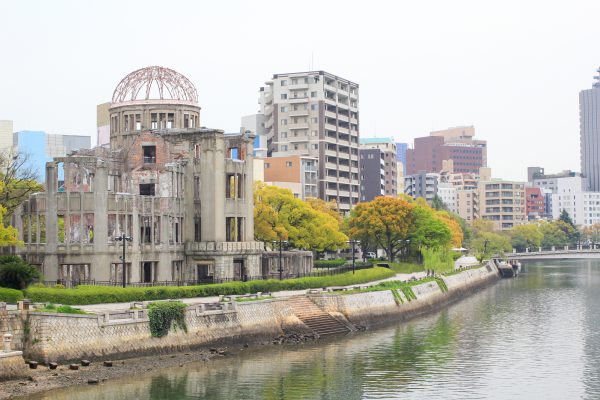
Seventy years after the “Atoms for Peace” speech, international security concerns remain dominated by the proliferation of nuclear materials and the prospect of nuclear conflicts. Japanese Prime Minister Kishida Fumio is gearing up to host the G-7 Summit in his family’s hometown of Hiroshima next month, where the skeletal backdrop of the Peace Memorial’s Genbaku Dome will serve as a grim reminder framing this year’s discussions. The reflective leader has often iterated how the city’s legacy as an atomic bombing site profoundly shaped his worldview, and considers efforts toward “a world free of nuclear weapons” to be his life’s work.
Recent times have not been encouraging toward this end. Russia’s looming threats of tactical nuclear weapons use in Ukraine, North Korea’s record numbers of missile tests, and Iran’s latest repulsion of a return to the JCPOA have all helped to whittle the countdown on the infamous Doomsday Clock from five minutes to a mere 90 seconds left until “midnight.” Nevertheless, Kishida has seemingly redoubled his efforts in the face of these setbacks. Last August, he became the first Japanese prime minister to attend the Nonproliferation Treaty (NPT) Review Conference in New York, advocating for his Hiroshima Action Plan, a five-pillared approach toward nuclear nonproliferation and disarmament.
The striking dichotomy now forming under Kishida is that he is simultaneously overseeing a massive domestic policy turnaround on nuclear energy. Accelerated restarts for Japan’s dormant nuclear power plants were greenlit by his administration last September, and his new plan would boost nuclear power’s share of grid supply from 4 percent today to 22 percent by 2030. This relies not only on the further restarts of idle plants following Nuclear Regulatory Authority (NRA) approval, but the construction of new advanced reactors and lifetime extensions for existing ones – a total departure from the nuclear power phase-out plan ratified 12 years ago after the Fukushima Daiichi disaster.
This pivot comes off the heels of last year’s energy crunch, sparked by the invasion of Ukraine. War and the ensuing supply chain chaos hypersensitized Tokyo to the security implications of its own reliance on imports for 90 percent of its energy. By curtailing Russian oil and coal purchases (by 56 percent and 41 percent, respectively) in unison with Western allies and partners, Japan shifted its usage further onto foreign-origin liquefied natural gas (LNG), which does little to improve its energy security or stabilize utility prices over the long term. In contrast, the return of nuclear power could help reduce the archipelagic nation’s import reliance, price volatility, and carbon emissions to boot.
While the Kantei sees the return to nuclear energy as a necessity, is the broader Japanese public ready for such a change? It may have little choice but to be. In addition to keeping the lights on for the world’s third-largest economy and derisking its heavy dependence on energy flows from Russia and through the South China Sea, the government remains committed to continuing deep decarbonization. In a Yale study, four-fifths of Japanese supported greater government action in curbing the pace of climate change, a sentiment realized through former Prime Minister Suga Yoshihide’s pledge for carbon neutrality by 2050 through a national “Green Growth Strategy.”
Japan was long considered a mainstay locale for grassroots antinuclearism, but an astonishing opinion poll from February has revealed a rapidly-returning acceptance of nuclear power. On restarting idle plants, 51 percent of Japanese supported the action, while 42 percent opposed, marking the first year of majority support since the Fukushima Daiichi disaster. This sea change in sentiment is especially visible alongside the same poll’s results just one year prior: 38 percent support vs. 47 percent oppose, and five years prior: 27 percent support vs. 61 percent oppose.
Stunning as this shift may be, many local interest groups and segments within Japanese civil society remain categorically opposed to nuclear power. Even within the national government, the expedited restarts have raised concerns ranging from fears of increased risks to opposition toward Kishida’s “unilateral” approach through executive branch action – as voiced by parliamentary opposition head Izumi Kenta at the start of the January Diet session.
The ghosts of the Fukushima Daiichi disaster are also far from laid to rest. The Tokyo Electric Power Company (TEPCO) only recently confirmed its plans to finish treating the site’s 12-year-old radioactive wastewater before dumping it into the sea, pending final approvals from the NRA and the International Atomic Energy Agency (IAEA). Although much external cleanup has been completed, the melted cores and contaminated debris inside the reactor housings still sit untouched. By TEPCO’s estimates, the plant’s decommissioning will take another 30 years to complete, and cost $76 billion.
Finally, the reprocessing plant at Rokkasho remains a perennial issue of contention. Kishida has supported a closed nuclear fuel cycle based on the extraction of fissile plutonium from spent fuel and “fast-breeder” nuclear reactors. While Tokyo insists that this will reduce waste volumes and enhance energy self-sufficiency by recycling material, reprocessing can also multiply nonproliferation risks, as plutonium can also be used as weapons-grade fissile material. Indeed, Japan has already accumulated 45.8 tons of separated plutonium: 9.3 tons within Japan, 21.8 tons in the U.K., and 14.7 tons in France. Critics point distrustfully to South Korea, which uses U.S. allowance for Japanese reprocessing as justification for its own “pyroprocessing” program, and has seen a worrying rise in domestic calls for indigenous nuclear weapons.
The development of the world’s nuclear industrial landscape is accelerating now, and the writing on the wall is clear. The risks of proliferation and the pressures of global norms alone will not stop states from harnessing this boon en masse to tackle today’s energy issues. South Korea, Bangladesh, Ghana, Brazil, Argentina, Turkey, Egypt, India, China, Russia, Slovakia, France, the United Kingdom, and the United Arab Emirates are all in the process of either constructing their first commercial nuclear power facilities or actively expanding their existing facilities. In 1974, India famously used fuel produced in a reactor supplied by the U.S.-Canada “Atoms for Peace” nuclear power transfer program to conduct its first “peaceful” nuclear explosion. To counter further dual-use spread in the future, Tokyo should unashamedly assume technocratic leadership in industrial collaboration and peer accountability, especially with “new-to-nuclear” power states, where emerging governance standards toward IAEA compliance are still in formation.
As a nation constitutionally precluded from war, highly esteemed as a foreign development partner, and frequently cited as a “responsible” international actor, Japan can leverage antipathy for nuclear arms to provide a benign foil against the great powers jostling for control of the growing nuclear technology exports market. In recent years, Russia’s state-owned Rosatom has offered commercial reactor development to no less than 28 would-be newcomers to nuclear, including Myanmar, Nigeria, and Uzbekistan. China, itself projected to become the world’s largest producer of nuclear energy by 2030, is also preparing its own export industry for up to 30 Belt and Road countries over the next decade. Meanwhile, the United States has recently fast-tracked agreements to provide small modular reactors to Romania, Poland, Thailand, and the Philippines in order to reassert itself in the sphere.
In Sapporo, the G-7 Ministers’ Meeting on Climate, Energy, and the Environment resolved last month to support the resurgence of commercial nuclear power through the safe and secure development of new reactor technologies, regulatory frameworks, and security guidance worldwide. Beyond the regular G-7 members, Kishida has also chosen to invite India, Brazil, Indonesia, South Korea, Australia, Vietnam, Ukraine, Comoros, and the Cook Islands to the summit sessions in Hiroshima, stressing Tokyo’s desire for bridge-building with the Global South, and signaling its commitment to multilateralism in managing the challenges ahead.
The present tension between the prime minister’s longtime advocacy for nuclear nonproliferation and disarmament, and his more recent push for nuclear energy, deserves further attention in one way or another. A full-throated, contemporary policy embrace of responsible “nuclear duality” as a successor to the “atoms for peace” campaign of last century could clarify this dichotomy as a strength and open up new diplomatic opportunities. However, Kishida must bear down on TEPCO’s cleanup, reprocessing at Rokkasho, and other domestic concerns with consistent and focused messaging. The Japanese constituency must first see themselves as responsible stewards of a promethean power, if the nation is to expand its safeguarding role and champion the nonproliferation of nuclear weapons globally.