

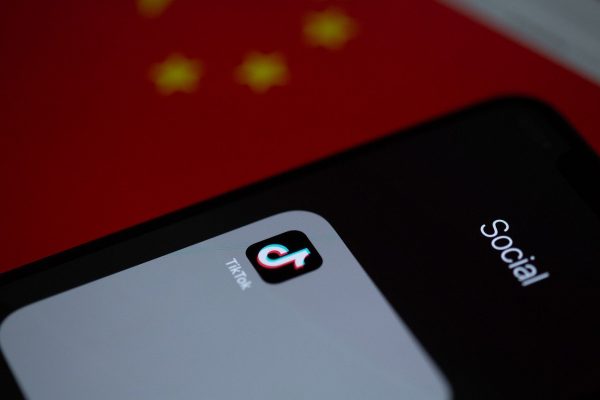
When social media users create and share viral dances and awe-inspiring stunts, they may not be aware that these same digital platforms are at the epicenter of a geopolitical power contest. In particular, the rise of TikTok, a platform owned by Chinese tech giant ByteDance, has added a new dimension to the complexity of the “world order.”
The saga of TikTok, which underwent a security review in the United States and made it onto the list of apps banned from government devices in Canada and Australia, underscores developing lines of conflict being drawn around data sovereignty and the necessity for data governance. This isn’t just a feud between two great powers; it’s a competition for a new world order in cyberspace.
Why TikTok?
TikTok is essentially a sibling version of Douyin, a video-sharing platform developed by ByteDance. ByteDance started its journey through content aggregation across various internet portals and platforms within China. The company has perfected its AI algorithms to optimally match content with its intended audience, continuously improving the algorithms based on the feedback of almost 1 billion users. On the various ByteDance platforms, content is “intelligently” pushed toward the audience most likely to appreciate it, creating a potential addiction to the content being presented. Similar algorithms have been implemented on the Douyin platform.
TikTok was established as an independent entity to distance itself from its parent company. It was tested and found successful in Asia, including Japan, a market typically challenging for foreign internet businesses to penetrate and survive. ByteDance’s algorithms have revolutionized the traditional social media business model. It has shifted from the model of “audiences searching for the right content” to “content searching for the right audiences.” This paradigm shift disrupts the established hierarchy, where content created by more well-known creators is more likely to be found by audiences in their searches.
When TikTok launched in the United States in 2017, it became an immediate market success. In October 2018, TikTok became the most downloaded app in the United States. Globally, as of 2022, it had achieved 3 billion downloads, and boasted over 1 billion active users each month.
This success story of TikTok hasn’t been entirely smooth and its future is still unknown. Under both the Trump and Biden administrations, TikTok and its parent company, ByteDance, have been scrutinized for potential national security risks, as critics worry that user data could be accessed by the Chinese government when deemed necessary under Chinese law.
In the context of the larger narrative of great power competition, TikTok exemplifies the dynamics at play. It signifies China’s technological prowess and the global impact of its digital innovations. TikTok’s saga is more than just a business narrative; it symbolizes the ongoing struggle for a new world order in cyberspace.
A New Territory for Geopolitical Competition
The COVID-19 pandemic catalyzed a surge in online activities, accelerating the process of digital transformation as billions of users and devices interconnected online, generating an astronomical amount of data. Increasingly, such data is shared and exchanged across national borders, as global trade moves toward digitized services.
Data has indeed become a crucial resource in the digital economy, with cyberspace quickly emerging as a new arena for human activities, becoming a geopolitical domain akin to land, sea, air, and outer space. However, unlike resources in other geopolitical territories, data can be shared and reused, not adhering to the “zero-sum” rule of resource competition typically seen in geopolitics. With the advent of cloud-based computing and data storage technologies, traditional jurisdiction based on geography and exclusive jurisdiction over domestic affairs face significant challenges.
Increasingly, competition in cyberspace for influence over the economy, society, and military affairs is redefining the concept of national sovereignty. As demonstrated by the TikTok case, the crux of the issue lies in the uncharted territory of data sovereignty and governance. Currently, there are no clear boundaries for determining data ownership by country. Additionally, strategies for managing privacy, security, and cross-border data flows remain undefined, especially when multiple entities across different nations are involved in data creation. For instance, it’s currently unclear who owns the data generated by a Chinese citizen or business in the United States, or vice versa.
The ascent of cyberspace as a new geopolitical domain has disrupted the inherent world order, causing upheavals not just between developed and developing countries, particularly between the United States and China – two major powers in cyberspace – but also between public and private entities.
Uniquely in cyberspace, non-state platform enterprises exert considerable power, often without adequate oversight or accountability. The top five U.S.-based tech titans (Amazon, Alphabet/Google, Microsoft, Apple, and Meta/Facebook) and the top five China-based ones (Huawei, ByteDance, Alibaba/Ant, Tencent, and Baidu) collectively manage over 50 percent of online traffic and dominate the digital infrastructure. These tech behemoths also control research and development in future-defining technologies. Their influence extends beyond technology to society, public opinion, politics, and even geopolitics, further complicating the already complex landscape of data sovereignty and governance.
The United States, the birthplace of the internet, occupies a significant position in the global governance of cyberspace. The U.S. and its Western allies control key resources, including the majority of infrastructure, internet protocols, and standards, as well as the international institutions governing the internet. In terms of soft influence, the U.S.-based tech giants extend globally (except in China), while their Chinese counterparts mainly operate domestically for now. For instance, approximately 80 percent of global netizens use U.S.-based internet browsers, close to 60 percent of online data is in English, and the control of core technologies and user interfaces largely rests with the United States and its allies.
In recent decades, China has emerged as the second-largest digital economy, accounting for nearly 40 percent of its GDP in 2022, and has begun exporting its digital technologies. Besides TikTok, China’s digital apps in social media (e.g., WeChat), e-commerce (e.g., Alibaba and JD.com), and mobile payments (e.g., Alipay) have been adopted overseas, although primarily by Chinese communities.
Uniquely, TikTok stands as the first Chinese app that has significantly penetrated local communities in over 150 countries. Interestingly, however, Chinese citizens cannot access TikTok within mainland China.
Value Clashes
The internet has been built and developed based on network effects – the larger the network, the more utility it provides to its users. In the foreseeable future, the United States and China are expected to continue their domination of cyberspace. However, the rivalry between these two powers extends beyond technology. The competition between their contrasting visions of digital governance encompasses issues such as individual privacy, data security, and the cross-border flow of data.
The prevailing internet governance, led by the United States, adheres to a multistakeholder approach, which emphasizes the free flow of information and data. This approach is rooted in democratic values and asserts that cyberspace governance should reflect a broad range of perspectives, emphasizing freedom, transparency, and inclusivity. Conversely, China’s vision of digital governance advocates for strong state control, based on the principle of “cyberspace sovereignty,” whereby each country has the right to regulate the internet within its borders. For instance, China’s extensive censorship network, known as the Great Firewall, restricts Chinese netizens’ access to many websites and platforms if their servers are not located within China.
China’s approach is often interpreted as exporting its authoritarianism, particularly through its Digital Silk Road via the Belt and Road Initiative (BRI). China has been exporting its digital infrastructure, along with its digital governance model, to BRI member countries. While on the surface, the TikTok situation illuminates national security concerns tied to China’s export of its digital technology, it also underscores the potential risks associated with China’s approach to data governance.
If these clashes cannot be resolved, China risks being “marginalized” in cyberspace. For instance, despite different levels of regulations on cross-border data flow and personal privacy protection, the U.S., the EU, and other democratic countries may establish a multilateral system, built on shared values and principles of freedom and human rights protection, governing cross-border data flows in trade, payment, scientific research, while excluding China. This could potentially fragment the global internet and undermine the open, interconnected nature of the digital world.
Emerging Digital Order?
History illustrates that rivalries between great powers over establishing a new world order can have substantial ramifications. In the realm of cyberspace, unlike physical resources such as oil or critical minerals, data, as a virtual entity, doesn’t conform to traditional jurisdictional boundaries. This reality has complicated the issues of data sovereignty and data governance, particularly with the rise of advanced digital technologies, such as AI, cloud-based computing and data analytics.
The internet, while having emerged as a vital infrastructure supporting an expanding digital economy, has also pervaded national infrastructures like power grids, transport networks, public health and finance systems. Damage to these systems or data breaches can pose severe threats to national security. Hence, there is a pressing need for a robust global digital order, especially in areas governing data sovereignty and cross-border data flow.
International order acts as a symbol of the progress of human civilization and is crucial in resolving conflicts between nations, as warfare isn’t, and shouldn’t be, the only means to settle disputes.
TikTok is just one of many digital companies originating from countries where data governance approaches differ significantly from the norms established in the West. It certainly won’t be the last. The handling of the TikTok case, and others like it, underscores the importance of cross-country collaboration on key issues. These include cross-border investment, information exchange, data sharing, and particularly the rise of AI.
As the two dominant forces in the digital realm, the United States and China have a particular responsibility in this endeavor. They need to recognize the importance of a global digital order that benefits not just themselves or the current generation, but the entire world and future generations.
Finally, the creation of a digital order isn’t merely an issue between the United States and China. It’s vital for all nations, irrespective of size, to contribute to the establishment of a new, fair, and inclusive world order in cyberspace. After all, we are all both users and creators of data in this interconnected digital landscape.