

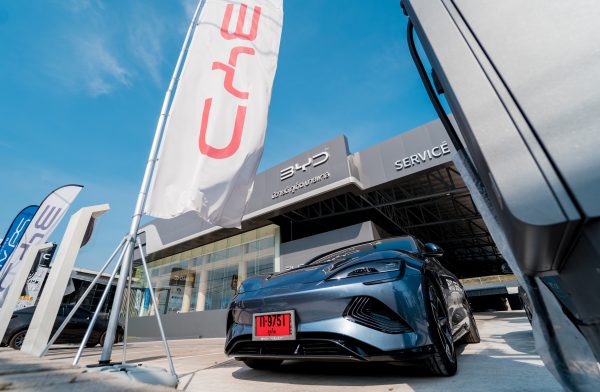
China’s dominance in the electric vehicle (EV) industry has become a significant focal point of geopolitical tensions. As a leading producer of EVs and a key player in the global supply chain for critical minerals and batteries, China’s influence extends well beyond manufacturing, shaping future energy security and driving geopolitical shifts toward green technologies.
In response, Western nations, including the United States and the European Union, have introduced defensive measures to protect their domestic industries from foreign competition. These measures often include imposing higher tariffs, restricting imports, and implementing other trade barriers aimed at safeguarding local markets from perceived unfair trade practices, while enhancing domestic production capacity.
A Geopolitical Tug-of-War
The United States has increased tariffs on imported Chinese EVs to 100 percent, while the EU has imposed provisional anti-subsidy duties ranging from 17.4 percent to 37.6 percent on Chinese EVs. The rationale behind these measures is rooted in concerns that China’s overcapacity in EV production could flood global markets with government-subsidized vehicles, thereby distorting fair competition.
However, this premise is contested. Economists argue that overcapacity often results from a mismatch between actual and potential production capacity, typically driven by insufficient domestic demand. In reality, China’s domestic EV market is expanding rapidly, and production capacity utilization remains high. For example, in 2023, China’s EV market saw substantial growth, with EV sales reaching 8.1 million units – a 35 percent increase compared to 2022. This growth trajectory is expected to continue, with projections indicating that EV sales could reach approximately 10 million units in 2024, representing about 45 percent of total car sales in China. On the production side, major Chinese automakers like BYD and Tesla‘s Shanghai Gigafactory reported capacity utilization rates of around 80 percent in 2023, within internationally recognized norms.
Though both protective, the U.S. and EU have adopted different approaches to imposing tariffs on Chinese EVs. The U.S. tariffs are more aggressive, reflecting a broader defensive strategy aimed at curbing China’s technological advancements and bolstering American manufacturing. The United States is particularly focused on slowing China’s progress in key technologies, especially in areas like battery technology, which is viewed as potentially dual-use with implications for military applications such as submarines and drones. If Donald Trump were to return to power, a Trump 2.0 administration would likely continue this policy trajectory, further intensifying efforts to decouple from China.
In contrast, Europe’s situation is more complex. Its anti-subsidy duties on Chinese EVs, designed to curb exports to Europe, are intended to encourage Chinese companies to invest in Europe. This strategy aims to stimulate the EU automotive industry, boost local employment, and support the achievement of green and sustainable development goals. While the EU’s recent ruling slightly reduced the tariff rates, it upheld the decision to impose duties on Chinese imports. The Commission explicitly stated that only a clear majority vote by EU member states against the measure could terminate it. This will undoubtedly prompt Chinese EV manufacturers to reassess the risks associated with investing in Europe.
Despite uncertainties, several member states are actively courting Chinese investment to enhance their own industrial capacities. For example, Italian Prime Minister Giorgia Meloni visited China in July to promote economic relations and industrial cooperation, with a particular focus on EVs and green technologies. Similarly, Germany, Czechia, Hungary, France, and Spain are also attracting Chinese investment in EV manufacturing, solar panels, and offshore wind installations.
In response to the EU’s decision, the Chinese government issued a statement emphasizing that the EU’s actions violate WTO rules and constitute unfair competition under the guise of “fair competition.” The Ministry of Commerce also announced an anti-subsidy investigation into certain dairy products imported from the EU.
China’s countermeasures can be seen as a strategic strike aimed at a critical vulnerability. Some European industrial nations, notably Germany, oppose imposing additional tariffs on China, with Chancellor Olaf Scholz being particularly firm in this position. Their concern is that such actions could provoke retaliatory tariffs against their own companies operating in China. In contrast, countries whose economies rely heavily on agriculture are strongly advocating for increased tariffs on China, as they do not share the same “vulnerabilities” that China could exploit. However, China’s countermeasures are specifically targeted at these pro-tariff countries, imposing reciprocal tariffs on agricultural products.
This approach offers two distinct advantages beyond its targeted nature. First, it directly impacts those who are pushing for higher tariffs on China. Second, China need not worry about further retaliatory measures resulting from these actions, as it can easily source agricultural products from alternative suppliers.
Australia’s Diplomatic Dilemma
Compared to other Western countries, particularly the United States and EU members, Australia has maintained a more open approach to Chinese-made EVs. For China, maintaining a strong relationship with Australia is a critical diplomatic strategy, as Australia is not only a key regional power in the Indo-Pacific with significant economic, strategic, and diplomatic influence but also one of the few Western countries in the region.
In the EV market, Australia finds itself in a unique position. Unlike the U.S. and the EU, Australia has not imposed additional tariffs on Chinese EVs. Instead, the Australia-China Free Trade Agreement has facilitated the influx of Chinese EVs, aiding Australia’s green transition by making these vehicles more accessible to consumers. However, Australia faces the challenge of maintaining this beneficial relationship with China while also navigating the broader geopolitical pressures from its Western allies.
In today’s geopolitics, a nation’s industry or trade policy can have significant diplomatic implications. If the Australian government were to follow the U.S. or EU by imposing tariffs on Chinese EVs or tightening investment scrutiny against Chinese investors in the EV or battery sectors, this could lead to diplomatic tensions in bilateral relations.
The escalation of the “trade war” on EVs between China and the EU provides a crucial lesson for Australia: If bilateral relations between Australia and China deteriorate, China could retaliate by targeting areas where it can find alternatives to Australian exports. This risk is particularly pronounced during periods of economic downturn in China, when its demand for Australian commodities and agricultural goods may weaken.
Additionally, a significant challenge within Australia’s EV policy remains the unresolved issue of data collection and management standards.
As EV adoption accelerates in Australia, there is an urgent need to localize services, maintenance, spare parts inventory, and battery recycling to reduce lead times and enhance service reliability. Modern EVs are deeply integrated with digital technologies, collecting vast amounts of data on vehicle performance, driving behaviors, charging patterns, and geographic locations. This data is crucial for optimizing vehicle efficiency and developing advanced services like autonomous driving. To provide preventive services and manage spare parts inventory effectively, significant amounts of user data need to be collected and analyzed.
The integration of data-driven technologies for maintenance and services introduces an additional layer of complexity, heightening potential national security concerns and prompting stricter requirements for data management and cybersecurity. Chinese EV manufacturers seeking to invest in Australia to enhance their service offerings may encounter growing challenges in obtaining regulatory approvals and navigating investment scrutiny. The Australian government has become increasingly cautious about foreign direct investment, especially in sectors sensitive to national security, with EV data management being a prime area of concern.
Australia faces a diplomatic dilemma: balancing the need to align with Western allies in reducing dependence on China’s EV and battery supplies while also promoting its green transition by providing accessible EV options for its consumers. Compounding this challenge is the additional pressure to address data and national security concerns.
Navigating this complex landscape demands a nuanced approach that balances these factors within an independent foreign policy framework, simultaneously addressing economic opportunities, security considerations, climate change imperatives, and broader geopolitical challenges.
The ongoing Australia-China High-Level Dialogue, which resumed with face-to-face meetings in Adelaide last week, offers a crucial opportunity for Australia to engage effectively with China’s growing influence in the EV sector while safeguarding its national interests and ensuring alignment with broader geopolitical strategies.