

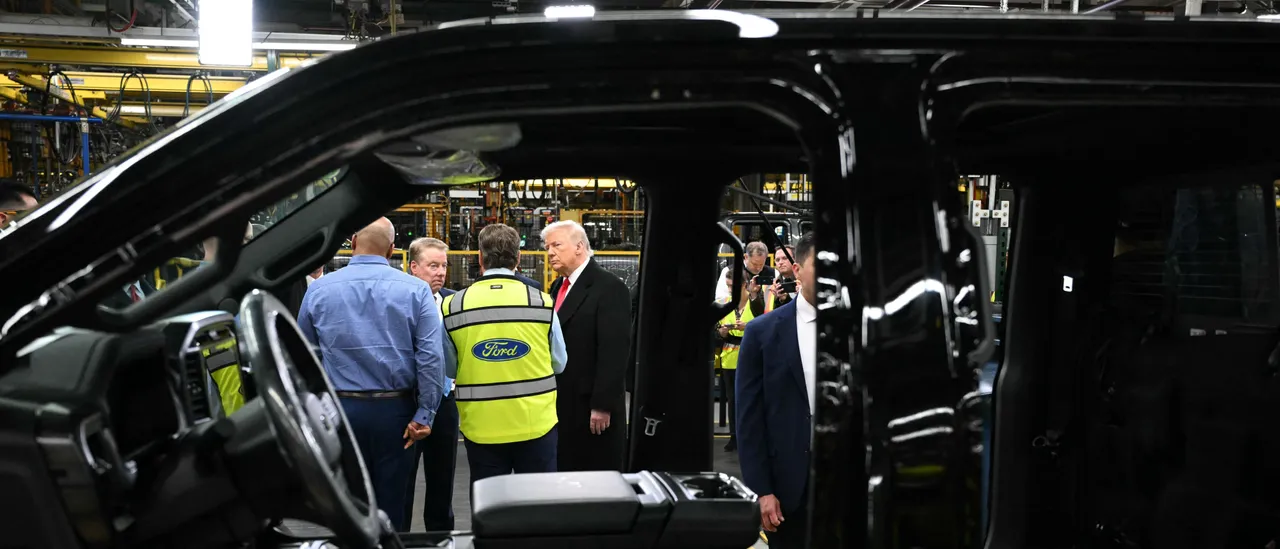
Ford posted its largest quarterly loss since the 2008 financial crisis Tuesday after suffering losses in its electric vehicles (EV) division.
The company cited lower-than-expected demand for EVs as one factor the reported fourth quarter $11.1 billion net loss, Fox Business reported.
Other factors included tariff impacts and a fire that impacted one of its aluminum suppliers, the outlet reported.
“I think the customer has spoken,” Ford CEO Jim Farley announced on the company’s earnings call.
The company lost $4.8 billion on its EV division in 2025 and projects similar losses in 2026, with a sustained loss from the division for the next two years, Fox Business reported. (RELATED: Ford Hemorrhages Another $1.2 Billion On EVs As Market Struggles Continue)
The company is aiming to break-even in the EV division in 2029, Ford CFO Sherry House said on the call.
Farley announced in 2025 that Ford would be reducing the production of the Ford F-150 Lightning and refocusing its production on more affordable EVs and hybrid models.
The change would enable Ford to invest in higher margin vehicles, like American-built trucks, vans, and hybrid vehicles, Fox Business reported. There are also reportedly plans for a $30,000 EV platform with an electric pickup truck.
FORD’S EV FALLOUT: Ford CEO Jim Farley is speaking out after the company posted an $11.1 billion quarterly loss — its worst since 2008.
“I think the customer has spoken,” Ford CEO Jim Farley said on the company’s earnings call. “That’s the punchline.”
The company lost $4.8… pic.twitter.com/VODeLg3b17
— Fox News (@FoxNews) February 12, 2026
Tariff costs were another point of concern for the company, the outlet reported.
Ford reportedly lost $900 million after the Trump administration said in December that the tariff-relief program credits for auto parts would only be retroactive to November, instead of May as originally expected.
The company’s tariff bill in 2025 was around $2 billion with a similar expense expected in 2026.
Fires at Novelis, an aluminum supplier in New York, led to a greater need to import aluminum, CNBC reported.
The plant reportedly won’t be fully operational again until the middle of 2026.