

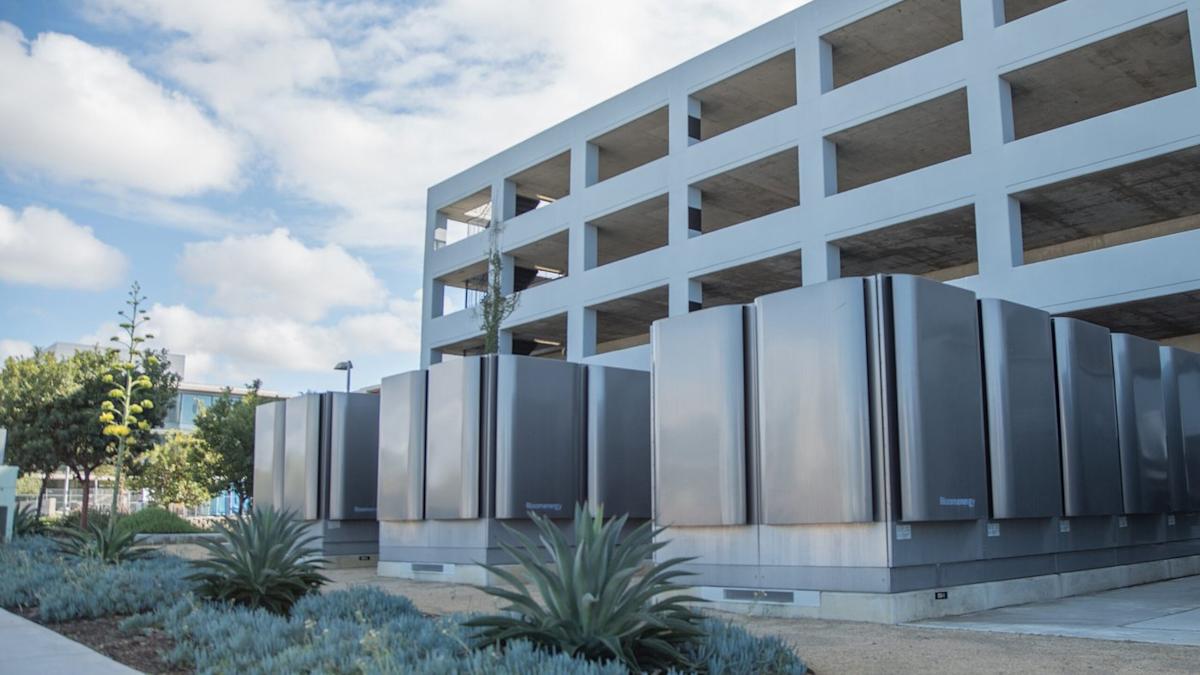
Bloom Energy (NYSE: BE) is a clean energy company that makes solid-oxide fuel cell systems. In a nutshell, these servers convert fuel, like natural gas, into electricity through a chemical reaction, producing no smog or smoke and far less carbon dioxide than fossil fuels.
Bloom’s valuation has exploded over the year — gaining over 1,200% since this time last May — largely due to demand from new data centers for clean, reliable power. To put it into numbers: Its first-quarter revenue grew 130% since last year, bolstered by 208% product revenue growth, and it now expects to bring in $3.4 billion to $3.8 billion for 2026 — a record for the company if it can pull it off.
Will AI create the world’s first trillionaire? Our team just released a report on the one little-known company, called an “Indispensable Monopoly” providing the critical technology Nvidia and Intel both need. Continue »
As one might expect, the rally has pushed this growth stock into a red-hot valuation. At today’s price of roughly $240, Bloom Energy trades at a $72 billion market capitalization, with a forward price-to-earnings ratio in the triple digits and a price-to-book ratio of about 80.
If you bought Bloom before 2026, holding this stock for the long term is a no-brainer. But if you didn’t, is it worth buying Bloom at this price?
The quadruple-digit gains might not repeat, but Bloom’s business is thriving
The kind of explosive 12-month growth that Bloom has undergone is pretty rare for an energy stock. It’s very unlikely Bloom will experience the same growth trajectory over the next year — even doubling in value would lift its market cap to about $144 billion, making it one of the most valuable energy companies on the market today. If we extend our time horizon, however, Bloom is poised for massive growth over the next five years.

The reason is simply this: Bloom is one of the few companies that has a ready-made solution for what could become a severe power shortage in the U.S. Indeed, as The New York Times reported in February, tens of millions of North Americans face the risk of blackouts due to an aging electric grid that simply can’t keep up with growing demands from the boom in AI data centers.
A recent Reuters report on Amazon data centers in Europe highlights what’s at stake: A data center can be built in two years there, but it can take up to seven years to connect it to a power grid. In the U.S., the timeline can be shorter (about three to seven years, depending on location), yet it doesn’t erase the potential for a delay between completing a data center and turning on the lights.