

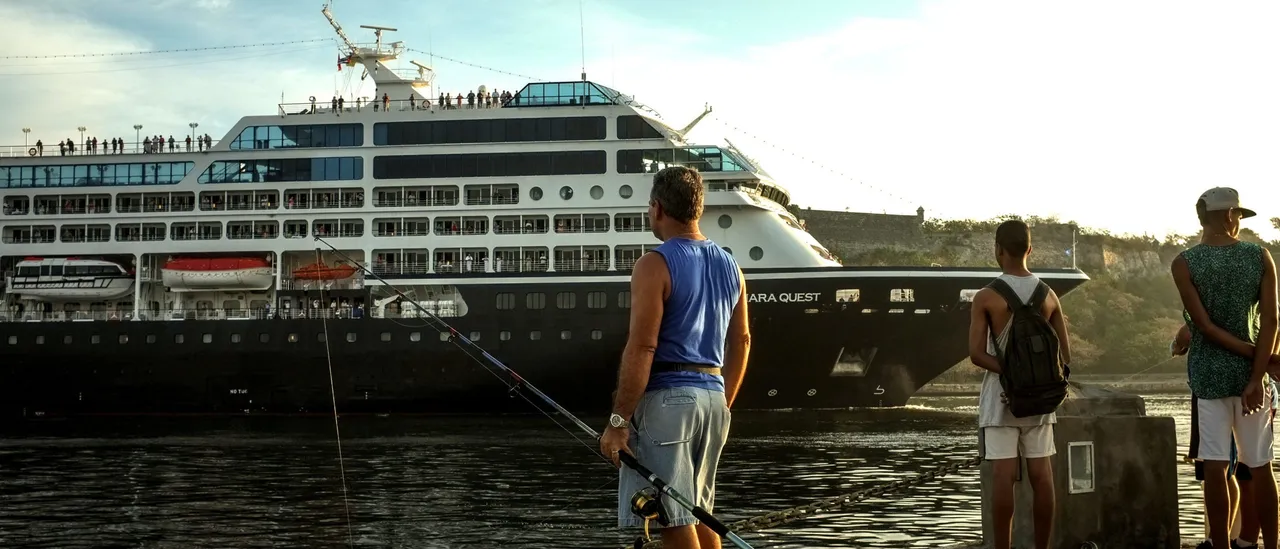
The Supreme Court of the United States ruled 8-1 on Thursday in favor of the Havana Docks Corporation, leaving major cruise lines responsible for paying millions in fines for using ports in Cuba without compensating the American owners of the docks.
The court ruling came after a district court ruled that Royal Caribbean Cruises, Norwegian Cruise Line Holdings, Carnival Corporation and MSC Cruises each owed $110 million for using the docks to transport more than a million paid passengers to Cuba, a decision that was later reversed by the Court of Appeals for the Eleventh Circuit before reaching SCOTUS in February, according to the opinion slip.
The syllabus of the court’s decision said the U.S.-based Havana Docks Corporation had legally acquired the Port of Havana in 1928 from the Cuban government before it was seized by Fidel Castro’s communist government in 1959, decades before the previously agreed-upon contract between Cuba and the corporation was set to expire in 2004. (RELATED: Marco Rubio Says Trump Is Offering A ‘New Relationship’ With Cuba In Anti-Castro Message)
Due to the breach of contract, Havana Docks was able to get a claim against the communist regime certified by the Foreign Claims Settlement Commission that it had suffered about $9 million in losses, with 6% annual interest, the syllabus said.
HAVANA, CUBA – DECEMBER 2: Fidel Castro and his brother Raúl attend a May Day parade December 2, 1996 in Havana, Cuba. (Photo by Sven Creutzmann/Mambo Photography/Getty Images)
However, in 1996, the Cuban Liberty and Democratic Solidarity Act was approved by Congress, creating a private right of action for U.S. citizens who hold “property which was confiscated by the Cuban Government on or after January 1, 1959,” and imposing liability on parties that knowingly and intentionally traffic in such property.
The act also gives the president authority to temporarily suspend the provision, which was done by all presidents until President Donald Trump’s first term, with the suspension expiring in 2019.
By that point, relations with Cuba had relaxed under the Obama administration, allowing many cruise lines to use the ports that had been seized from Havana Docks while only issuing payments to the Cuban government and not to the corporation.
Havana Docks alleged that this was a violation of the Cuban Liberty and Democratic Solidarity Act and demanded compensation. A majority of the Supreme Court agreed, with Justice Clarence Thomas writing the court’s opinion.

WASHINGTON, DC – JUNE 20: An exterior view of the Supreme Court on June 20, 2024 in Washington, DC. (Photo by Andrew Harnik/Getty Images)
Thomas said the court disagreed with the Eleventh Circuit, which found that the cruise lines’ actions would not have interfered with Havana Docks’ property interest had there been no confiscation, seeing as the docks were only used after the end of the initially agreed-upon contract between the pre-communist Cuban government and Havana Docks.
Thomas instead argued that Havana Docks did not have to prove the cruise lines would not have interfered with a property interest in a “counterfactual scenario” because the property was, in reality, “tainted by a past confiscation liable to any United States national who owns a claim to that property.”
The sole dissenter, Justice Elena Kagan, said the court’s decision may seem “sensible at first blush,” but that the property did not belong to Havana Docks at the time of the docking and therefore belonged to the Cuban government.
“The docks belonged to the Cuban Government — not Havana Docks — all along,” Kagan said. “What Havana Docks owned was only a property interest, allowing it to use those docks for a specified time. And that time-limited interest expired in 2004 — more than a decade before the cruise lines ever used the docks.” (RELATED: New Second Amendment Appeal Request Lands On Supreme Court’s Doorstep)
Justice Sonia Sotomayor and Justice Brett Kavanaugh wrote a concurrence saying they agreed with the majority opinion, but also wanted to highlight that Havana Docks could potentially seek even more money than the $110 million from each cruise line that used those docks.