

Get your daily dose of health and medicine every weekday with STAT’s free newsletter Morning Rounds. Sign up here.
Good morning. You may have noticed a missing link in yesterday’s issue. You can read Sarah Todd’s great story on ultra-processed food research and policy here.
Ebola update: Case numbers, pushback
A potpourri of Ebola news: The Democratic Republic of the Congo is making its way through samples of hundreds of suspected Ebola cases, and as it does, the size of the outbreak has shrunk dramatically. As of Wednesday, the country reported 363 confirmed cases. In a WHO press conference, Director-General Tedros Adhanom Gheybreyesus said there were now 116 suspected cases, which, if confirmed, would bring the outbreak total to just under 500 — less than half the size it was thought to be late last week. But Craig Spencer, Ebola survivor and Brown University public health professor, told STAT he’s hearing from people on the ground that there could still be a lot of undetected cases.
The union representing CDC employees, the American Federation of Government Employees Local 2883, is publicly objecting to the Trump administration’s plan to force Americans who’ve been exposed to Ebola to quarantine in Kenya. But Gheybreyesus demurred when asked his thoughts about the U.S. plan, saying, “They can do whatever they think is right for them.” He also expressed appreciation for the U.S.’s “strong commitment” to the efforts to contain the outbreak. — Helen Branswell
Trump to strip job protections of top NIH officials
President Trump issued an executive order yesterday redefining the positions within the civil service sector, a change that would make it easier to terminate federal workers by classifying them as political appointees. It would affect many high-level officials who oversee the review and disbursements of grants at the National Institutes of Health.
Biomedical researchers and policy experts decried the change when it was proposed this spring. STAT’s Anil Oza has the latest details.
Scientists uncover a new hiding spot for HIV
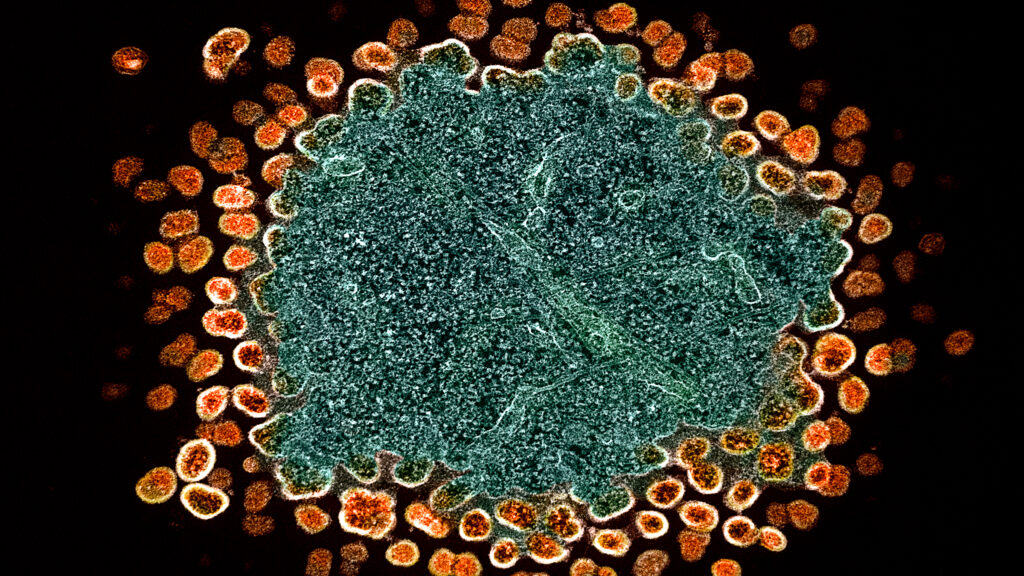
Scientists have long understood HIV to be an expert of evasion. The virus attacks the immune system by infiltrating white blood cells known as T cells, specifically ones that express a surface protein called CD4. Once inside, it copies its DNA into the cells’ genomes. Antiviral drugs can stop HIV from replicating, but if a patient ever stops taking them, those cells start pumping out HIV particles and the infection roars back.
A real cure hinges on ferreting out these latent reservoirs of HIV DNA and eliminating them. Researchers have hoped they could send CRISPR to those cells to cut out the HIV DNA lurking there or design immunotherapies to hunt them down.
Complicating those efforts, researchers in China have discovered HIV has another trick. It can change the identity of the cells it infects. In a paper published Wednesday in Science Translational Medicine, the team reported that HIV can drive gene expression changes in T cells, turning off their CD4 proteins and turning on a protein called CD8. The new finding challenges long-held biological wisdom that T cell identity is fixed and expands the types of cells that need to be targeted in order to completely flush HIV DNA out of a patient’s body. — Megan Molteni
There’s a lot we don’t know about male puberty
When girls experience early puberty, we know they’re at higher risk for endometriosis, type 2 diabetes, heart disease, breast cancer, eating disorders, and more, including all-cause mortality. Research on the timing of male puberty is much more preliminary, though early studies have found similar correlations to timing and harmful health impacts. But given the fact that men suffer poorer health outcomes across their lifespans, some clinicians believe that a better understanding of puberty could be transformative.
“Increased knowledge on factors regulating timing of male puberty may be the key to understanding long-term health in males,” said Anders Juul, a pediatric endocrinologist who advocates for more research. STAT contributor Ashleigh N. DeLuca wrote about this under-examined gap and what needs to happen next. Read more.
Senate hearing repeats talking points on gender care
A Senate health committee hearing yesterday highlighted persistent political debate around gender-affirming care for transgender youth. Questions and testimony largely lingered on well-trodden ground.
Senators and witnesses with opposing perspectives all claimed that the American Medical Association supported their position. Sen. Bill Cassidy, for example, cited a media statement from the AMA calling evidence for surgery on trans minors “insufficient.” Sen. Bernie Sanders asserted that the AMA supports affirming care. What’s the truth? The AMA has a policy supporting gender-affirming care, which it has not revoked. But the group, which wants to maintain a friendly relationship with the Trump administration, did release the statement Cassidy mentioned. The AMA later requested a correction from the New York Times in particular, and emphasized the importance of preserving access.
Kurt Miceli, a speaker representing the anti-gender-affirming-care and anti-DEI group Do No Harm, repeated a claim that most children who experience gender dysphoria will grow out of the feeling. But a recent literature review of research on desistance, most of which is decades old, found that this claim is “without merit,” as the studies are methodologically flawed and based on outdated assumptions.
Prominent detransitioner Chloe Cole spoke about her experience with what she calls coercive medical abuse. Cole advocated for bans on gender-affirming care and claimed “there is no such thing as a child being born in the wrong body.” Democratic senators opposite her expressed sympathy for her experience but argued that medical malpractice suits are the better way to address harm.
No transgender youth spoke at the hearing, but Sen. Tim Kaine spoke directly to them. “If you’re a trans kid watching this hearing,” he said, “there is some intentional effort to make you feel bad about yourself. But you got a lot of people who love you.”
Docs use AI scribes. Patients could, too.
More than a quarter of U.S. medical practices use ambient scribes, which are AI-based listening and note-taking tools. But now, a growing number of developers are pitching apps that will do similar work directly for the patients, offering extra help to remember what a doctor says and track multiple encounters across health systems.
As STAT’s Katie Palmer writes, every patient these days has a recording device in their pocket. But these tools — which are already garnering major investments — also raise concerns about data privacy when health information is stored outside a provider’s domain. Read more from Katie on what these apps are offering and the cultural and legal questions that come with them.