

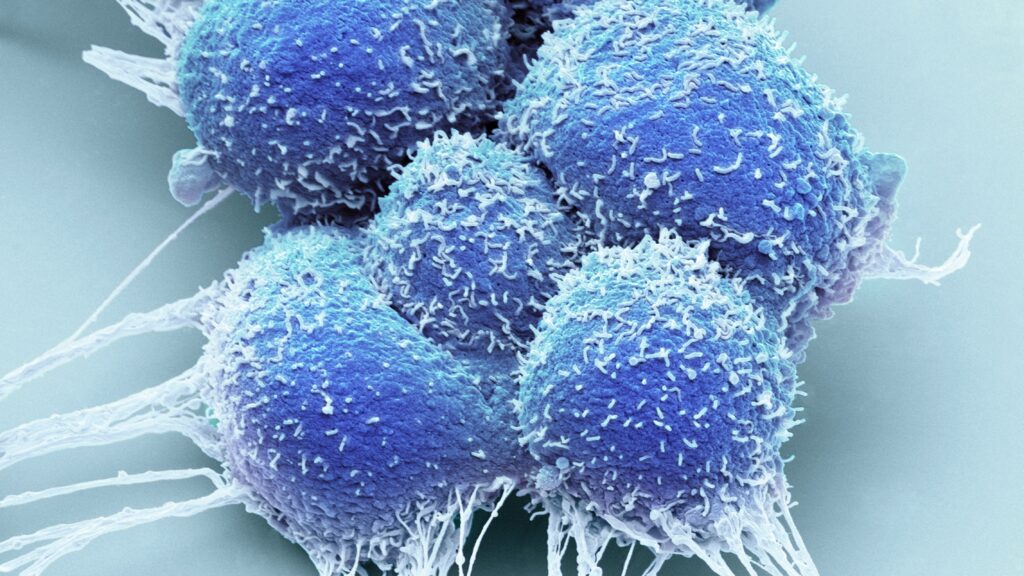
For most localized solid tumors, it’s common for surgeons to try to preserve as much of the diseased organ as possible, removing only the cancer along with some healthy tissue surrounding it to avoid further spread. But for prostate cancer, treatment is usually all or nothing. Except for patients with low-grade disease that’s unlikely to turn deadly, the whole gland gets removed, or irradiated. The long-term consequences can be serious, notably incontinence and erectile dysfunction.
A less aggressive alternative intended to reduce the risk of these undesirable side effects has been gaining attention among patients and physicians for several years, though treatment guidelines consider it experimental. Called focal therapy, it targets lesions visible on MRI scans, using a variety of technologies to heat and destroy, freeze, burn, or even electrocute cancer cells. Focal treatments are often delivered in single-treatment sessions and can sometimes be done in a doctor’s office, adding to their appeal.
While these technologies have been around since the late 1990s, interest has grown as MRIs have become more sophisticated and better able to accurately identify a cancerous lesion, and these therapies were a hot topic at the recent annual meeting of urologists.
Urologic oncologists who treat prostate cancer are split over its benefits compared to traditional surgery or radiation. Providers who perform focal therapy were bolstered last month by a U.K. study showing that 10 years after treatment, only 0.1% of patients treated with focal therapy had died of prostate cancer, comparable to survival outcomes for standard treatments. And they had higher satisfaction rates and lower levels of side effects compared with other treatments. But many other specialists would like to see more long-term data, and clearer evidence for its benefits from randomized trials directly comparing focal therapies to standard of care treatment.
The American Urological Association says focal therapy is still experimental: While it acknowledges it as an option for intermediate-risk cancer, it warns that it should be performed only as part of studies and in prospective registries. Yet a paper published last week found that half the patients receiving focal therapy had either higher-risk or lower-risk cancers, including patients that guidelines say require no immediate treatment and should be followed with active surveillance.
Still, many leading cancer centers, as well as independent doctors, offer focal therapy, and patients who choose it express great satisfaction with it, even as commercial insurance often doesn’t cover it.
“I’m super happy with it. I have zero side effects,” said Chris Brosseau, a 48-year-old from Denver who has a family history of aggressive prostate cancer. He chose focal therapy rather than active surveillance, radiation, or surgery, even as it cost him about $17,000 out of pocket; many commercial insurers don’t cover focal therapy, though Medicare does. “I realize it can come back because I didn’t treat my whole prostate,” he said. “If it comes back on the other side, I wouldn’t hesitate to do this again.”
What is focal therapy?
Focal therapy comprises a series of Food and Drug Administration-authorized technologies that destroy cancer tissue. The most popular methods — cryotherapy, laser ablation, and high intensity focused ultrasound (HIFU) — have decades of history, and the choice of which to use typically depends on the shape and location of the lesion. (Localized radiation doesn’t fall under the category of focal therapy.)
Cryotherapy, which delivers extreme cold through a probe, is the oldest, and it accounted for nearly 80% of focal therapy procedures in 2010; by 2023, its popularity had waned to 20%. Laser ablation, which aims a focused beam at cells, accounted for about 45% of procedures. HIFU, which uses high-frequency sound waves to kill cells with heat, is the fastest growing, accounting for 35% in 2023.
Under the AUA guidelines, about 10% to 20% of prostate cancer cases would qualify for focal therapy as part of studies: patients who have intermediate-risk cancer (be it favorable, meaning it’s unlikely to spread, or unfavorable), and could choose active surveillance as well as surgery or radiation therapy. Uptake remains low: Recent data show that in the U.S., 1.3% of prostate cancer patients received focal therapy.
Enthusiastic providers see upsides compared to other available treatments. Surgery, called a prostatectomy, has a longer recovery time, and causes initial incontinence in nearly all patients; though most regain bladder control within a year, 5% to 10% can experience permanent incontinence. Erectile dysfunction is common, too, and more than half of the men who undergo surgery lose sexual function in the medium to long term. Radiation therapy has fewer long-term side effects, but it still can lead to temporary incontinence and erectile dysfunction. Plus, it typically requires several weeks of daily treatment.
Focal therapy, on the other hand, is typically a one-and-done treatment that can take anywhere from 40 minutes to a couple of hours. Some patients have a catheter for some time following the treatment (one that STAT spoke with said he had one for close to a month), but the side effect profile is typically limited, unless the mass is in a sensitive spot for erectile dysfunction.
“There are times you go and treat someone with focal therapy and you know with a pretty darn high likelihood there’s going to be close to zero chance of side effects,” said Scott Eggener, a professor of urology at the University of California, Los Angeles. But “there’s other areas of the prostate near the nerves or the sphincter where … there’s a real risk of side effects that [patients] might encounter.”
Following the treatment, patients are monitored through blood testing, MRIs, and sometimes biopsies. If cancer appears in other areas of the prostate, further focal therapy sessions can be appropriate, though if it recurs in the area that was treated, radiation or surgery is usually recommended.
“In my experience of doing this, and I’ve been doing it for 10 years, greater than 95% of the patients when they’re eligible for focal choose focal therapy,” said Abhinav Sidana, a urologic oncologist and the director of focal therapy at the University of Chicago School of Medicine. Though he performs both prostatectomies as well, he sees why: “An average-skilled surgeon doing focal therapy will end up having better functional outcomes than sometimes even the most skilled prostatectomist,” he said.
An experimental treatment
Ask about focal therapy to providers who don’t offer it, and you get a very different picture. Skeptics raise concerns about the rigor of data on its ability to effectively treat cancer, the rate of side effects, and the outcomes of each of the technologies.
“Focal therapy hasn’t been evaluated carefully and robustly,” said Tyler Seibert, an associate professor at the University of California, San Diego. In order to do so, it needs to be compared directly with established treatments, he said, to assess whether it has better outcomes, or the same outcomes with a more favorable side-effect profile. “The only way to know that is to do a head-to-head randomized trial, and that’s just what we’re missing with focal therapy,” he said.
He concedes that there are significant challenges in conducting such trials, including because “patients who are excited about focal therapy are sometimes reluctant to be randomized,” though he finds this to be problematic in itself. “That means that we’ve messaged poorly, because why are the patients so sure that they want this thing that those of us looking at the data objectively are saying, ‘Well, we don’t know’?” Seibert said.
Eggener, who has done research on focal therapy in the past, thinks more data are necessary, not least because it’s hard to definitively say what method works best. “As far as which technology, there’s no direct comparisons, it’s all conjecture on which might be better than the other.”
This is a sticking point even for some focal therapy providers, who bemoan the fact that most registries group together all focal therapy methods as one treatment, making it hard to discern which has better outcomes or fewer side effects. “It’s focal therapy no matter how you did it,” said Samuel Peretsman, a urological oncologist and the chief medical officer of HIFU device-maker Sonablate. “We’re just going to call it all focal therapy so we can scale up the amount of data to analyze it. But the reality is all those tools do have varying outcomes, varying side effects, varying cure rates.”
To address this, Sonablate has launched its own registry, though not all focal therapy providers agree it’s necessary to hone down on each tool. “We should club all of them together,” said Sidana, because it’s ultimately the concept of ablation that needs to be evaluated.
Providers offering focal therapy scoff at the idea that more data are necessary before a treatment that they have administered for many years gets the official stamp of approval. “When they say that focal therapy is experimental, I say: ‘What about it is experimental?’” said Mark Emberton, a professor of Interventional oncology at University College London who has been treating patients with focal therapy for at least two decades.
“We have plenty of data for focal therapy,” said Sidana, adding that a lot of procedures in medicine are “based upon clinical judgment of physicians.” Other technologies, such as robotic surgery or brachytherapy (in which radioactive seeds are inserted in the prostate), had been studied much less when they were introduced, he said, and the only true unknown with focal therapy is whether it shortens the potential lifespan of patients compared to prostatectomies or radiation therapy.
Data from the U.K. show that for patients followed up to 10 years, survival after “focal therapy is not inferior to radical surgery, however, it is much better in terms of quality of life,” Sidana said. “When patients look at that data, they’re like, ‘OK, 10 years is enough. I don’t care if 20-year outcomes of prostatectomy are going to be better than focal therapy.’”
The chance that focal therapy may not deliver the same life expectancy is real, but that can’t be the only metric by which to evaluate it, he said. “A lot of these patients want to live in the present, they don’t want to lose their sexual function today so that they live one year longer at the age of 90 versus being sexually active for the next 10 years.”
This was Brosseau’s thinking. “I’m relatively young and I get that there might be another spot that comes up someday, and I’m OK with that,” he said. “The insurance would cover removal or radiation, and neither of those really appealed to me.”
The danger of overtreatment
Another point that skeptics of focal therapy highlight is that it could lead to more unnecessary treatment. “The problem with focal therapy is many of the people who do well with focal therapy would have done well with observation,” said Otis Brawley, professor of oncology and epidemiology at Johns Hopkins University.
Indeed, new data published in JAMA this month showed that focal therapy is used most frequently in situations that do not meet the urology association’s recommendations: 51% of treatments were done on cancers of higher or lower risk than intermediate. Patients with low-risk cancer had a 4% chance of being treated with focal therapy rather than being monitored with active surveillance, as the guidelines recommend.
“Some [patients] get surveillance fatigue. Some get surveillance anxiety. And you’re still being tested, you’re getting MRIs, you’re getting biopsies — there’s a burden of surveillance,” Peretsman said. Until somewhat recently, intervention came with risks and side effects, but focal therapy changes the equation, he said. “[Patients] look at that balance a little differently, like ‘I can take care of this anxiety and be out the door in 40 minutes, have sex in three days and never use a pad’ — they are reassessing the risk-benefit [profile],” he said.
While some physicians are comfortable treating patients to ease their stress, others see it as overtreatment, and a missed opportunity to establish the value of active surveillance. “There are a host of patients who, emotionally and mentally, just can’t handle the fact they have cancer and we’re going to watch it,” Brawley said. “Now, for those people, I’m not … going to recommend that we give them a half-proven treatment so that we can allay their fears, and in my mind, focal therapy is a not fully proven treatment. It may be a good treatment, but it’s not fully proven.”
STAT’s coverage of health challenges facing men and boys is supported by Rise Together, a donor advised fund sponsored and administered by National Philanthropic Trust and established by Richard Reeves, founding president of the American Institute for Boys and Men; and by the Boston Foundation. Our financial supporters are not involved in any decisions about our journalism.