

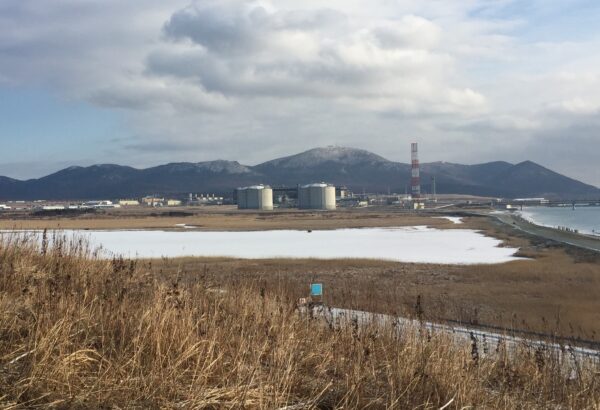
Japan is one of the most energy-insecure countries in the world relative to the size of its population and economy. Liquified natural gas (LNG) accounts for 30 percent of its electricity generation, and Japan imports more than 97 percent of its total LNG. Japan’s supplies of crude oil and coal are almost 100 percent imported.
Successive energy shocks produced by Russia’s invasion of Ukraine and the closure of the Strait of Hormuz have raised household costs and depressed growth. The International Energy Agency forecast that Japanese electricity prices for the second half of 2026 will surge 40 percent year-on-year, compared to only 25 percent for the European Union.
This context helps to explain why Japan has continued to resist pressure from the United States to phase out its procurement of Russian LNG from the Sakhalin-II project in the Russian Far East. The Takaichi government justifies its stance by asserting that Russian LNG plays an “extremely important role” in Japan’s energy security.
Domestic gas industry leaders warn that efforts to substitute the 5 million tonnes of LNG Japan buys from Russia annually – amounting to 9 percent of its total LNG imports – would risk supply shortages and increased costs for consumers. Cargoes from Sakhalin Island reach Japan in only two or three days, resulting in significantly lower transport costs compared to the seven days for Australian LNG and 20-40 days from the U.S. Gulf Coast. As Japanese households strain under a continuing cost-of-living crunch, there is little political appetite in Tokyo for measures that could add to that pain.
This June, the U.S. Treasury extended Japan’s sanctions waiver for purchases of Russian LNG until the end of 2026, marking the fifth extension since restrictions were introduced in 2022. However, Tokyo’s lobbying for exemptions is unlikely to succeed indefinitely. Officials must plan for the possibility that sooner or later, patience in Washington will run out.
Does the Takaichi administration have the stomach to make a major break with Russia? A litmus test came in August with Russian President Vladimir Putin’s unprecedented visit to one of the four disputed Kuril Islands controlled by Russia. Japan regards the islands as “illegally occupied” and the dispute remains the main reason both sides have never signed a formal treaty ending World War II. Given the importance of the issue to Japanese foreign policy, Putin’s incendiary move demanded a forceful reply.
Instead, Takaichi’s response – calling the visit “absolutely unacceptable” and saying it had “hurt the public sentiment of the Japanese people” – was panned domestically as weak and inadequate. The government announced it was weighing further economic sanctions and other countermeasures but has yet to follow through. According to government insiders, concerns over energy loomed large and any cessation of imports from Sakhalin-II was ruled out.
Putin’s provocative visit underlined the failure of former Prime Minister Abe Shinzo’s strategy of stepping up engagement with Russia in the hopes of resolving the territorial dispute. This effort, too, has links to Japan’s energy policy. As part of the economic sweeteners Tokyo extended to Moscow, its companies invested in Russian energy and infrastructure, taking equity stakes in Sakhalin-I and -II. These efforts not only failed to pay off but that the needle has now swung sharply in the opposite direction. Rather than inducing positive behavior from Moscow, those Japanese investments created dependencies that constrain Tokyo’s actions.
Japan is not ready to wholly abandon this Abe-era strategy. However, its continuing energy purchases and the sending of business delegations to Moscow risk negatively impacting its reputational standing among G7 allies. Critics can point to the example of the EU, which was far more reliant on Russian energy than Japan but has moved to institute a complete ban on Russian gas imports by September 2027.
Looking ahead, Japan is faced with difficult choices as the bulk of its Sakhalin-II LNG contracts are due to expire between 2028 and 2033. Domestic buyers’ preference for long-term contracts to avoid spot market volatility limits options and requires extensive planning and supplier diplomacy in advance. Simultaneously, Japan will be competing with strong demand from other Asian customers, as the Iran-U.S. war has cut off most of Qatari LNG from the global market and put its liquefaction facilities out of commission for years.
Japan may look to buy more from Australia or the United States. However, Australian gas production is reaching a plateau, while U.S. LNG cargoes loaded in the Gulf of Mexico must either transit the Panama Canal, which is increasingly susceptible to drought-induced closures and fee rises, or take the long, expensive route around the Cape of Good Hope.
Canada is emerging as a major LNG exporter, with significant capacity coming online between 2028–2032. Loaded on the Pacific Coast, Canadian LNG is cost-competitive and reaches Japan in a chokepoint-free journey taking only 10 days.
However, none of these alternative supplies will be as cheap and accessible as buying LNG from Russia. The broader risk is that abandoning energy cooperation will torpedo bilateral relations and close the door to a diplomatic resolution of the disputed Kuril Islands. The costs of further antagonizing Russia, at a time when Japan faces simultaneous security challenges emanating from both China and North Korea, may simply be too high.