

“Don’t Google,” the pediatric geneticist warned us on a sunny October afternoon in 2020.
She had just diagnosed our 11-year-old daughter, Maya, with Nicolaides-Baraitser syndrome, a genetic condition so rare there were only 61 cases in the scientific literature.
As questions flooded our minds, she examined Maya’s finger and toe joints to see if they matched the other children with the syndrome name we struggled to pronounce.
The doctor asked my husband, Matt, and I how many seizures she had had (none), and cautioned that due to the cardiac issues seen in others with the syndrome, we should be extra careful Maya did not catch Covid.
The pandemic had us all locked into one kind of dystopia. Suddenly, we entered another.
Only 61 cases of Nicolaides-Baraitser syndrome — also known as NCBRS — was simultaneously too tiny and too huge to fathom. The doctor told us some kids didn’t talk, some didn’t walk. Our daughter did both these things. Maya did share other NCBRS traits: sparse hair, herniated umbilical cord, weak muscle tone, stunted growth, and this complicated catch-all term: “intellectual disability.”
Maya’s doctor was kind, yet the news she delivered was difficult. There was no cure for NCBRS, no medicines, and nothing was known about disease progression. The symptom that alarmed me most in that moment was the progressive skin wrinkling in some NCBRS teens. Did that mean Maya would age way too early and die young, I asked? Too few adults with the syndrome to know, we were told.
After the doctor left the room, the genetic counselor held my hand and reminded me, “don’t Google.” Terrified that a search would reveal a wretched future for our child, I vowed that Maya would be our guide. We would simply live in the present with her.
It took exactly five years to disobey. Last October, when I could no longer ignore the fact that Maya would soon turn 18 and officially become an adult, I finally Googled Nicolaides Baraitser. I was still terrified as to what it might reveal, especially since Maya had not yet hit puberty but was suddenly experiencing episodes of acute dysregulation.
I found some scientific papers and a website full of children’s faces, most grinning broadly, who all looked startlingly similar to Maya. NCBRS is nicknamed the “beautiful smile syndrome” as the patients tend to be cheery and smile endlessly. Maya looked more like some of these children than she did us, especially when she smiled.
I learned what an exclusive club my daughter was in. Even now, there are only 337 known cases of NCBRS around the world.
Eerily, as I began typing the words “Nicolaides Baraitser” into the search bar it automatically offered “Nicolaides Baraitser life expectancy.” I didn’t click it. I knew there were devastated NCBRS families whose child had died. I couldn’t contemplate this scenario.
Instead, I asked (almost) 17-year-old Maya if I could turn my journalism towards an investigation of her syndrome and her future. In typical Maya fashion, her consent was a bit confusing, but very spirited: “Well I wouldn’t do it Mama, but you can!” So I asked her if she would be my partner, and she enthusiastically agreed. Maybe Maya could ask questions alongside me — “shy” is not in her behavioral profile.
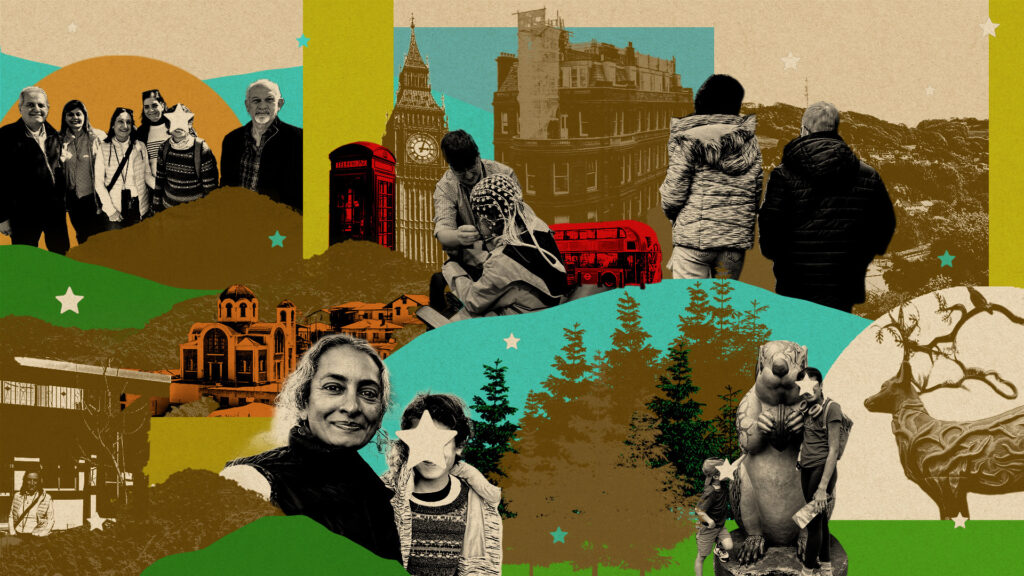
And so began a mother-daughter quest that so far has taken us to a Cypriot mountain village, the British countryside, and playgrounds and arboretums across the United States to find Maya’s 337-strong genetic family and learn more about the syndrome.
First stop: Cyprus
Maya and I started in the Troodos Mountains in Cyprus with a local doctor and the villagers who protected her decades ago.
Paola Nicolaides was 12 years old in 1974, when her family fled their home in the capital, Nicosia, escaping the invading Turkish army. Hiding in the mountains, her world flipped upside down.
“We just didn’t know if we were going to be alive the next day,” Nicolaides said, showing Maya and me her friend’s tiny cinderblock house that had been her mountain refuge.
That experience taught Nicolaides about the fragility of normalcy. She survived and wanted to give back.
A decade later she was training to be a doctor at a British university and after graduation accepted an offer to work for a year at London’s Great Ormond Street Children’s Hospital under renowned medical geneticist Michael Baraitser. Together they made rounds, examining patients with unusual symptoms.
It was 1992 and practicing medicine involved old-school doctoring. “It was all about seeing and recognizing and discussing these rare cases,” Nicolaides said.
“There was a blue book called Smith’s Malformations,” Nicolaides said. “There were photographs of children with syndromes and you would have to kind of say, OK, does it look a bit like this?”
During one of her daily rounds, Nicolaides met an intriguing young patient, June. “She looked very unique in terms of her sparse hair,” she recalled. “She had some intellectual difficulties and epilepsy.”
Her investigation of the medical literature yielded nothing. Baraitser encouraged Nicolaides to write about June.
Their 1993 co-authored paper became Nicolaides’ first scientific publication. Then she went on with her medical career, eventually moving back to Cyprus to work as one of the island’s few pediatric neurologists.
It was exciting to meet the person whose name has been said many times in our household. Maya joyfully called her “the person who founded my syndrome.” For her part, Nicolaides doesn’t want the credit. “I just described this one patient’s details and characteristics.” She is adamant that “other people did all the hard work.”
So Maya and I went off to find them.
Second stop: England
On a quiet intersection in central London is Great Ormond Street Children’s Hospital. It continued to welcome unusual children long after Nicolaides first saw June.
“As always, it started with a patient,” said Raoul Hennekam, a Dutch professor of pediatrics and clinical genetics who was practicing between a hospital in Amsterdam and Great Ormond Street, where he led genetics teams starting in 2004.
Hennekam remembers that patient to be 8 or 9, with distinctive features. “When I saw him I thought, ‘I’ve seen you before.’” It was 2005, more than a decade after June had passed through the same ward.
Two weeks later, back in Amsterdam, he was stunned to see another patient with strong similarities. “No, it can’t be,” Hennekam thought, “seeing two in such a short period of time.”
“It was only when I was starting to look into literature, I found a description from Nicolaides and Baraitser and I also found a few other papers,” he said. “I realized that must be it.”
And so began the incremental process of finding these June-like patients in the global haystack of humanity.
Hennekam, like Nicolaides, gives credit to Baraitser. “He can recognize unusual patients so well,” Hennekam said. “The fact that he thought, ‘this patient is unusual. This is different than anything else, and it has a meaning,’” speaks to Baraitser’s years working with rare genetic conditions. I wanted to interview Baraitser but had no luck in finding him.
Working with Hennekam was a young Portuguese medical resident, Sérgio Sousa. The two decided that a follow-up with the original patient, June, might yield more clues into this syndrome. “ It was very important to see the evolution of that first patient,” Sousa said.
Sousa traveled to the family’s home on the Lincolnshire coast in 2007, where he examined a then 32-year-old June. He noted “a gradual decline of her motor and mental abilities” as well as sparser hair, coarser facial features, and more prominent joint anomalies, leading him to conclude “certain features of NCBRS can be progressive.”
Across the Channel, a French doctor, Gilles Morin, was also starting to see patients with symptoms like June’s. In 2003 Morin, as well as a Belgian team that included Ingrid Witters and Jean-Pierre Fryns, proposed a new syndrome, and suggested it should be named after the very first authors: Nicolaides and Baraitser.
As Hennekam and Sousa learned of more patients, publishing a groundbreaking study in 2009 on 18 new patients and the 5 known cases — based on physical features and symptoms — they wondered if there was genetic commonality. In 2010, working with a team from Belgium, they began a herculean task to find any shared gene variants.
What the team discovered was monumental.
“Of the 36 patients we had at that time, they were able to find a change in the same gene in 34 of them,” Hennekam said. His team had found alterations to the gene known as SMARCA2.
He and Sousa doggedly pursued more NCBRS answers. In 2014 they published the most thorough description yet of the impacts of this syndrome on the 61 diagnosed individuals around the world, which became a guide for doctors when a new patient popped up.
Because of their research, by 2016 routine genetic testing could detect SMARCA2 variants. That’s how Maya got her diagnosis, as did many of the world’s 337 cases.
Third stop: English countryside
Yet before this great genetic discovery, back in March 2006, this still unknown rare syndrome experienced another pivotal moment: A young British couple from picturesque Central Bedfordshire welcomed their first child, Callum.
Lee Reavey was 19 and thrilled to be a father. However, his infant son struggled. “ In the first week, he was failure to thrive,” Reavey said. “We were in and out of hospital for the first year.”
In July 2007, Callum was sent for a week of intensive testing at Great Ormond Street.
“And then we got a call,” Reavey said. Callum was the 7th person in the world to be diagnosed with Nicolaides-Baraitser syndrome. “ It was a bit of a shock to the system,” he added. “Not even the doctors knew nothing … at one point we were told he’d never walk, never talk.”
Callum’s first years involved frequent projectile vomiting and intolerances to many foods. He missed most of his developmental milestones. “We were just scared,” said Callum’s mother, Michelle. Both sets of grandparents became the family’s social safety net.
The Reaveys spent Callum’s early years performing their own intensive physical and speech therapies with him, determined their son would roll over, crawl, and learn to say his name.
One day a local paper had a story about another child with NCBRS. Finding this family and a few others in Europe, the Reaveys coaxed them to come together in 2010. It would be the first ever NCBRS gathering: six families, plus Hennekam and Sousa.
“That was when I got the sense of this is what we need,” Reavey said. “We need this community, everybody needs this community.”
By then, despite the predictions, Callum was walking and talking.
As they fought to get Callum services and accommodations, the Reaveys simultaneously began building a global community organization to gather the other NCBRS families, Reavey explained while seated at his favorite local pub. Maya and Callum, both smiling happily at each other, perused the menu. Callum whispered his choices and Maya repeated them loudly to the server. “ He wanted pizza and a brownie and I spoke for him,” Maya later told me. “He’s shy.” His dad said, “You watch, later on [he] will not stop talking.”
Reavey explained that NCBRS families deserved information because “nothing’s known about it.” Among various scientific projects, his NCBRS Worldwide Foundation is partnering with the University of Dusseldorf to map the variance in the severity of symptoms seen across NCBRS patients. In mid-October, Reavey will be leading his 12th NCBRS global conference in Utrecht, Holland, with over 20 families from 13 countries attending.
All these efforts aim to answer confounding questions. Why can Callum and Maya talk, but others cannot? Why do some have seizures and others not? Will they all have seizures at some point? There are numerous puzzles that science has yet to solve. A tiny cadre of passionate researchers and doctors are doing the work to find answers, but the path is slow and littered with obstacles.
Back to London
A block from Great Ormond Street sits the University College of London’s Institute of Neurology. In a brightly lit room seven floors up, a sleek incubator hummed. Lab technician Aleksej Kubelka carefully opened the large machine and slid out a tray. This biobank houses cells from different patients. Looking through his microscope, Kubelka counted cells as part of a study of neuromuscular diseases.
One floor below, institute researcher Stephanie Efthymiou wants exactly the same kind of biobank for NCBRS patients.
But funding has proven difficult.
Efthymiou has also been trying to get a mouse-model study underway where the NCBRS genetic mutations are replicated in mice and studied. In related disorders, mice have been treated with gene therapies and an improvement in symptoms noted. However, Efthymiou has been unable to get GBP100,000 (about $130,000) to perform the initial mouse-model study.
“It is especially difficult to get funding for rare disorders,” Efthymiou said. “I think funders … don’t see the benefit of helping such a small community.”
Then, last summer, finally some good news.
The NCBRS Worldwide Foundation announced a major new research initiative with the Jackson Laboratory for Rare Disease in Maine, touting the potential to “completely rewrite the future of Nicolaides-Baraitser Syndrome.” JAX, a leader in mouse-model studies, agreed to engineer a specialized mouse model carrying the SMARCA2 genetic mutations responsible for NCBRS.
Efthymiou was thrilled.
Scientists at JAX will use the modified SMARCA2 mice to create a baseline, mapping impacts on the brain, growth, and behavior. It’s a prerequisite before testing potential gene therapies, small-molecule drugs, or targeted treatments can take place.
The only catch is that the NCBRS Worldwide Foundation must crowdsource a portion of the cost, about $35,000. In July word went out, and NCBRS loved ones, from grannies to besties, stepped up. The funds were raised in a few months. Crowdsourcing the follow-up work — developing gene therapies or treatments — might prove beyond the scope of this tiny community.
Fourth stop: Baltimore
On a crisp spring day, Jacqueline Harris dashed into an exam room at Baltimore’s Kennedy Krieger Institute. Upon seeing a new NCBRS patient sitting on the examination bench, she cracked a huge grin, immediately returned by the patient. Harris playfully launched into her physical examination, making it a game about pizza. Her patient, Maya, who is afraid of doctors and hospitals, squealed with excitement.
Harris, a pediatric neurologist at Kennedy Krieger, is an expert on epigenetic machinery disorders, of which NCBRS is one. Harris has said in lectures that epigenetic disorders, which affect which genes are activated, have an upside of being potentially “more treatable than other genetic conditions.”
But to get to treatments and clinical trials, a thorough understanding of the cognitive and behavioral impacts of NCBRS is required. Harris is in the early stages of doing just this, a study she describes as “deep phenotyping.”
“So more than just saying people with NCBRS have intellectual disability, what kinds of things does everybody with NCBRS struggle with and what things do they struggle less with and what tests are best to use to measure that,” she said.
Intellectual disability, a symptom present in most NCBRS patients, is a broad term, Harris notes. For example, it is unknown if an expressive language disorder is common to all NCBRS patients. It took my family years of fighting to have Maya evaluated by a speech pathologist, who found a significant expressive language disorder, allowing her to receive targeted therapy. If this was part of the known disease characteristics, Maya might have received help much earlier.
Potential epigenetic therapies — targeted drugs or interventions that improve symptoms by turning affected genes on or off — might also be helpful in other areas. “A child who is awake all night and is disruptive, if they could sleep through the night, those kinds of things make huge differences to the quality of life of families, and also matters towards making an individual as independent and functional as possible,” Harris said.
For NCBRS children who are nonverbal, Harris says epigenetic therapies might not move them into the normal range of communication, but progress is possible. “Even if we moved [the needle] just a bit so that child could communicate, so that child could string words together on a device to communicate what they need or what they feel,” she offered as a “theoretical” improvement based on treatments in similar disorders.
Yet funding this work has also proven difficult. “Currently, the climate is very hostile towards science in general, and definitely rare disease is taking a large brunt of that pain,” Harris said.
The trickle down of the Trump cuts to research funding was swift. “I had a handful of NIH grants withdrawn that were slated for funding because there were international collaborations,” Harris said.
Harris has had to rely on private philanthropy for her NCBRS study. A New Jersey family, whose 7-year-old son has NCBRS, made a significant donation allowing her to start work. Yet crowdsourced fundraising for this study has lagged. Harris also needs more NCBRS patients to be part of the study for it to be clinically significant. Even though the private donation covers travel costs for families to see her in Baltimore, she is still a few families shy of her goal.
For her part, Maya has been begging to go back and see Harris, by far her favorite medical experience. While I talked NCBRS with Harris the day of our Kennedy Krieger visit, Maya took a doll’s temperature, stethoscope slung around her neck, in a play room packed with toys. Suddenly she had a new life goal. “Mama, I want to be a doctor,” she declared as she skipped back to the hotel. She “interviewed” Rebecca Xu, Harris’ friendly research assistant, she told me, who encouraged her ambition. Why a doctor? “I want to give people shots,” my needle-averse daughter declared.
Next stop: the future
Reavey knows it’s unlikely any genetic therapies will come soon for Callum, now 20. But he plows ahead with his advocacy, hopeful of changing the course for those just being born with sparse hair, seizures, and intellectual disability.
This summer Callum graduated from an adaptive college program for people with developmental disabilities. Now what? “That’s a hard one at the moment,” Reavey said. “I would love for him to have a sense of purpose.”
When Callum turned 18 and many of his childhood services stopped, the Reaveys were told it was time to institutionalize their son. “I won’t put him in a residential [home] with the local authority,” Reavey said. Instead they build their future with Callum at the center and his favorite “Back to the Future” sheets always on his bed.
It’s what Ruth, the mother of June — the very first NCBRS patient described in that medical paper by Nicolaides and Baraitser — did. Ruth cared for June until she died in 2010 at age 34. Ruth wrote on the NCBRS Worldwide Foundation story page that June’s death was not NCBRS related, describing her daughter as a “huge inspiration.”
While we couldn’t locate Ruth when we were in England meeting the Reaveys, Maya did get to meet another NCBRS friend, the endearing Harley, 21. In a vibrant park, Harley laughed nonstop as he bounded freely with an energy and strength neither Maya nor Callum could match. His parents, Lisa and Paul, alternated chasing Harley to make sure he didn’t end up in the pond.
On our return to the States, as work took me across the country, Maya came along and we met more NCBRS families.
She walked the Baltimore waterfront with 19-year-old Jack, discovering their shared fear of balloons and love of paint-by-sticker books. She giddily jumped on our hotel bed with 3-year-old Mae, who never stopped smiling. In Charlottesville, Va., Maya and 4-year-old Jack clambered up and down a YMCA play structure, not needing words to have a blast. In Chicago, Maya was confused, lost in an arboretum maze, until 6-year-old Anthony joyfully led her out. And when Maggie, 11, visited California, the girls pursued two shared passions: swimming despite the frigid temperatures, and wandering the aisles of a big-box store hungry to spend their quarters.
I asked Maya how she felt about meeting other NCBRS children. She gave me one word: “special.” Then she declared that they must all “shake in scary bathrooms” like she does.
Maya has found her people.
For my part, I discovered a caring group of parents with whom I made an instant and deep bond. Lee Reavey is right. We do need this community, as we raise our Beautiful Smile Syndrome children in a world not set up for them.
Reporting for this story was supported by the Pulitzer Center.