

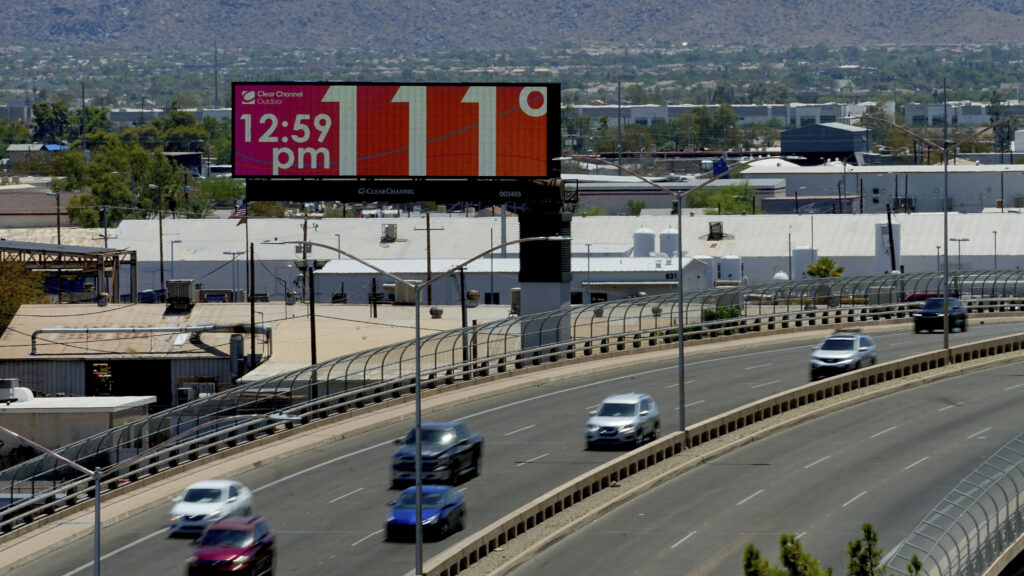
During the first heat wave of 2025, 55-year-old Shauna Thomas was found dead in her suburban St. Louis apartment after spending at least three days without air conditioning or water. Police said she had “several medical issues” that may have contributed.
Clinicians, community leaders, and public health workers often advise people with chronic diseases such as diabetes to use air conditioning or go to an air-conditioned building. But that advice presumes that cooling is actually affordable and available.
Thomas’ tragic death underscores why cooling should be added to a key government program that provides heat.
Extreme heat is not simply uncomfortable. It’s a medical stress test. Early-season heat waves are already hitting Western parts of the country. The Eastern U.S. is likely to follow later this month. Forty million Americans live with diabetes, and heat can quickly drive dehydration, disrupt daily routines, and destabilize blood sugar, sometimes requiring urgent care. Reliable cooling can prevent many of these emergencies. When cooling equipment fails, energy costs make it unaffordable, or it’s simply not available, people lose the ability to manage chronic conditions.
Energy insecurity concentrates among lower‑income households, renters, and Black and Latino communities. In cities, housing quality, tree cover, and infrastructure shape neighborhood heat exposure, leaving some communities consistently hotter than others. These patterns reflect decades of disinvestment and housing policy decisions, not personal choices.
In regions where central air conditioning has been historically less common, rising temperatures now collide with homes never designed for extreme heat. Outside urban centers, older housing stock and thinner safety nets create similar risks. This is an environmental-justice challenge rooted in policy, infrastructure, and who bears the cost of inaction.
For people with diabetes, heat degrades temperature‑sensitive medications and makes blood sugar harder to control. A recent National Academy of Medicine meeting emphasized that effective heat policy must address inequities in exposure, resources, and infrastructure. As heat waves grow longer and more intense, heat-related deaths will continue to rise, especially among people managing chronic disease without reliable access to cooling. Energy policy has become health policy.
The Low Income Home Energy Assistance Program (LIHEAP) is a federal program designed to help households maintain safe indoor temperatures when energy costs spike. But the fiscal 2026 budget cycle exposed how fragile that support remains. The administration proposed eliminating LIHEAP entirely just as extreme heat becomes a predictable public health threat. Congress ultimately rejected that approach, enacting full‑year appropriations in February and funding LIHEAP at $4.045 billion. Still, a program that faces extinction in one budget cycle cannot provide the stability that people rely on.
Federal uncertainty forced states into triage. Pennsylvania delayed opening LIHEAP after its federal allocation didn’t arrive on time, citing an inability to backfill costs. Connecticut took the opposite approach, creating a state reserve to keep essential services (including LIHEAP) running. These divergent responses highlight a system that depends more on state capacity than national consistency.
That patchwork comes with consequences. In Pennsylvania, winter funding shortfalls led the state to cancel its LIHEAP cooling program in 2025. Because federal rules permit but do not require cooling assistance, whether help exists depends largely on where someone lives.
Florida offers a different model, treating extreme heat as a core LIHEAP issue, operating defined heating and cooling seasons and providing year‑round crisis assistance. Recently, Florida has served more households through cooling than heating support.
Congress must take four steps to remedy this problem.
First, make LIHEAP reliable by ensuring predictable funding and treating cooling as essential. When federal guidance treats cooling as optional, protection remains uneven and falls hardest on households facing the highest energy burdens and the least control over housing conditions.
Second, modernize LIHEAP for the climate we now face. The Heating and Cooling Relief Act would update the program to address both heating and cooling needs, but it has yet to move beyond committee. Federal policy must reflect current exposure patterns rather than outdated assumptions.
Third, protect LIHEAP’s ability to function. The bipartisan LIHEAP Staffing Support Act would establish minimum staffing levels at HHS, ensuring that the program can operate when households need it most. It too remains stalled.
Finally, establish baseline federal protections against utility shutoffs for medically vulnerable people. Shutoffs disproportionately affect households already facing high energy burdens and fewer housing protections. Most states, albeit inconsistently, restrict winter shutoffs for heating. Far fewer have summer shutoff restrictions.
Congress must build on this state-level precedent by ensuring that medically vulnerable households are protected from electricity shutoffs during extreme heat, regardless of where they live.
Prevention matters because the next crisis is predictable. Congress can continue to treat cooling as optional and then act surprised when heat drives avoidable emergencies. Or it can align energy policy with medical reality. Advice is not a plan. Access is.
Charles E. Leonard, Pharm.D., M.P.H., is a senior fellow of the Leonard Davis Institute of Health Economics at the University of Pennsylvania and an epidemiologist focused on medication safety among people living with chronic health conditions. Anthony Nicome, M.H.S., M.P.H., is an adviser of the National Academy of Medicine Climate Communities Network, former program manager of the White House Environmental Justice Advisory Council, and a public health strategist focused on the impacts of climate change on health.