

At 6 a.m. on Tuesday at Newark International Airport, dozens of business travelers are cutting the 15-minute-long TSA line using Clear. High-tech cameras scan their faces and crunch their biometrics—jawbone contour, eye-socket depth, lip curvature—to verify their identity. Within seconds they’re through security—well, the ID-checking bit, at least—and dumping briefcases and carry-ons in bins to be scanned for bombs and forbidden liquids.
For $209 a year—chump change for many frequent fliers—Clear makes navigating the airport slightly faster and a little less unpleasant. Those relegated to less-speedy lines might grouse, but Clear’s 8.2 million members love it. The 16-year-old company, which struggled to make money in its earliest days, is now a profitable terminal mainstay, raking in $900 million in revenue and $168 million in net income in 2025.
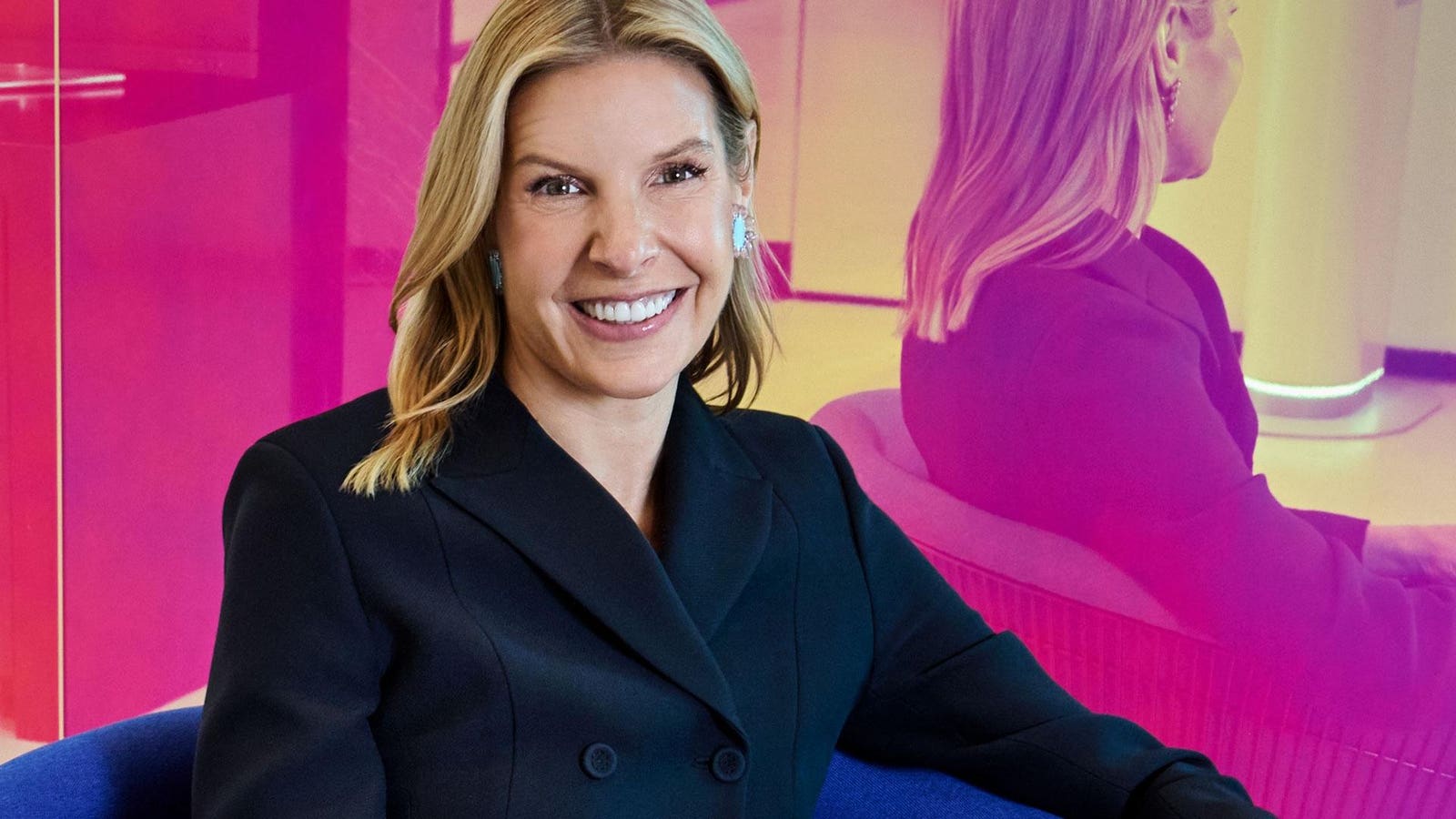
“I think people continually underestimate how hard traveling is and how much people want help in travel,” says Clear CEO Caryn Seidman Becker, 53, who bought the company’s assets and 190,000 people’s fingerprints for $6 million when it went bankrupt during the financial crisis. Today you can use it at 60 American airports. The New York City–based firm, which went public in 2021, now has a market cap of $7.6 billion, translating into a more than 1,000% return for Seidman Becker and her initial investors. Her 14.5% stake is worth $1.1 billion, making her one of America’s 44 self-made female billionaires.
But Clear has limits: There are only so many people in the U.S. who travel enough to justify paying for it. Its active airport memberships grew just 6% in 2025. And the business is predicated on government incompetence. The TSA could get privatized or, heaven forbid, better at moving people through the line. “A totally efficient government-run process at the checkpoint would hurt Clear’s business,” says Justin Oberman, CEO of aviation startup Airspace Data, who helped set up the TSA post-9/11. “Fundamentally all you’re getting is the ability to cut the line.”
Clear is also dependent on American Express: Holders of the Platinum card, who pay $900 a year for a suite of perks, get it free. Analysts estimate just under half of all Clear members come through AmEx. Clear signed a multiyear extension with AmEx this spring, but Seidman Becker needs new ways to grow. One line of business is enrolling international travelers from countries with no U.S. visa requirements; another is offering concierges to help older people and families with small kids with their bags. She also makes money signing people up for TSA PreCheck. Decent ideas all, but not enough to catapult the business into hockey-stick growth. So Seidman Becker is now gunning to help any industry that needs people to verify that they indeed are who they say they are, a surprisingly large niche that San Francisco–based consultancy Grand View Research estimates will generate $34 billion in revenue by 2030.
You can use Clear to get into Yankee Stadium and eight other sports venues across the country. You can confirm your identity with Clear when you use Docusign, LinkedIn or Uber. You can use it to rent a jackhammer or a pickup truck from Home Depot, where Seidman Becker is on the board. “We want to go from 12 times a year to 12 times a day,” she says.
The biggest new target? Healthcare. Major hospital groups in Georgia, New York, New Jersey and Louisiana have all signed on to integrate Clear. A popular application: scanning people’s faces to confirm their identities when they check into the doctor’s office, undergo surgery or receive chemotherapy. New Jersey’s Hackensack Meridian, which owns 18 hospitals, also uses Clear to speed up password recovery for patients’ MyChart accounts.
Wellstar, one of Georgia’s largest health systems that serves 1.3 million people, has built Clear’s identity verification tech into check-in kiosks for 264 departments and doctor’s offices. That’s saved thousands of hours of work for front desk staff and helped eliminate hundreds of duplicate health records, each of which takes hours to untangle. Now Wellstar is rolling out Clear to every hospital it owns. Clear is cognizant that privacy concerns in a health care setting are more important than they might be at the airport or Home Depot: It doesn’t sell any data to anyone, ever.
In December Clear landed a $6 million contract with Medicare so that new enrollees can sign into their accounts using a selfie, no password needed. “If instead you can use your face and it knows it’s you, it’s a lot simpler,” says Amy Gleason, special advisor for the Centers for Medicare and Medicaid Services (CMS). It’s a vital relationship for Clear: Medicare pays a fifth of the country’s medical bills. Hackensack Meridian CEO Bob Garrett says Medicare’s sign-off could “open the door to this tech becoming part and parcel of how we deliver care across the country.”
Seidman Becker has been talking up Clear as a digital identity company for more than a decade. At a January town hall in Clear’s Manhattan office, she pulls up one of her earliest slide decks from 2010 to prove that even then she saw Clear as more than an airport company (“I’m a digital hoarder,” she explains). Few listened until recently. “A lot of initiatives beyond travel haven’t worked in the past,” says Wyatt Swanson, an analyst at D.A. Davidson. “In my view, even if the CMS contract isn’t a big contributor to revenue in 2026, it should act as a proof point.”
The disturbing growth of identity fraud—supercharged by AI—coupled with a remote workforce is creating opportunities beyond health care for Clear. Businesses increasingly need to make sure that the people they hire aren’t out to scam them, and that the people logging into their work systems are actually employees. T-Mobile uses Clear to confirm the identities of its 75,000 workers. “You’ve got to hang around the hoop for a long time, and in this case, we were right,” Seidman Becker says.
It’s early days for Clear’s non-airport business. The financial figures are so small the company doesn’t break them out on its balance sheet. But it’s growing fast: In 2025, 41 million people were enrolled across both airports and enterprises, up 31% year over year, with enterprise bookings up fivefold. The market likes the story, especially that AmEx isn’t bailing on Clear: After years of hovering around half of its 2021 IPO day close of $40.43, Clear’s stock has popped 68% so far in 2026, compared to the Nasdaq’s 13%.
Born in Maryland to two government workers, Seidman Becker studied political science at the University of Michigan, then landed her first job in risk arbitrage. In 2002, when she was 29 and pregnant, she pulled together $60 million to start a hedge fund called Arience Capital. By 2007, she’d built Arience’s assets under management to $1.5 billion (with about 12% annualized net returns). But then the financial crisis hit. Down 18% and nervous about where the market was headed, Seidman Becker liquidated most of the fund and returned her investors’ money.
Meanwhile, Clear, started by Court TV founder Steven Brill in the aftermath of 9/11, was collapsing under a mountain of debt. Brill had been pushed out by his investors. Convinced of its potential, Seidman Becker decided to buy it. But a group of former employees wanted it too. Holed up in a law firm’s Midtown Manhattan office, Seidman Becker realized mid-negotiations that her opponents didn’t have the funds. “I hear them in the hallway on the phone trying to raise the money,” she says. “They were dialing for dollars.” She put in a best and final offer—$6 million, cash—and won. “We went home that night and it was like having a new baby. You have no idea what you’re doing,” she says.
After Clear’s relaunch in Orlando and Denver in 2010, it took six years to sign the next 16 airports. They caught a break in 2016, when Delta began offering Clear for free to frequent fliers and bought a 5% stake in the company. American Express signed on as a partner in 2019, and growth exploded until the pandemic slowed its roll. Seidman Becker launched a vaccine confirmation feature in Clear’s app until travel trickled back.
In 2022, Clear allowed a passenger through security who was using a false identity (Seidman Becker blames human error). There was an investigation, and in the end the TSA issued stricter rules that caused Clear’s lines to lengthen, a headache for the company until the rules were slowly rolled back. The challenges went beyond business. Around the same time, Seidman Becker’s husband, Marc Becker, the co-head of impact investing at Apollo, died of pancreatic cancer at age 51.
As Seidman Becker attempts big moves outside travel, she’s up against major players like LexisNexis Risk Solutions (parent company RELX’s 2025 revenue: $13 billion) and Experian (2025 fiscal year revenue: $7.5 billion), which currently dominate the health identity verification business. Perhaps most worrying for Clear: Apple and Google have also have identity initiatives—and longstanding relationships in health care.
Clear has a big moat at the airport. But not outside it. Seidman Becker succeeded on Wall Street. She’s clearly capable of saving and growing a niche business when it’s insulated from direct competition. Now let’s see how she does going toe-to-toe with the toughest dogs in tech.