

A budding takeover battle for the company behind Jack Daniel’s risks allowing the iconic, best-selling American whiskey to fall into foreign ownership.
Jack Daniel’s is one of the most popular American whiskeys ever made and is also the world’s second-best-selling whiskey brand. The Jack Daniel Distillery, established by Jack Daniel in the 1830s and now listed on the National Register of Historic Places, was the first registered distillery in the U.S.
Paris-based French liquor conglomerate, Pernod Ricard, wants to take over Brown-Forman, a Louisville, Kentucky-based American company founded in 1870 that bought the Jack Daniel distillery in 1956. Brown-Forman’s brands include the popular Woodford Reserve and Old Forester Bourbon brands, while Pernod Ricard’s brands include Absolut Vodka, Jameson Irish Whiskey and Malibu Rum, among others.
Pernod Ricard’s potential takeover could trigger an investigation from the U.S. Treasury Department’s Committee on Foreign Investment in the United States (CFIUS). CFIUS is tasked with investigating foreign investments in U.S. businesses, identifying and mitigating national security risks and potentially recommending presidential action to block certain deals.
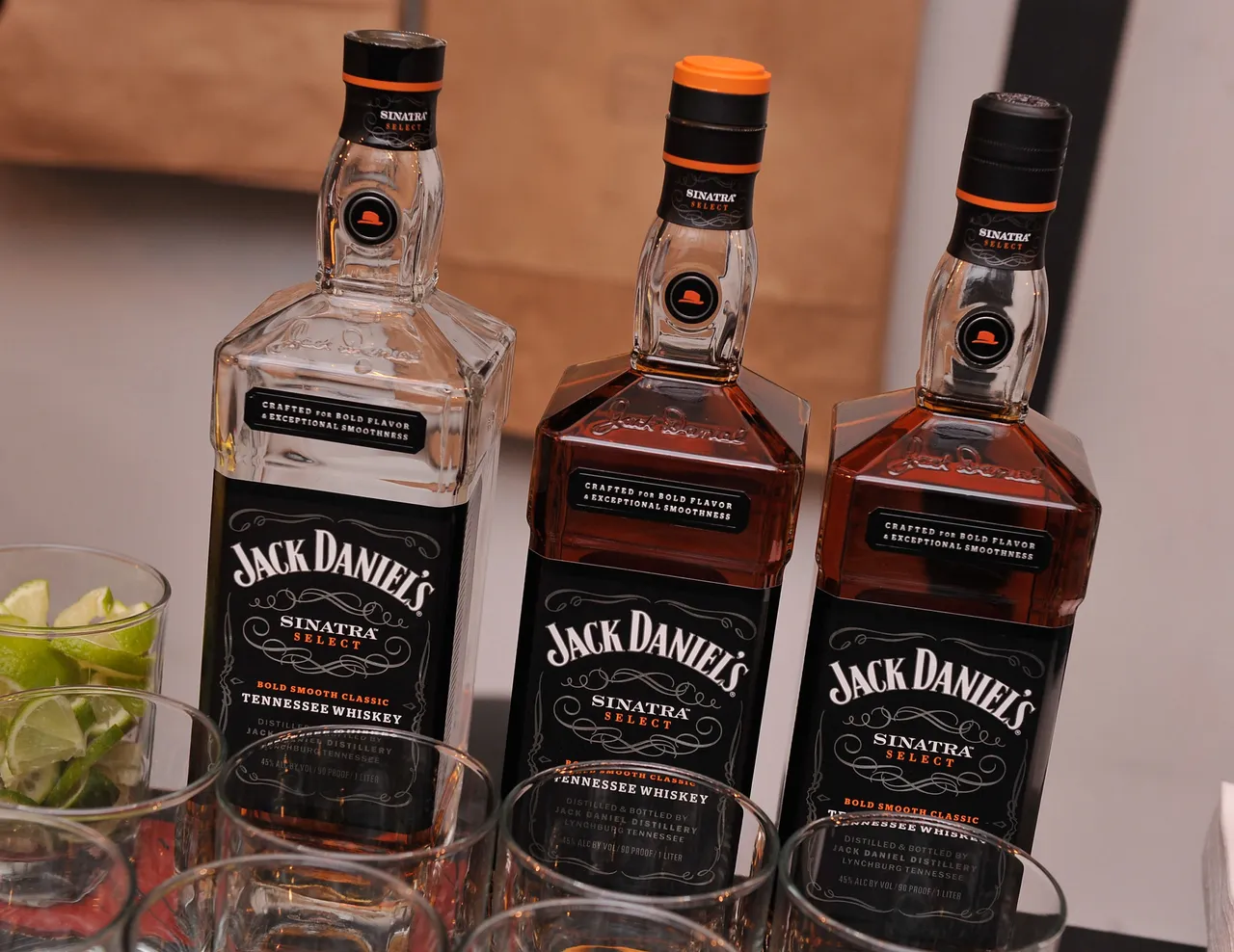
NEW YORK, NY – FEBRUARY 20: A general view of atmosphere at a party hosted by Jack Daniels and New York Magazine celebrating Jack Daniels’ Sinatra Select at By Robert James Boutique on February 20, 2014 in New York City. (Photo by Stephen Lovekin/Getty Images for New York Magazine)
Pernod Ricard’s portfolio includes Havana Club, a rum brand originally founded by the Arechabala family in 1878. Pernod has operated the Havana Club in a 50-50 joint venture with the Cuban government’s Corporación Cuba Ron since 1993, and sells the brand in 125 countries outside the U.S., thanks to America’s trade embargo with Cuba.
After the 1959 communist revolution, the Cuban government nationalized Havana Club, forcing the family to flee the country for Florida. Three decades later, the family sold the rum trademark and recipe to Bacardi, whose American headquarters is now based in Coral Gables, Florida. Pernod eventually sued Barcardi for false advertising, and the two companies have since been entangled in a legal battle.
An American Arechabala family descendant said in 2018 that she felt “cheated” and “betrayed” by Pernod and the Cuban government producing rum using the family brand name.
“It’s not authentic. I remember saying, as a child, they just erased my great-great-grandfather’s name off the bottle. It’s forgery,” she told NBC News.
In addition to its ties to the Cuban government, Pernod Ricard released its first Chinese whiskey, which is produced at the company’s $150 million distillery in Emeishan, China, in 2013.

DAYTONA BEACH, FL – FEBRUARY 12: Dave Blaney, driver of the #07 Jack Daniels Chevrolet, in action during practice for the NASCAR Nextel Cup Daytona 500 on February 12, 2005 at the Daytona International Speedway in Daytona, Florida. (Photo by Jamie Squire/Getty Images)
Brown-Forman is also being pursued by the family-owned American company Sazerac, which is based in Louisville, Kentucky. Sazerac produces its own liquors, as well as the Buffalo Trace brand, which runs the oldest continuously operating distillery in the U.S. Sazerac has offered to buy Brown-Forman for $15 billion, The Wall Street Journal reported earlier in April.
If Pernod Ricard’s acquisition is successful, the CFIUS could launch an investigation and potentially recommend that President Donald Trump block the deal.
Trump previously signed an executive order in January that blocked the HieFo Corp. from acquiring a New Jersey-based company’s semiconductor business due to concerns that Genzao Zhang, HieFo’s CEO and co-founder, had ties to the Chinese Communist Party. He also threatened to block Japanese company Nippon Steel’s takeover of U.S. Steel before agreeing to a deal in June 2025 that gave the U.S. government a “golden share” for veto power on crucial decisions. The deal also forced Nippon to keep U.S. Steel’s headquarters in Pittsburgh and to maintain domestic steel production.
The Daily Caller has contacted Pernod and the Treasury Department.