

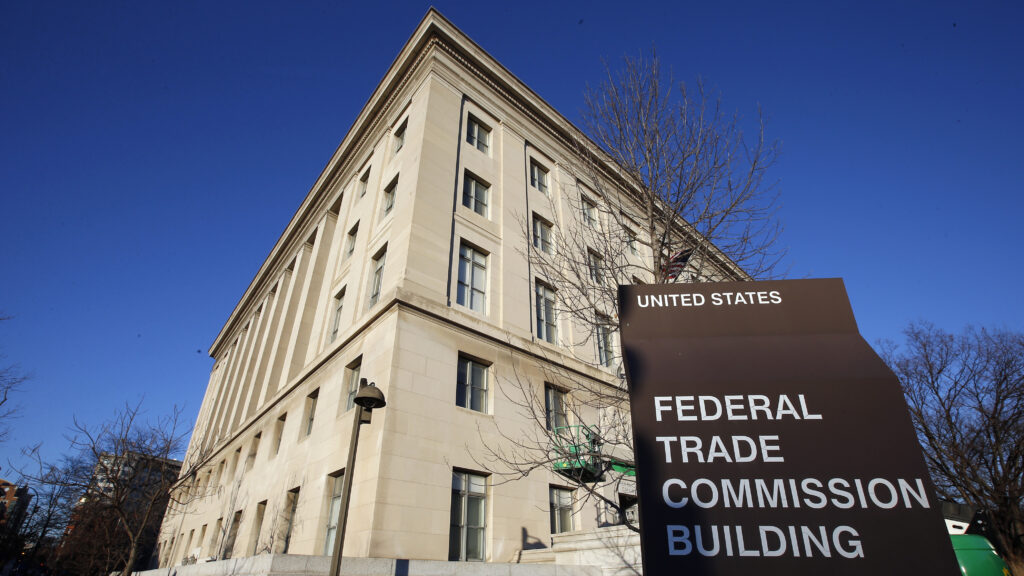
The Federal Trade Commission and four state attorneys general have sued the main professional organization for gender-affirming care clinicians, alleging it made false claims to sell medical services to kids.
The lawsuit against the World Professional Association for Transgender Health (WPATH), filed Wednesday in a federal court in Texas, is part of the Trump administration’s broader effort to end gender-affirming care for minors.
The FTC and attorneys general in Alaska, Iowa, Nebraska, and Texas allege WPATH misled children and parents about the benefits and risks of surgeries and drugs and “deceived many consumers into believing that its treatment guidelines are based on strong evidence derived from scientific methods,” the lawsuit states.
In a statement, WPATH rejected the allegations.
“The U.S. Federal Trade Commission is not a medical provider and has no place interfering with the process of individualized medical decision-making,” the group said in the statement. “The FTC also does not have any jurisdiction over WPATH and its noncommercial speech. The state claims have similar factual and legal flaws.”
The lawsuit was filed in the Northern District of Texas, a court with a conservative reputation where the Trump administration has recently centralized its legal efforts around gender-affirming care. At least one hospital, NYU Langone, has received a grand jury subpoena from the same district.
The allegations reflect the positions that administration officials laid out nearly a year ago at an FTC workshop focused on policing gender-affirming care. The lawsuit claims that clinicians regularly make statements to parents such as: “Would you rather have a dead son than a live daughter?” Then-FTC Commissioner Melissa Holyoak proposed these sort of statements could constitute fraud or deception. Supporters of gender-affirming care say these claims amount to pedantry, as research shows gender-affirming care is associated with improvements in mental health.
Last year, the Department of Justice and the FTC sent subpoenas to clinics and drugmakers that provide gender-affirming services and products. WPATH received a subpoena, but sued to prevent the probe and last month won on First Amendment grounds. D.C. District Court Judge James Boasberg found “extensive evidence of animus and wafer-thin justifications lacking evidentiary support” behind the FTC’s probe, mirroring the rulings of several other federal judges across the country who have largely blocked federal investigations into the provision of gender-affirming care.
“We expect the same result when we oppose this latest attack on WPATH and its mission to promote evidence-informed care and guidance for doctors and their patients,” the WPATH statement said.
The new lawsuit cites two controversial evidence reviews to support its claim that WPATH misled parents and children about the safety and effectiveness of gender-affirming care like puberty blockers, hormones, and surgery: the Cass review, commissioned by England’s health agency, and the Trump administration’s own review on gender dysphoria, which was a direct result of an executive order that aimed to end the provision of this care to minors. That same executive order claimed that WPATH “lacks scientific integrity” and ordered agencies to rescind any policies that rely on the group’s guidance.