

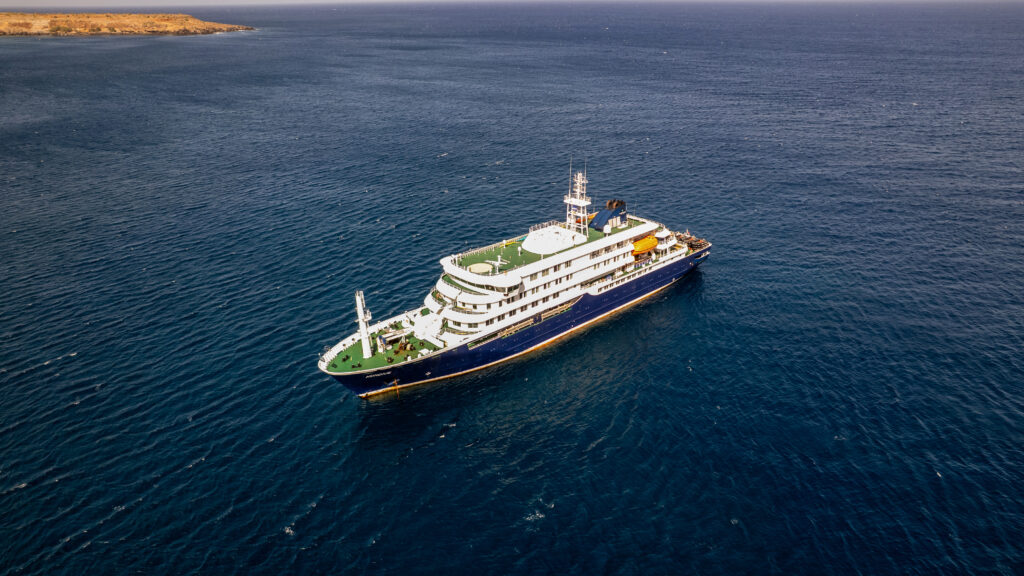
Three passengers are dead. Seven people are ill. The ship is anchored off Cape Verde, passengers cannot disembark, and the World Health Organization is coordinating the response.
The suspected cause is hantavirus, a rodent-borne pathogen with no cure and no approved vaccine. It is not a disease we associate with cruise ships. The MV Hondius departed Ushuaia, Argentina, on April 1, transited Antarctica and the island of St. Helena, and is now the site of what infectious disease experts are calling a genuinely unprecedented outbreak in this kind of setting. Notably, authorities in the Argentine province of Tierra del Fuego— from which the ship departed — have confirmed that no hantavirus cases have ever been recorded there. WHO notes, however, that the virus is endemic in other regions of Argentina and Chile.
Within hours of confirming the suspected diagnosis, WHO activated a coordinated international response under the International Health Regulations (IHR) — epidemiological investigation, laboratory testing, logistics support, clinical management and medical evacuation of symptomatic passengers, all moving in parallel. That is the system working as designed: a pathogen moving faster than borders, in an unexpected place, requiring rapid simultaneous action across multiple countries and jurisdictions before the full picture was even clear.
The United States, having withdrawn from WHO in January 2025, received none of that notification.
That isolation from global health governance will matter far more in six weeks, when the FIFA World Cup 2026 opens across 11 American cities.
The MV Hondius outbreak raises a question that investigators are now racing to answer: How did this happen?
Two possibilities are on the table. The first is onboard rodent contamination, with passengers inhaling aerosolized virus from infected excreta. The second is more consequential: infection with Andes virus, the one hantavirus strain with documented human-to-human transmission, endemic to the part of South America where this voyage began.
Every other known hantavirus does not spread between people. If Andes virus transmission is confirmed in a closed, high-density setting, it changes how we think about outbreak risk in contained environments. Hantavirus cardiopulmonary syndrome carries a case fatality rate up to 50%. The incubation period runs two to three weeks, sometimes up to six. By the time someone is symptomatic, they may be far from where they were exposed.
According to the WHO, there are 147 passengers and crew on the ship representing 23 nationalities. As of Monday, seven (two confirmed and five suspected) cases, including three deaths, have been reported. The first patient, a 70-year-old male, developed fever, headache, and gastrointestinal symptoms on April 6 en route from Ushuaia to St. Helena and died on April 11— with no microbiological testing performed. His 69-year-old spouse deteriorated on a flight to Johannesburg and died in the emergency department on April 26. She was subsequently confirmed by PCR as hantavirus-positive. A third patient, a British national, developed fever, shortness of breath, and pneumonia on April 24, and was evacuated to South Africa three days later. He has laboratory confirmed infection and remains in intensive care. A fourth patient, an adult female, died on Saturday after a rapid progression from fever and malaise that began just four days earlier. Three additional individuals with fever and gastrointestinal symptoms remain on board under evaluation. The epidemiology is still unfolding.
This is exactly the kind of signal that demands real-time information sharing across borders. It is what WHO was built to manage.
I want to be precise about what the United States lost by withdrawing from WHO, because it is often described in abstract terms.
WHO’s value during an outbreak is operational. The Global Outbreak Alert and Response Network (GOARN), the IHR notification cascade, the rapid risk assessments, the pathogen sequencing data shared in real time across member state networks: These are not diplomatic niceties. They are tools that compress the timeline between detecting a signal and responding to it. Hours matter in outbreak medicine. The gap between a WHO notification landing in a health ministry inbox and that same information appearing in a public press release can be the difference between containment and spread.
The United States helped build that system. We funded it, shaped its architecture, and relied on it for decades. We then walked away from it, and we are now working with publicly available information on the same timeline as anyone with an internet connection.
For most of the year, that gap is diffuse and hard to see. This summer it will not be.
The FIFA World Cup 2026 is one of the most complex mass gathering events ever staged on American soil. In December, the State Department said it expects 5 million-7 million international visitors will move through host cities over six weeks in the height of summer. Even if those numbers are an overestimate, huge numbers of people will arrive from more than 200 countries, carrying with them the full infectious disease geography of the world. Some will be incubating illnesses they do not yet know they have. Some will seek care in American emergency departments. Some will fly home before they are ever symptomatic.
Mass gatherings amplify. They concentrate people, accelerate transmission, and create the conditions under which a localized signal becomes an international event within a single incubation period. The clinicians and health departments working through this tournament will need to know which pathogens are circulating in the countries sending the largest delegations, which travelers are arriving from active outbreak zones, and what presentations in an emergency department in July should prompt concern rather than a routine discharge.
Those answers flow through WHO. We are no longer at the table where they are generated and shared.
The MV Hondius will be resolved. Viral sequencing will eventually tell us whether Andes virus moved between people in a confined space, and what that means for how we assess risk in settings like stadiums and transit hubs going forward. Public health will learn from this, as it always does.
But the lesson available right now, before a single World Cup match is played, is this: In infectious disease, information is the intervention. The earlier a signal is detected, characterized, and shared, the more options exist to respond. We built the infrastructure that makes that possible. Then we left the system that runs it.
This summer, across 11 American cities, we will find out what that decision costs.
Krutika Kuppalli is an infectious diseases physician in Dallas. Her work focuses on emerging infectious diseases, outbreak response, vaccine policy, and clinical care of complex infections. She previously worked for the World Health Organization.