

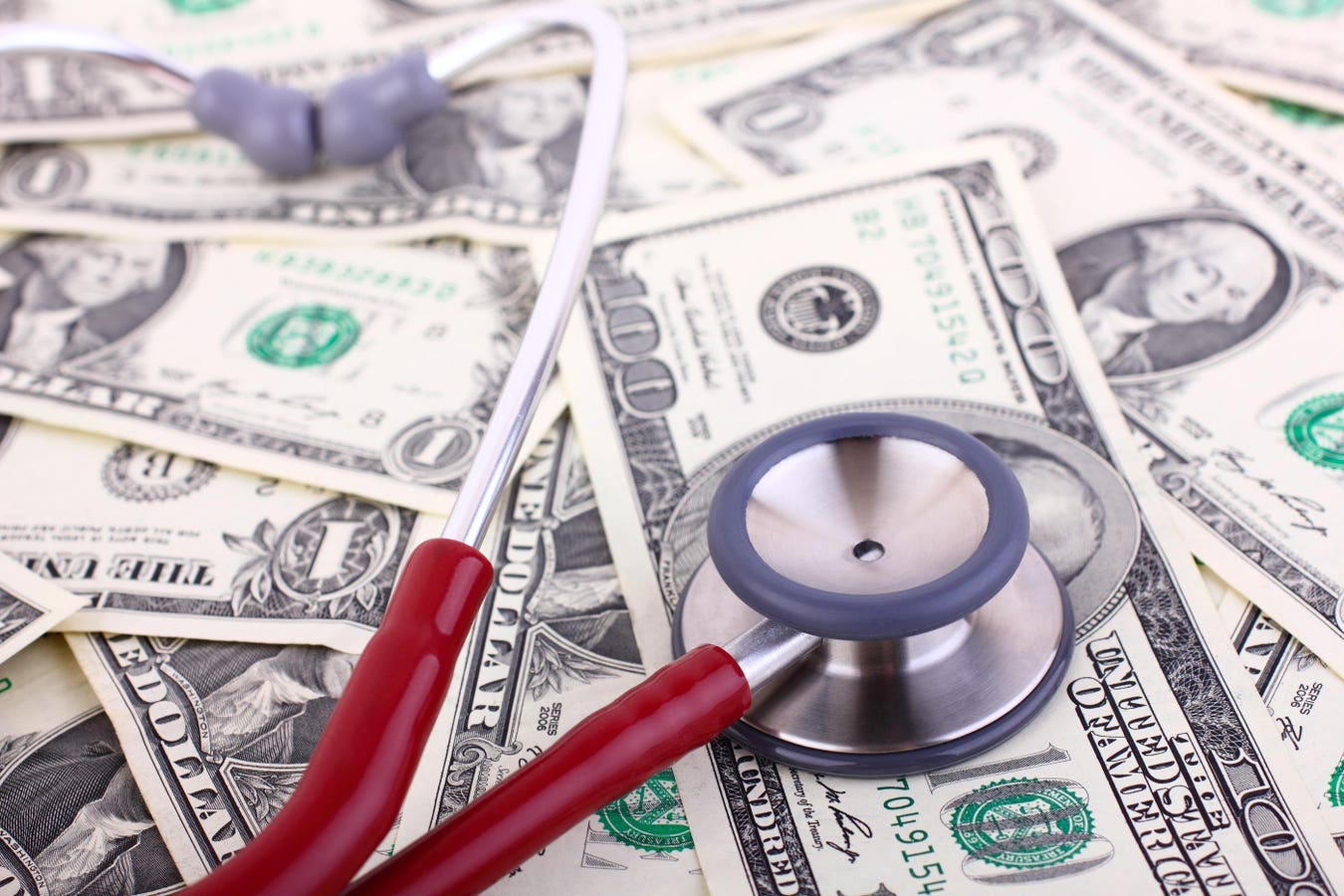
Healthcare spending projections are often inaccurate. This problem is amplified when (possibly wrong) estimates inform decisions related to coverage of drugs such as weight loss GLP-1s.
getty
Economics has been called the dismal science, a term coined by the Scottish historian Thomas Carlyle in 1849. One of the things he criticized economists for was their inability to predict well.
Well, the predictive capacity of economists hasn’t gotten all that much better in the past 175 years. At the same time, forecasts remain central to healthcare policy evaluation, as well as the scoring of legislation in terms of budgetary impact and implementation of regulatory changes.
Two federal government entities, the Centers for Medicare and Medicaid Services Office of the Actuary and Congressional Budget Office, make (sometimes) flawed predictions for many of the same reasons. Perhaps first and foremost there’s an understandably heavy reliance on assumptions. All economics modelling depends on presuppositions that may or may not hold.
Take, for instance, CMS models focused on prescription drugs that depend heavily on historical baseline averages. This may not properly account for the budgetary implications of certain newly or recently approved blockbuster medications entering the market. To illustrate, CMS missed the massive spike in prescription drug spending caused by the launch of hepatitis C medicines, starting with the therapeutic Sovaldi in 2014. More recently, early projections failed to accurately grasp the massive rise in use of popular GLP-1 medications in Medicare and Medicaid, such as Ozempic and Mounjaro.
Spending on GLP-1 drugs for currently covered indications under Medicare and Medicaid has increased substantially in a relatively short period of time and could increase further with expanded coverage of GLP-1s for obesity, even at the lower net prices for these medications.
When the Biden administration first proposed adding coverage of drugs for obesity alone to Medicare’s outpatient drug program Part D in 2024, it estimated the cost at between $25 billion and $35 billion over 10 years.
Such large numbers could have been a driving factor in the reluctance or unwillingness of plan sponsors to participate in the Trump administration’s BALANCE model as it was originally designed. CMS announced the Better Approaches to Lifestyles and Nutrition for Comprehensive hEalth or BALANCE model earlier this year, a voluntary demonstration project designed to expand Medicare beneficiary access to GLP-1 medications. BALANCE intends to facilitate the use of GLP-1 medications but also and lifestyle interventions to help prevent chronic conditions and combat obesity.
Though BALANCE has been put on hold due to insufficient participation by payers, CMS will move ahead with a Bridge program that will facilitate beneficiary access to GLP-1 medications for $50 per month, starting in July of this year. Millions of beneficiaries will become eligible to receive weight loss drugs, such as Zepbound and Wegovy, for $50 a month.
Approximately 16 million already qualify through existing conditions such as diabetes or cardiovascular disease risk factors. But now about 13 million overweight and obese beneficiaries who don’t have such co-morbidities will also be eligible for coverage through 2027.
Curiously, CMS documentation does not include potential financial implications for the government from either the BALANCE model or the Bridge program. The agency’s decision not to publicly release cost estimates is especially odd given just how expensive this could be for taxpayers who foot the bill. Is the agency afraid to be wrong? Or is it deferring to CBO which has crunched the numbers and the swelling of government expenditures is conspicuous?
The CBO has estimated that if every eligible beneficiary enrolled in the Bridge initiative, annual taxpayer spending on the program could exceed $30 billion. Of course, it’s not likely that so many folks will actually take the medications. But suppose just 20% do, the cost would be roughly $6 billion annually, a large number that could crowd out the ability of government to fund other healthcare items.
But this begs the question, are the predictions accurate? For well over a decade, CBO has estimated how much it will cost for Medicare to lift the prohibition on coverage of obesity drugs under the Treat and Reduce Obesity Act, which has been reintroduced more than a dozen times since 2012. CBO calculations have faced criticisms of being both too low and too high.
And historically the accuracy of CBO projections has been called into question in relation to big pieces of enacted legislation, including the Affordable Care Act. CBO estimated in 2012 that 25 million people would have coverage under the ACA in 2017. However, only 10.3 million actually enrolled by that year. Was this the fault of CBO’s model or the way ACA was rolled out by the government? Or perhaps a combination of both?
And despite enrollment being well short of initial expectations, CBO underestimated the cost of Medicaid expansion in 2015 by $26 billion.
While widely regarded as the best available nonpartisan analysis, CBO projections have struggled with correctness in several key areas. The complexity of the U.S. healthcare system is a variable that not even improvements in data systems analysis can overcome. Additionally, CBO may misjudge behavioral responses, including forecasts on how individuals and businesses react to, say, new insurance mandates, premium and other subsidies, as well as (new or updated) regulations.
In fairness, predicting human behavior is invariably difficult. Though there have been some improvements in precision over the past four decades, in particular regarding short-term outlays, errors can happen during periods of high inflation or economic volatility, or when unexpected legislation passes due to unforeseen circumstances. For example, when laws were enacted in the wake of the Covid-19 pandemic this threw so many predictions out the door.
And it can get worse with forecasts spanning 10 years or more. It’s nearly impossible for any entity to foresee what will happen a decade from now, economically and politically. This applies domestically and is magnified globally.
The economics of healthcare is a social and not a natural science. So unlike, say, meteorology, economic predictions haven’t generally improved over time. Though still subject to the vagaries of certain confounding factors in the atmosphere along with anomalies, an article in Mother Jones notes that there have been significant improvements in weather forecasting. A modern five-day forecast is as accurate as a one-day forecast in 1980. A 72-hour hurricane track prediction these days is better than a 24-hour prediction from decades ago. A similar story can’t be told, however, about economic forecasting, whether related to Gross Domestic Product, employment or inflation figures, or items like budgetary implications from changes in insurance coverage of GLP-1s.