

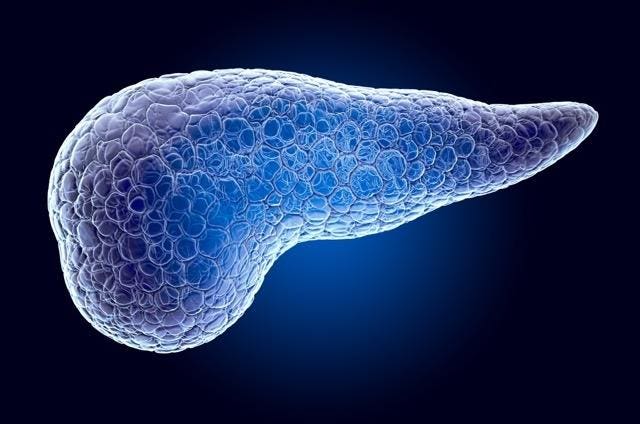
Pancreas, x-ray hologram. 3D rendering on dark blue background
©alexlmx 2020 from Magnific
Diabetes affects nearly 600 million adults worldwide, and about 9 million of them live with type 1 diabetes. There is an urgent need to improve its treatment. One promising approach is islet cell transplantation, which can restore insulin-producing beta cells. New RNA technology offers the promise of increasing the efficiency of this critical function.
A healthy pancreas contains about a million small clusters of cells called islets of Langerhans. Islets are the tiny hormone-producing clusters inside the pancreas. Inside each islet, one cell type, called beta cells, makes insulin. When the immune system destroys those cells, type 1 diabetes follows.
Injected insulin replaces the missing hormone but cannot match the moment-to-moment timing of working islet beta cells. Islet transplantation can restore insulin production. In the current procedures, islets isolated from a donor pancreas are infused into the hepatic portal vein and lodge in the liver’s abundant network of blood vessels. The therapy is approved in several countries. It has taken some patients off insulin for years at a time. Unfortunately, most transplanted cells die in the first days after surgery, significantly limiting the effectiveness and general application of this promising procedure.
Challenges of Islet Transplantation
Restoring blood flow to the transplanted islet cells is key to success. Functional recovery after transplantation depends critically on revascularization, or restoring blood flow to the transplanted islet cells that weren’t getting enough. Revascularization is like fixing or adding new roots to a wilting plant, so water (or, in our case, blood) can reach the plant again.
Revascularization depends on vascular endothelial growth factor A, or VEGF-A. The insulin-producing beta cells release this growth factor when the oxygen concentration is low. Unfortunately, the natural production of VEGF-A by beta cells is too slow to create a favorable environment, and most of the transplanted cells die.
Previous strategies for accelerating revascularization have fallen short. Direct injection of the growth factor protein clears the site too quickly. Viral vector delivery of the growth factor gene keeps the signal on indefinitely. The never-ending signal produces chaotic vessels and carries the risk of aberrant growth.
What is needed is a way to turn the growth factor on in the beta cell itself, at the right level and only for as long as the transplanted cells need it. A new study uses two RNA technologies working together, a targeting aptamer and a gene-activating RNA, to do just that. The new method encouraged the transplanted cells to build their own blood supply during the window when they need it, then quietly switch off.
Two RNA Technologies in One
The first technology is a short double-stranded RNA called an RNA aptamer that binds to the surface of the beta cell. The treatment also depends upon a small activating RNA, or saRNA, that increases the production of the messenger RNA for the vascular growth factor and its protein.
Figure 1A from Yoon et al. A schematic of the two-part RNA molecule used in the study. The shape on the left is the aptamer, which acts as a homing device. The ladder shape on the right is the small activating RNA, the working cargo. The two parts are joined into a single strand and delivered together.
Van Simaeys, D., & Berggren, P. O. (2026). β-cell-targeted RNA activation of vascular endothelial growth factor-A improves islet transplantation. Signal Transduction and Targeted Therapy, 11(1), 318.
The treatment involves exposing isolated beta cells, prepared for transplantation, to a combined aptamer–saRNA drug. After entering the cell, the saRNA component is transported into the cytoplasm, recognized by the cellular Argonaute protein, and delivered to the appropriate site within the nucleus, where it activates VEGF‑A production. In animal models, the aptamer–saRNA drug not only increases VEGF‑A production but also substantially increases the proportion of beta cells that survive following transplantation.
A Platform Beyond Diabetes Therapy
One advantage of using RNA is that its effect is transient. In these model systems, the saRNA appears to provide a temporary boost in VEGF‑A that helps beta cells survive the early period after transplantation into poorly oxygenated tissue. Once the beta cells have survived this initial barrier, the saRNA effect fades, and the cells continue to grow and function without ongoing RNA treatment. Human clinical trials of this approach are expected to begin soon.
The novel strategy holds promise for enhancing the survival and function of transplanted beta cells. This approach could be particularly applicable in conditions where cell viability is crucial for treatment success. The strategy may contribute to more effective transplantation outcomes. Beyond its implications for diabetes, this work illustrates how new RNA technologies are transforming the treatment of both acquired and inherited diseases.