

Get your daily dose of health and medicine every weekday with STAT’s free newsletter Morning Rounds. Sign up here.
Good morning. Today we’re co-publishing a KFF Health News story on how Louisiana sheriffs spent millions of opioid settlement dollars on law enforcement gear instead of addiction treatment. I’d recommend a read — my jaw dropped when I saw how much one office spent on Flock cameras alone.
RFK Jr. is posting vaccine misinformation again
There’s a pattern to health secretary Robert F. Kennedy Jr.’s social media posts regarding vaccinations: downplay the severity of measles, dispute his role in spreading misinformation about vaccines, and attempt to focus attention elsewhere.
That pattern played out again this week, STAT’s Chelsea Cirruzzo reports. In the wake of two deaths from measles in Pennsylvania, Gov. Josh Shapiro expressed frustration at the continued spread of misinformation. Online, Kennedy accused Shapiro of “gaslighting” and blamed declining pediatric vaccine rates on the Biden administration. Read more from Chelsea about the back-and-forth.
FDA approves new pancreatic cancer drug
The FDA approved a life-extending treatment for advanced pancreatic cancer yesterday that is expected to usher in a new era of treatment. The drug, brand name Rasonque, is the first to attack a genetic cause of the aggressive, highly lethal malignancy.
“It’s the biggest development we’ve had in pancreas cancer in decades,” said medical oncologist Andrew Ko. “I’m so thankful for this as an advance for our patients.” Read more from STAT’s Adam Feuerstein and Angus Chen on the data behind the drug and how much it will cost.
A long-shot plot to roll back $1 trillion in Medicaid cuts
President Trump’s signature tax cut law will cut nearly $1 trillion in Medicaid funding over the next decade. Hospital lobbyists and leaders have begun laying the groundwork to delay, roll back, or mitigate the unwelcome cuts, which will start to take effect next year, STAT’s Daniel Payne reports today. “They see an opening,” one lobbyist said. “I don’t know if I do.”
Hospital systems have seen their power in Washington diminish — a major lobbying campaign last year to stop the cuts proved fruitless — and may be losing broader support across the political spectrum. Logistically, any changes would still require the president’s approval and possibly the cooperation of a handful of Republican lawmakers willing to undo landmark legislation.
It could all come down to the wire. “I’m hoping that I’ll be able to convince my colleagues a little closer to the implementation date: ‘Listen, we shouldn’t do this,’” Sen. Josh Hawley (R-Mo.) said. Read more in the second installment of Daniel’s Unraveled series.
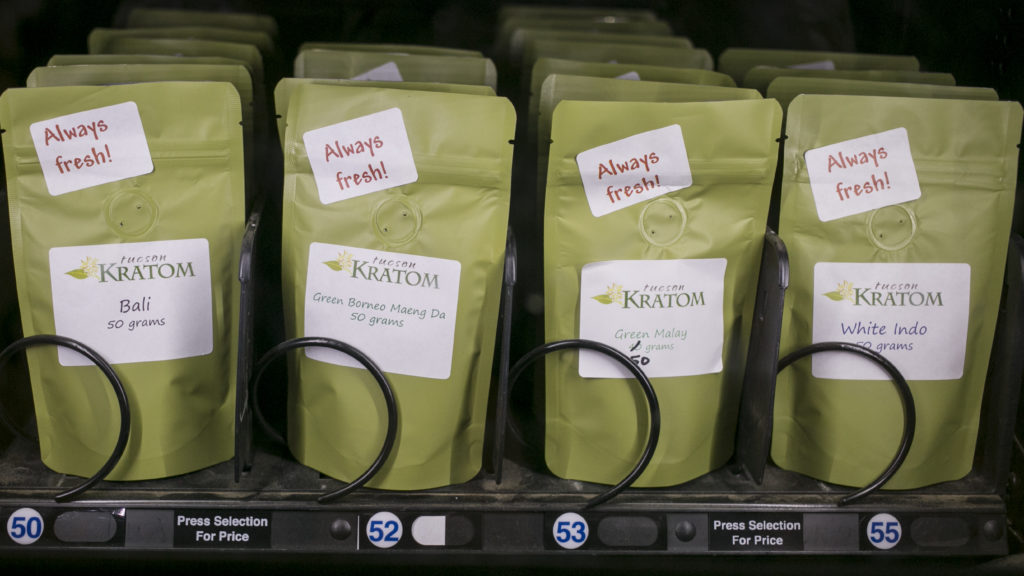
Earlier this summer, the DEA issued two notices of intent: one to ban the psychoactive compound 7-OH above a certain threshold, and another to ban three related substances: MGPI, MGM-15, and MGM-16. This week, the public comment period was extended for the 7-OH ban (technically a rescheduling that would put it on the same level as heroin) until Sept. 10, while the rule on the related substances was finalized and went into effect yesterday.
There are specific differences between these substances that we can get into later when my word count can be higher, but essentially, they all act on the same receptors in the body as opioids. The kratom leaf has been used in herbal medicine for centuries. 7-OH occurs naturally in the leaf in low quantities but in recent years has been highly concentrated into products with intoxicating effects.
The Trump administration first proposed limiting 7-OH products last summer. Since then, President Trump has at times appeared to pivot on the policy. Legislators have questioned the kratom industry’s connection to health secretary Robert F. Kennedy Jr., suggesting that the 7-OH ban could benefit companies like Botanic Tonics.
What doctors can learn from Reddit menopause forums
For many women with mysterious, chronic health problems, Reddit forums can be a refuge. Users share their experiences and connect dots that, oftentimes, doctors have ignored. Epidemiologist and biostatistician Yulin Hswen recently studied Reddit forums on perimenopause and menopause. “These conversations are not just chatter — they are scientifically important,” she writes in a new First Opinion essay.
In a published study, Hswen and colleagues compared menopause-related discussions on Reddit with more than 2 million electronic health record notes from the University of California, San Francisco’s system. They found that some of the symptoms that were most discussed online were among the least represented in the clinical records. Read more on what got discussed online, what came up in the doctor’s office, and what it means.
What we’re reading
-
The quest for a hangover cure, New Yorker
-
‘You’re ruining my dreams’: CTE study adds to family tension over football, New York Times
- New treatments for common cardiovascular risk factor near the market, with billions at stake, STAT
- Major UK study could be a ‘game-changer’ for heavy periods and endometriosis, Femtech World
- The mystery of Moderna’s magic algorithm, STAT