

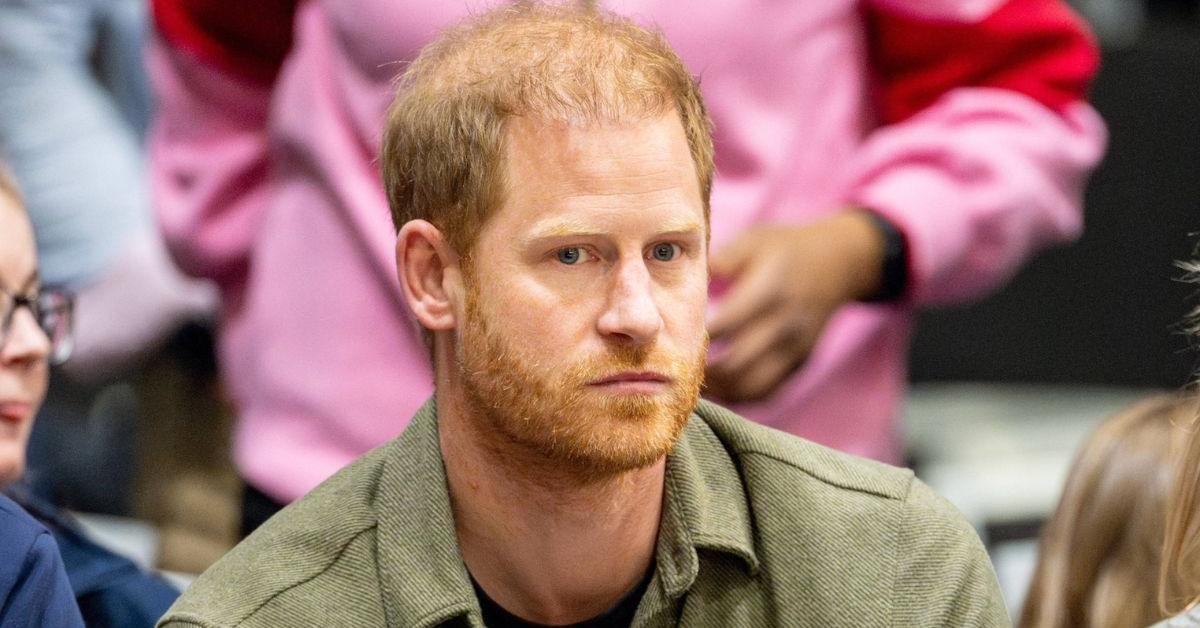
Prince Harry has found himself at the center of a fresh backlash over antisemitism after condemning rising hatred against Jewish communities in Britain – more than two decades after his Nazi uniform scandal shocked the world.
RadarOnline.com can reveal Harry, 41, addressed what he described as the “deeply troubling” increase in antisemitic violence in a magazine article, warning that silence in the face of hatred allows extremism to thrive.
The Duke of Sussex referenced his own “past mistakes” in the piece – an apparent acknowledgment of the infamous 2005 controversy in which he was photographed aged 20 wearing a Nazi costume to a private party.
The images sparked international outrage at the time and remain among the most damaging scandals of his public life.
Harry’s intervention comes amid heightened tensions across Britain following violence linked to conflict in the Middle East, with both antisemitic and anti-Muslim incidents rising sharply in recent months.
One source close to the reaction surrounding the article said Harry’s comments had reignited debate about whether he can ever fully escape the shadow of the Nazi costume scandal.
The insider said, “For many people, Harry speaking out about antisemitism inevitably brings them straight back to those photographs of him parading around like a Nazi. Even though it happened decades ago and he has repeatedly expressed regret, critics still see a contradiction between his past behavior and his attempts to position himself as a moral voice on issues of hate and extremism.”
Another source added: “There are people who believe Harry has every right to speak about the dangers of antisemitism precisely because he understands the consequences of ignorance and offensive behavior firsthand. But others think the intervention risks reopening old wounds because the Nazi uniform episode became such a defining moment in public perceptions of him.”
In the article, Harry condemned attacks against Jewish communities in London and Manchester while drawing a distinction between political protest and hostility toward an entire faith or ethnic group.
He wrote: “Nothing, whether criticism of a government or the reality of violence and destruction, can ever justify hostility toward an entire people or faith.”
Harry also warned against collective blame while discussing the wars in Gaza and Lebanon, arguing that criticism should remain directed toward governments and institutions rather than entire communities.
“We cannot ignore a difficult truth: when states act without accountability, and in ways that raise serious questions under international humanitarian law, criticism is both legitimate, necessary, and essential in any democracy,” he explained. “The consequences do not remain contained within borders. They reverberate outward, shaping perception, inflaming tensions.”
Although Harry repeatedly referred to “the state” throughout the article, he did not directly mention Israel by name.
He also addressed the increasingly polarized atmosphere surrounding public debate on the conflict.
“We have seen how legitimate protest against state actions in the Middle East does exist alongside hostility toward Jewish communities at home – just as we have also seen how criticism of those actions can be too easily dismissed or mischaracterized,” Harry said.
Harry argued public discourse and media commentary were failing to preserve nuance, warning that oversimplified narratives were helping deepen social division.
He also insisted demonstrations against violence remained both “human and necessary,” while stressing anger should never be directed toward entire religious or ethnic groups.
The duke concluded with a broader appeal for solidarity against hatred targeting both Jewish and Muslim communities.
He went on: “When anger is turned towards communities – whether Jewish, Muslim, or any other – it ceases to be a call for justice and becomes something far more corrosive.”
Harry’s intervention came as his older brother, Prince William, 44, separately addressed concerns over rising antisemitism during an investiture ceremony this week.
Holocaust educator Bea Lewkowicz, daughter of Holocaust survivors and newly appointed OBE recipient, later revealed William had emphasized the importance of “preserving the truth” at a time when Holocaust distortion and antisemitic rhetoric were spreading rapidly online.