

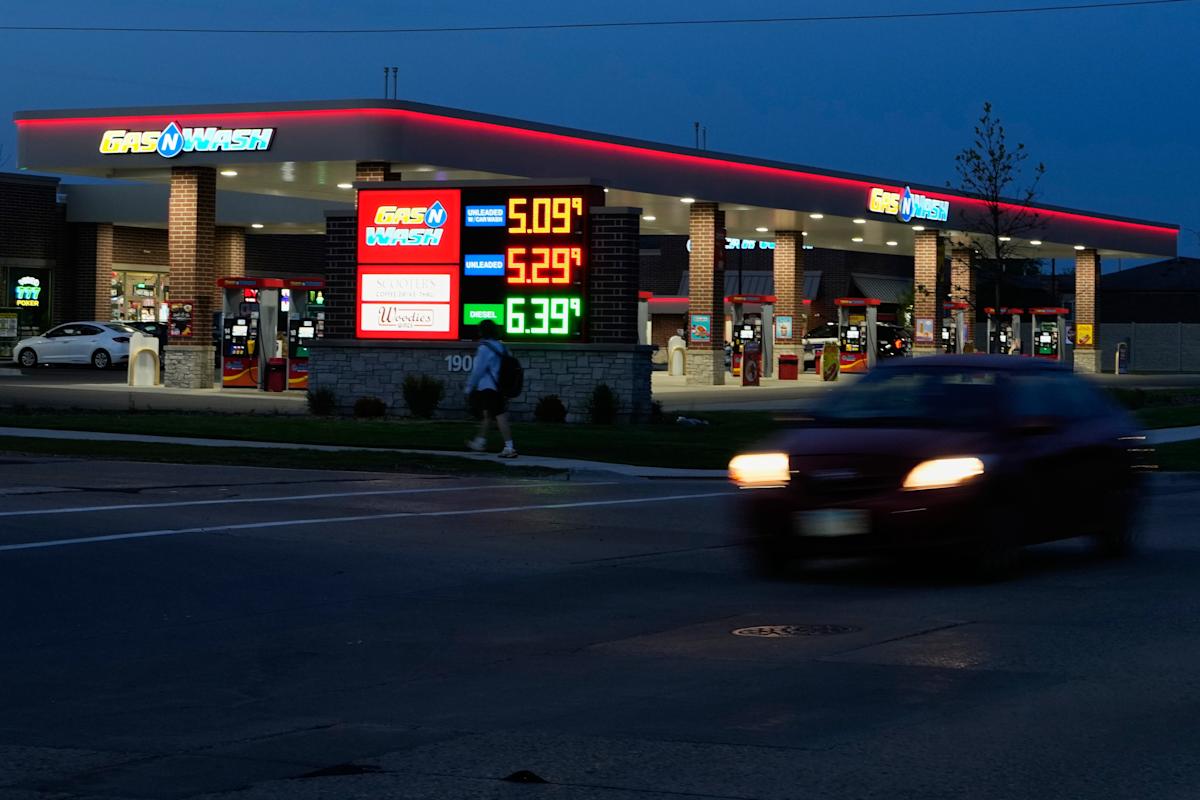
A well-known business adage says you have to spend money to make money. Right now, food truck and restaurant owner John Berl is mostly doing the former.
The owner of Uncle John’s BBQ Stand in Claymont, Del., filled up one of his food trucks with $120 worth of gas this week to head to a beachside car show where he was promised lots of hungry customers. But people didn’t come out — maybe because they couldn’t afford to themselves, with consumer prices 3.8% higher than a year ago — and Berl was left holding the bag. Weak sales combined with labor, fuel, and insurance costs meant his business ended the day hundreds of dollars in the red.
“The gas prices are affecting everything. My delivery charges are up, all my consumer products are up. Just to get to an event used to cost me $20, now it costs me $45,” Berl said. “I can’t be profitable at the moment. I haven’t made money since last September, October — that was the last time I got a paycheck myself.”
“It’s hard work to make nothing,” Berl said.
That reality is reflected in economic data. Small business profitability slid 1.3% in April from a year earlier — the weakest reading in two years, according to an analysis from the Bank of America Institute. In the same time frame, gasoline spending growth by small businesses jumped almost 31%.
Meanwhile, the National Federation of Independent Business’ optimism index in April sat “below its 52-year average of 98.0 for the second consecutive month,” the NFIB said, with some small businesses reporting higher costs, more reluctant consumers, and difficulty finding good workers.
“I believe people are nervous to spend money because of the economy and are unsure of what will happen in the upcoming months,” one small business in the service industry reported to the NFIB. “Summer is typically very busy for us, but who knows?”
That “who knows” mentality, combined with labor shortages, could partly be responsible for a pullback in payrolls across some small businesses, an especially worrying trend because smaller firms account for almost half of US employment. Though hiring still managed to pick up among small agriculture, retail, health services, and transportation firms in April, “across the board, payroll growth has been substantially lower for small businesses this year compared to 2025,” the Bank of America Institute analysis said.
Hiring could soften even further if high prices continue to pressure margins. Berl, for example, is bringing on fewer staff than he typically would ahead of his busy season.
Jennifer Ybarra, a costume artist in Morgantown, W. Va., who has been selling her wares on Etsy for 15 years, is also struggling. The items she needs to make her handmade neck ruffles, hats, and eye patches — like a roll of ribbon or a spool of thread — are getting more expensive. Gas to pick up supplies is another pain point.