

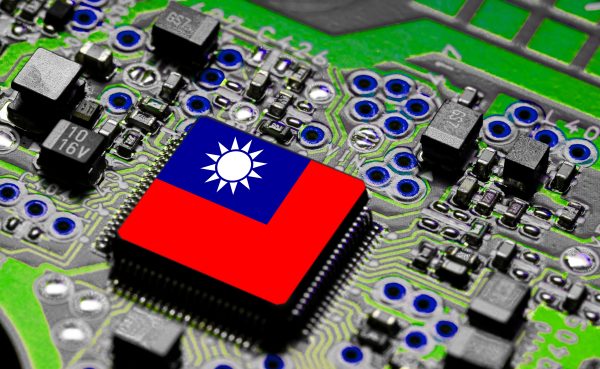
Taiwan’s semiconductor industry has been under the global spotlight, given its indispensable strategic importance. Analysts have spilled a great deal of ink on the implications of geopolitical wrangling for Taiwan’s chip industry, and vice-versa. Nonetheless, the Taiwanese government and its chip industry face another significant problem – the struggle to recruit enough chipmakers.
In the past three years, Taiwan’s chip industry has continually struggled to find enough engineers from upstream to downstream of the supply chain. In 2021, there were 27,701 unfulfilled engineer positions in the industry, about a 44 percent increase compared to the second quarter of 2020.
The situation only worsened in 2022. The job market reported 35,167 unfulfilled positions in the first quarter of 2022, a 40 percent surge from the same quarter a year ago. Even though the global market contraction for chips from the third quarter of 2022 to the second quarter of 2023 reduced workforce demand, the talent shortage was here to stay. Taiwan reported 22,820 unfulfilled engineer positions in this period.
Taiwan’s declining young talent pool presents another serious challenge for the chip industry to meet its workforce demand against the backdrop of the existing labor shortage. In the past two decades, Taiwan has faced a steady reduction in STEM graduates across both undergraduate and graduate programs. On top of that, Taiwan is dealing with the world’s lowest fertility rate and an aging population that will shrink its overall talent pool.
Externally, Taiwan confronts intensified global competition for semiconductor talent as vital players in the industry, including the United States, China, South Korea, Japan, and the European Union, ramp up efforts to cultivate domestic talent and attract foreign professionals. This global policy pattern is driven by various motives, including handling rising talent shortages in the industry, empowering domestic manufacturing capabilities, adapting to new geopolitical dynamics, and recognizing semiconductor’s strategic value in today’s world.
For Taiwan, the soaring international competition for chipmakers exacerbates its existing talent shortages as it may cause an outflow of Taiwanese chip professionals seeking better opportunities and increase the difficulty of drawing in top foreign talent.
Moreover, the recent “AI wave” is expected to increase the demand for chips, especially high-end ones utilized in AI applications, further underscoring the industry’s need for additional workforce for higher productivity. The recent projection of 20 percent annual revenue growth by Taiwanese chipmaker TSMC exemplified this growing demand.
Increasing Strategic Focus on Talent Cultivation
Recent global policy trends demonstrate a shift toward more government-led initiatives in cultivating talent within the semiconductor industry, and Taiwan is no exception lately.
In June 2020, Taiwan’s Executive Yuan announced the “Leading Enterprise Research and Development In-depth Cultivation Plan,” prioritizing core technologies such as emerging semiconductors, new-generation mobile networks, and AI. Nevertheless, this strategy did not prioritize talent development like the ones coming years later. Instead, it placed more focus on foreign investment and innovative capability.
A year later in 2021, the Executive Yuan launched a new strategy – “Accelerating Future Technology Research and Talent Planning” – emphasizing the importance of addressing talent shortages. This strategy introduced the “National Key Area Industry-Academia Collaboration and Talent Cultivation Innovation Act,” aimed at boosting industry-academia collaboration in semiconductors and AI.
Unlike the strategy document in 2020, which largely disregarded the talent part, the 2021 strategy positioned “semiconductor talent supply” as the first pillar. The policy shift reflected the government’s realization of the escalating talent shortage due to surging market demand from 2020.
Since the legislation passed, nine universities have established new institutes specializing in semiconductors. This strategy also expanded university programs in critical areas such as semiconductors, AI, electronic engineering, and material engineering, resulting in a 10 percent increase in undergraduate programs and a 15 percent increase in graduate programs.
To advance this strategy, the National Science and Technology Council (NSTC) allocated 35 billion Taiwanese dollars ($1.1 billion) for the “2025 Top-Down Semiconductor Plan” to establish several programs to support semiconductor talent from 2021. These programs have generated 848 master’s and 241 PhD-level students, according to the legislative briefing in 2023. Additionally, the NSTC-owned Taiwan Semiconductor Research Institute supports 2,100 high-level semiconductor talents annually.
Following these initiatives, the Taiwanese government doubled down on its investment to support semiconductor talent. In November 2023, the Executive Yuan unveiled the “Chip-based Industrial Innovation Program (CBI).” The plan is expected to provide NT$300 billion ($10 billion) in the next 10 years to combine generative AI and chip technologies for industrial innovation, refine the environment for international talent, accelerate industrial innovation, and attract foreign investment.
The persisting talent shortage in semiconductors has undoubtedly prompted the government to make leaps in supporting the environment to foster more talent for the semiconductor industry. While these policies are mostly positive, they are not comprehensive enough to further address the growing talent need in the market, as they overlook several vital factors to unlock more talent sources. As such, here are some policy recommendations that the incoming Lai administration should contemplate.
Adopting a Nuanced Approach
First, the government should increase investment in pre-college education on semiconductors to enhance students’ understanding and foster their interest. This could include offering elective courses, visiting lectures, seminars, and educational visits regarding the chip industry. This approach could help students develop an interest in the field and the potential to choose an area of study in college related to semiconductors.
There have been some initial efforts in this area. The Ministry of Education last year introduced experimental semiconductor courses in five vocational schools. While strengthening efforts to promote chip-related courses is crucial, the government must strike a fine balance by offering a diverse range of elective courses to ensure the curriculum caters to students’ varied interests.
Second, the government, chipmakers, and academic institutions must collaborate to cultivate female talent for the semiconductor industry, an underexplored workforce. In Taiwan, female enrollment in engineering programs remains disproportionately low compared to males, one of the reasons why there are fewer female workers in the semiconductor industry. For instance, female employees constituted only about one-third of TSMC’s total workforce in 2022.
To encourage more female workers in the industry, initiatives such as providing comprehensive information about the semiconductor industry to female high school and college students can inspire their participation in related engineering programs at the university level and potentially encourage them to choose a career in semiconductors. For instance, leading chip firms like MediaTek and TSMC initiated such efforts in collaboration with academic institutions to attract more female talent last year.
Government, academia, and the private sector should collaborate to further encourage female talent to pursue careers in semiconductors by offering dedicated scholarships, providing post-graduate hiring guarantees, and enhancing the involvement of female students in the field.
Third, the government should establish semiconductor departments in vocational high schools in Taiwan to facilitate direct entry into the semiconductor industry post-high school education and cultivate a talent pool with strong semiconductor fundamentals for further education at the college level. This is another underdeveloped area for potential semiconductor talent where the government has yet to invest.
Beyond better utilizing its younger talents, Taiwan should also invest in upskilling and career transition opportunities for its existing workforce. For example, the Taiwanese government should create more well-organized chip-training institutions with potential hiring opportunities, targeting individuals who are seeking career changes or currently unemployed. This strategy can tap into a valuable segment of the labor market by providing avenues for employment in semiconductors.
Lastly, Taiwan must broaden the talent pool beyond its national borders. Currently, Taiwan’s chip industry largely relies on domestic talent, an approach that cannot be sustained due to the diminishing birth rate. To that end, Taiwan should actively revisit and revise its immigration policies to increase access to foreign talent and meet industry demands. Realistically, it might be hard for the Taiwanese government to advance major reforms in immigration policy, as demonstrated by the pushback against admitting more Indian migrant workers last year.
The government should conjure up more creative and compelling measures to effectively attract more foreign talent while securing public support. One option is for the Taiwanese government to consider designing a “chip visa” that allows an appropriate amount of government-approved foreign semiconductor engineers to support Taiwan’s most vital industry. Taiwan can consider countries like India, Vietnam, and the Philippines, which are home to a large number of engineers.
The government should also explore opportunities to collaborate closely with leading chip firms to set up scholarship programs and language training programs, along with post-graduate working opportunities in Taiwan-based semiconductor companies, for top graduate and undergraduate students in Southeast Asia. Just recently, South Korean chip giant Samsung adopted this approach and signed an agreement with top universities in Vietnam aiming to secure foreign semiconductor talent.
Such an approach will not only ensure that Taiwan can bring more talent to support its industry but will also equip the participants with the expertise to work in Taiwan’s chip firms while enjoying life in Taiwan, an important factor in retaining these talents.
Advocating for a moderate approach to attract skilled foreign talent to support Taiwan’s critical industry would be more compelling in gaining public support than proposing extensive immigration reforms, such as large-scale migrant worker programs.
To be sure, although the government is responsible for addressing the talent shortage, it is crucial to point out that the shortage is also a product of its chip industry’s infamous working environment, culture, and public image. This can only be improved by the industry itself.