

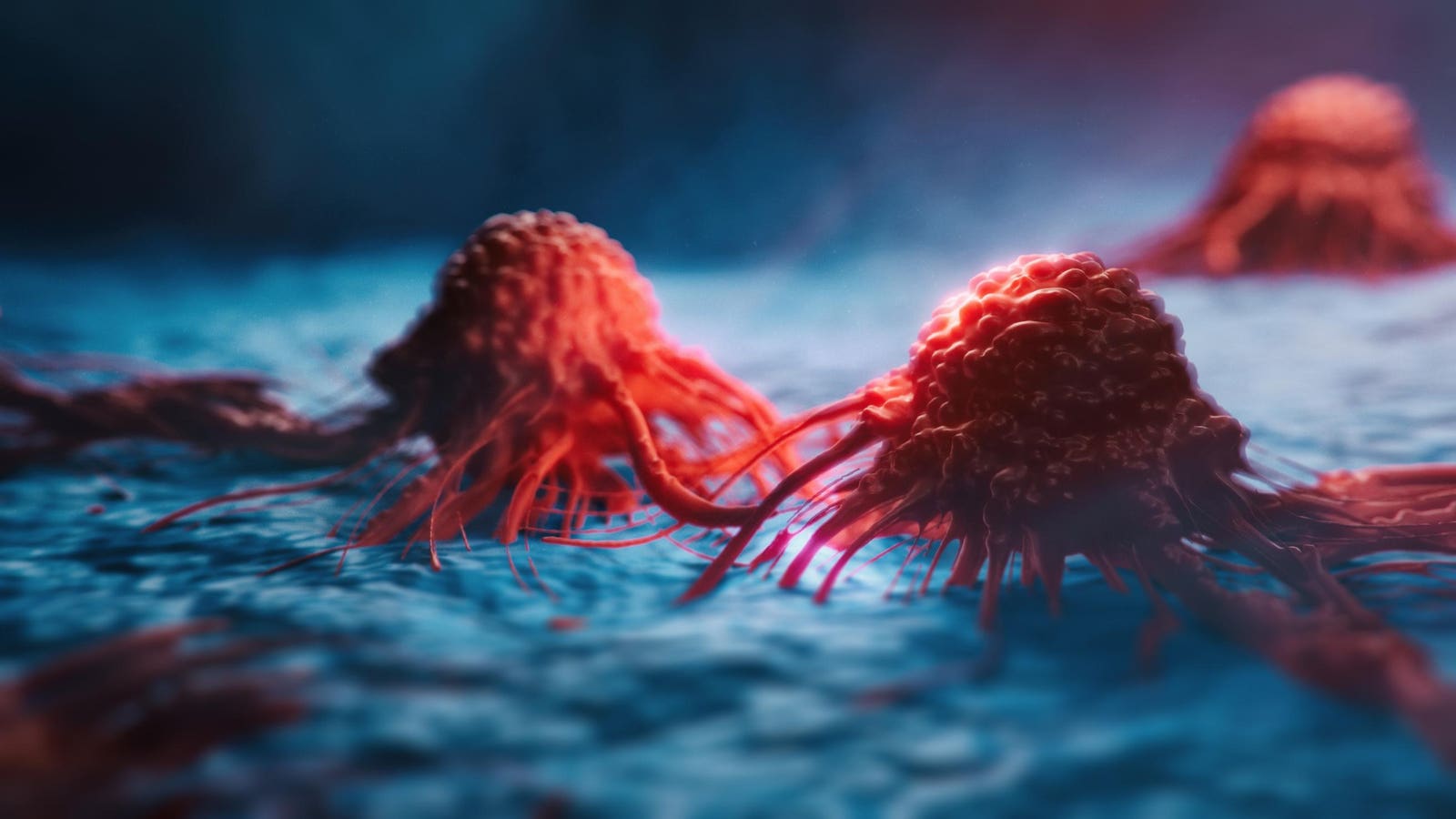
Cancer cells vis – 3d rendered image, enhanced scanning electron micrograph (SEM) of cancer cell. Visual of overall shape of the cell’s surface at a very high magnification. Medical research concept.
getty
A new kind of cancer treatment is changing what is possible for women with uterine cancer that comes back or refuses to go away. The drug delivers chemotherapy directly to the cancer cell, then releases it inside. In a new study, this approach reduced tumor size and slowed disease progression in women whose cancer had returned after standard treatment. The findings suggest a potential new option for patients with few remaining treatments and further expand the role of antibody-drug conjugates beyond breast cancer.
A Smarter Way to Deliver Treatment
Antibodies are Y-shaped proteins that the body makes to recognize and stick to specific targets, such as a virus or a cancer cell. For decades, antibodies have been used as cancer treatments because they can target tumor cells with great accuracy.
More recently, antibody-drug conjugates have expanded that approach by attaching chemotherapy directly to these antibodies, turning them into targeted delivery systems. The antibody finds the cancer cell and locks on. The cell then pulls the whole package inside, and only there does it release the chemotherapy. Healthy cells are mostly spared.
Standard chemotherapy floods the entire body, which is why it causes hair loss, mouth sores, and so many other side effects. The new treatment combines two components into a single molecule: an antibody and a chemotherapy drug. This guided treatment narrows the damage to where it is needed most. The same idea is already working in breast cancer and bladder cancer, suggesting these therapies could benefit a broader group of patients than initially expected.
Why Uterine Cancer Needs New Options
Uterine cancer, also called endometrial cancer, starts in the lining of the uterus. Most women catch it early and do well. The story changes when the cancer returns or spreads. Aggressive endometrial cancers often become difficult to treat after standard chemotherapy and immunotherapy stop working.
The new treatment, tested in a recent clinical trial, carries multiple chemotherapy molecules per antibody. That means a higher dose of the medicine enters the cancer cell each time the antibody binds. Once released, the chemotherapy reaches very high concentrations inside the tumor cell.
Importantly, the chemotherapy payload can also spread into nearby cancer cells after release. This “bystander effect” may allow the treatment to damage neighboring tumor cells even if they do not strongly express the target protein themselves.
These features may help explain why antibody-drug conjugates continue showing activity in cancers that no longer respond well to conventional therapies. Rather than simply blocking tumor growth signals, these therapies use antibodies as delivery vehicles to transport chemotherapy directly into resistant tumors.
What the Trial Showed
The trial enrolled women whose uterine cancer had come back or kept growing despite chemotherapy. Half had also received an immune-based treatment. Many had the most aggressive forms of the disease.
Roughly 1 in 4 women saw their tumors shrink on the new drug. A few saw their tumors disappear on scans. More than half of the women in the trial either saw their tumors shrink or saw their disease hold steady for at least six months. Tumor shrinkage appeared across several aggressive subtypes of uterine cancer, including two of the toughest forms.
The new drug is not free of side effects. The most common are low blood counts, anemia, fatigue and diarrhea. Some women needed a pause in treatment or a lower dose to manage them. Very few women had to stop the drug completely, and no new safety surprises came up during the study. The pattern of side effects is similar to that seen with other guided antibody drugs in different cancers.
A New Direction for Cancer Care
The findings reflect a larger shift in oncology toward therapies that combine precise targeting with highly potent drugs. Antibody-drug conjugates increasingly blur the line between targeted therapy and chemotherapy by merging both approaches into a single treatment.
Larger trials are now testing the new drug head-to-head against standard chemotherapy in women with recurring uterine cancer. Other studies are pairing it with immune-based treatments to see if the combination can do even more.
For aggressive uterine cancers, the significance extends beyond a single drug. The study suggests antibody-drug conjugates may open a new treatment strategy for tumors that historically carry few effective treatment options.
This work is part of a series demonstrating how modern antibody strategies can be developed to enhance immune responses, with potential applications across a wide range of diseases and therapeutic areas.