

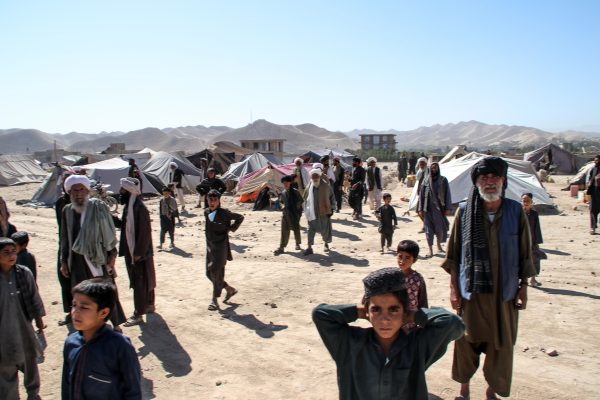
“It is hard for women to think about rights when their children are starving.” This stark observation, shared during a key informant interview in 2020, lays bare the grim realities faced by families in Afghanistan. With international sanctions and economic instability worsening under the Taliban’s rule, millions are grappling with food insecurity and dwindling resources. The erosion of critical lifelines, from humanitarian aid to remittance flows, has plunged countless households into desperation, leaving women and children particularly vulnerable. This humanitarian crisis demands urgent global action to address not just survival needs but the systemic barriers keeping families trapped in cycles of poverty and repression.
The challenges faced by families in Afghanistan echo those of displaced communities worldwide, where survival often hinges on fragile support systems. For many, the focus is not on long-term rights or recovery but on immediate survival – finding the next meal or securing basic shelter. Despite the critical need, bureaucratic inefficiencies, political stagnation, and restrictive policies choke the flow of essential lifelines, leaving millions in conflict zones to navigate a humanitarian landscape fraught with barriers and uncertainty.
Our recent research on post-conflict Sri Lanka underscores the transformative impact of remittances. Using household-level data, we found that these flows not only help families meet immediate needs but could also enable wealth accumulation over time, playing a pivotal role in economic recovery. Globally, remittances to low- and middle- income countries totaled $656 billion in 2023 – far exceeding the $256 billion in official development assistance. When disrupted by forced repatriation policies or resettlement delays, this lifeline frays, exacerbating hardship for refugees and their families alike.
At a time when remittances often double the scale of official aid, addressing systemic barriers to their flow is imperative. By reforming refugee resettlement processes and supporting remittance systems, policymakers can unlock their full potential, offering stability and hope to millions of displaced individuals.
The Importance of Remittances
Although often overshadowed in policy debates, remittances are a hidden backbone of economic resilience for conflict-affected families. These funds go beyond meeting immediate needs; they enable families to rebuild their lives and navigate long-term uncertainties. In fragile contexts, where traditional support systems are weakened or nonexistent, remittances fill critical gaps that official aid cannot reach.
Our research in post-conflict Sri Lanka highlights this transformative role. We found that remittances significantly increased household wealth over time, even in areas lacking robust financial infrastructure. Families invested in education, improved housing, and started small businesses – decisions that fostered economic stability and created ripple effects of growth across entire communities.
The power of remittances, however, depends on their uninterrupted flow. For displaced individuals, restrictive policies and bureaucratic delays can cut off this lifeline, pushing families further into poverty. Without these funds, hard-earned gains risk being eroded, leaving vulnerable populations trapped in cycles of instability.
With the right support, remittances could move from being a stopgap measure to a cornerstone of global recovery strategies. Policymakers must address key barriers by reducing high transaction fees, formalizing remittance channels, and ensuring refugees achieve financial stability. These reforms would amplify the impact of remittances, ensuring they remain a vital resource for families navigating the uncertainties of displacement.
Case Study: Afghan Refugees and U.S. Policy
For Afghan refugees, displacement often leads to years of uncertainty, compounded by slow and cumbersome resettlement processes. The U.S. Special Immigrant Visa (SIV) program, created to protect those who worked alongside U.S. forces, faces severe backlogs, with some applications taking years to process. Similarly, humanitarian parole offers only temporary relief, leaving many without pathways to permanent residency or stable employment. These bureaucratic hurdles trap thousands of Afghan refugees in limbo, preventing them from rebuilding their lives or sending critical financial support to families back home.
The consequences are devastating. Since the Taliban’s return to power in 2021, remittance flows to Afghanistan have plummeted by 60 percent, according to the World Bank. This collapse has cut off a vital lifeline for families already grappling with economic instability and rising poverty. For the United States’ Afghan allies across the world who are awaiting news about resettlement, the inability to consistently send money exacerbates hardship for relatives in Afghanistan, creating a ripple effect of poverty and instability.
Policy inaction has only worsened the situation. While the U.S. Congress has increased the number of SIVs, systemic issues in the resettlement process remain unaddressed. The Afghan Adjustment Act (AAA), which would provide a pathway to permanent residency for those on humanitarian parole, remains stalled despite bipartisan support. Without these reforms, Afghan refugees face ongoing legal and economic uncertainty, limiting their ability to contribute to their host communities or support families abroad.
The U.S. has both the opportunity and the responsibility to address these gaps. Streamlining the SIV process, passing the AAA, and providing comprehensive support for Afghan refugees would not only fulfill U.S. commitments but also restore vital remittance flows. These changes would demonstrate how effective refugee policies can serve both humanitarian and strategic goals, setting an example for other nations.
Policy Solutions
The transformative potential of remittances in conflict-affected regions cannot be fully realized without systemic reforms. Refugees face significant barriers, from navigating resettlement processes to accessing the tools needed to support their families. Addressing these challenges requires both short- and long-term solutions.
In the short term, the United States must streamline refugee resettlement processes. Reducing backlogs in the SIV program and accelerating the Afghan Adjustment Act would provide stability for Afghan refugees, enabling them to secure employment and resume sending money home. These steps would uphold the U.S. commitments to its allies while mitigating economic hardship for families in Afghanistan who depend on remittances.
Long-term reforms are equally critical. Formalizing remittance channels is essential to ensure funds reach recipients safely and efficiently. High transaction fees and reliance on informal systems, like hawala, often reduce the impact of remittances. Policymakers should work with financial institutions to lower fees, expand banking access, and implement financial literacy programs. These efforts would empower families to maximize the benefits of remittances, turning them into engines of sustainable growth.
Beyond practical reforms, the United States has an opportunity to set a global standard. Our research in Sri Lanka illustrates how remittances can help rebuild war-affected communities when supported by effective policies. By investing in these systems, the U.S. can lead on both humanitarian and economic fronts, inspiring other nations to follow suit.
As global displacement increases due to conflict and climate change, stabilizing and optimizing remittance systems is no longer optional. It is both a moral obligation and a strategic imperative, redefining how we support displaced populations and the communities they are forced to leave behind.