

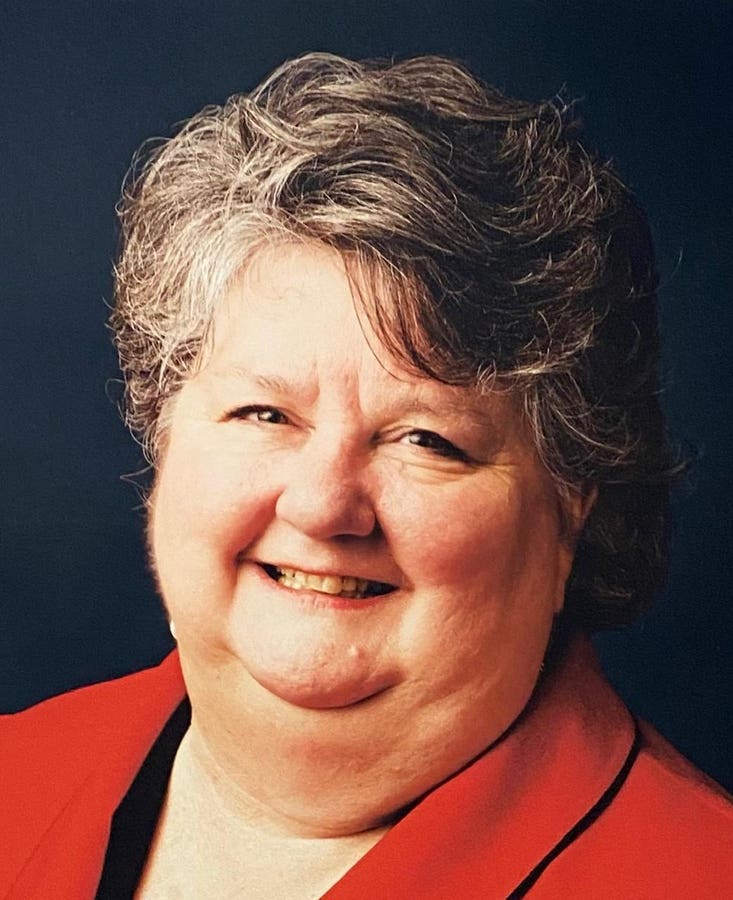
Leeba Ruth Lessin was a giant in the healthcare industry prior to her untimely death in January 2021. She was one of the pioneers of the delegated model.
CareMore
American physicians are exhausted.
Exhausted by prior authorization. Exhausted by endless documentation. Exhausted by fragmented care. Exhausted by the growing sense that they are being held accountable for outcomes they often do not control.
Beneath all of this frustration lies a deeper structural problem: most physicians in America lack both the authority and the incentives to truly manage the total cost and quality of care for patients over time.
They are blamed for costs they do not control.
Measured on outcomes they often cannot influence.
And trapped inside payment systems that reward activity more reliably than prevention.
There is, however, one region of the country where healthcare evolved differently.
For decades, Southern California quietly developed one of the most sophisticated—and least understood—healthcare delivery models in America: the delegated model of care.
Though rarely discussed in national policy debates, the delegated model fundamentally reshaped the relationship between physicians, insurers, and patients across much of California. It helped produce some of the country’s most advanced population health organizations, some of the earliest large-scale experiments in value-based care, and a generation of physician operators who learned not merely how to practice medicine, but how to redesign healthcare delivery itself.
The model emerged from California’s HMO ecosystem and operated on a deceptively simple idea: move financial responsibility and operational control closer to physicians themselves.
Instead of health plans tightly controlling every utilization decision, physician organizations—medical groups and independent practice associations—accepted prospective payments (usually as a high % of a health plan’s premium revenue) and assumed responsibility for managing the care of entire patient populations. In many arrangements, they were delegated not simply financial risk, but substantial operational authority including utilization management, specialty referral oversight, chronic disease management, care coordination, and in some cases claims payment functions themselves.
This changed everything.
In most of the country, value-based care evolved as a contractual overlay administered largely by insurers. Physicians remained operationally dependent on fragmented fee-for-service infrastructure while being offered incentives tied to quality scores, shared savings calculations, or limited downside risk.
California’s delegated model evolved differently.
It shifted not only financial accountability, but substantial operational authority, into physician organizations themselves.
That distinction mattered enormously.
In fee-for-service medicine, a physician can prevent unnecessary hospitalizations, coordinate care beautifully, reduce complications, and improve outcomes—and much of the economic benefit accrues elsewhere. Often to the insurer.
Under delegation, physicians and medical groups directly experienced the consequences of better coordination and prevention. Savings generated from avoiding unnecessary admissions, redundant testing, poorly managed chronic disease, and fragmented care could be reinvested directly into patient care infrastructure itself.
This created incentives that largely do not exist in traditional American healthcare.
It is one reason Southern California became an incubator for some of the country’s most innovative care delivery organizations.
Although California became the most mature and visible example of delegation, elements of the model spread selectively into markets including Nevada, Arizona, Texas, New Mexico, Washington, and parts of the broader Southwest and Pacific Northwest. But nowhere did delegation become as deeply embedded into the healthcare delivery infrastructure as it did in California, where physician organizations evolved into highly sophisticated population health operators with substantial operational autonomy.
The model was shaped by a generation of physician entrepreneurs and healthcare leaders including Leeba Lessin and Dr. Sheldon Zinberg, alongside pioneers such as Richard Merkin at Heritage Provider Network and Robert Margolis at HealthCare Partners.
These leaders understood something earlier than much of the rest of American healthcare:
Physicians could not meaningfully improve outcomes if they remained trapped inside fragmented payment structures rewarding episodic encounters instead of longitudinal accountability.
They were not simply building contracting entities.
They were building operating systems.
The delegated model did not merely create risk-bearing organizations. It created physician executives, physician operators, and physician entrepreneurs who learned how to build systems of care rather than merely practice within them.
Few organizations illustrated this more clearly than CareMore Health.
CareMore did not emerge from abstract policy theory. It emerged from physicians and operators recognizing that the traditional healthcare system was structurally incapable of managing complex chronic illness effectively.
They saw frail seniors cycling endlessly through emergency departments, hospitals, specialists, rehabilitation facilities, and disconnected primary care offices because nobody was truly responsible for the whole patient over time.
Fee-for-service medicine rewarded encounters.
It rewarded procedures.
It rewarded admissions.
But it did not consistently reward prevention, coordination, or keeping vulnerable patients stable at home.
The delegated model gave organizations like CareMore permission to build differently.
Instead of maximizing office visits, CareMore built an operating system around proactive intervention.
A frail senior discharged after a congestive heart failure admission might receive immediate post-discharge follow-up, medication reconciliation, transportation support, home monitoring, and aggressive outpatient management designed specifically to prevent deterioration before another hospitalization occurred. Extensivists followed patients across inpatient and outpatient settings. Nurse practitioners ran chronic disease clinics. Behavioral health, fitness programs, social support, and care management became embedded operational functions rather than peripheral services.
This was not charity.
It was not experimentation for experimentation’s sake.
It was the direct consequence of aligning financial accountability with clinical responsibility.
That is what leaders like Lessin and Zinberg understood so clearly.
When physicians are truly responsible for the total cost of care, prevention suddenly becomes economically rational.
Investing upstream becomes rational.
Building interdisciplinary teams becomes rational.
Spending heavily on coordination becomes rational because avoiding deterioration, hospitalization, and fragmentation benefits both patients and the organization itself.
As I once wrote about CareMore’s founding philosophy (when I led the company), “capitation was seen as freedom, not risk.”
That framing remains profoundly misunderstood nationally.
Much of the healthcare industry continues to discuss capitation primarily through the lens of downside exposure and actuarial risk. But many of California’s physician organizations experienced it very differently.
To them, capitation created freedom.
Freedom from chasing visit volume.
Freedom from building organizations around billing codes instead of patient needs.
Freedom to hire care managers.
Freedom to invest in prevention.
Freedom to deploy home-based interventions.
Freedom to create entirely new clinical workflows that fee-for-service economics rarely support.
That mindset shift—more than the payment mechanism itself—is what made the delegated model so powerful.
Leaders like Leeba Lessin and Dr. Sheldon Zinberg were not simply building organizations capable of bearing risk. They were helping build physician-led systems capable of functioning as true population health operators long before “value-based care” became a national buzzword.
At the same time, delegation should not be romanticized as a universal cure for healthcare dysfunction.
Delegated organizations often inherited many of the same administrative burdens traditionally associated with insurers. Medical groups and IPAs managed utilization, directed referrals, negotiated with downstream providers, administered networks, and in some arrangements even paid claims on behalf of health plans. The operational complexity could be immense, and poorly managed delegation sometimes simply relocated bureaucracy rather than eliminating it.
Some organizations failed financially.
Others struggled operationally.
Regulatory controversies—including the collapse of SynerMed—exposed vulnerabilities in oversight and governance.
And yet despite these imperfections, the delegated model remains one of the few large-scale American healthcare models that genuinely attempted to align physician incentives around total patient outcomes rather than unit production.
In many ways, it represents the truest form of value-based care because it requires physicians and organizations to fully internalize responsibility for outcomes, utilization, coordination, and long-term patient health.
It is not simply a payment mechanism layered on top of fee-for-service operations.
It is an entirely different operating philosophy.
That is also why many organizations fail when they attempt delegation superficially.
Some groups accept delegated risk financially while continuing to operate culturally and operationally as fee-for-service businesses. They remain dependent on visit volume, procedural throughput, and fragmented incentives while simultaneously attempting to manage total cost of care.
The result is often organizational tension, underinvestment in care management infrastructure, physician burnout, and eventual financial strain.
Successful delegated organizations understood this was not a side strategy.
It was a total mindset shift.
The model allowed physicians to hire teams they otherwise could not afford.
To invest in prevention.
To coordinate across settings.
To create entirely new clinical roles.
To focus on keeping patients healthy rather than maximizing billable encounters.
And importantly, it created physician organizations with operational muscles many health systems elsewhere never developed.
As physicians assumed financial responsibility for patient populations, California medical groups built sophisticated infrastructures around utilization management, chronic disease management, referral coordination, post-acute management, and population health analytics.
That infrastructure is one reason California has long stood apart in managed care.
Critics have long worried that capitated payment arrangements create incentives to withhold care. Those concerns should not be dismissed lightly. Any system built around financial accountability requires strong oversight, ethical leadership, and constant vigilance against under-treatment.
But the delegated model also forced physician organizations to confront a reality much of American healthcare still struggles to address:
Someone must actually be responsible for the patient across time.
Not just during an office visit.
Not just during a hospitalization.
But longitudinally.
That may explain why many physicians who practiced inside delegated environments struggle when returning to fragmented fee-for-service systems.
Because once physicians experience the ability to actually redesign care—to build interdisciplinary teams, proactively manage populations, intervene upstream before complications occur, and align resources around prevention—it becomes difficult to return to systems where the economics reward reactive care more reliably than keeping patients healthy.
This is the irony at the center of modern healthcare policy discussions.
America spends enormous time debating how to create accountability for outcomes while largely ignoring one of the only regions in the country that spent decades operationalizing physician accountability at scale.
The delegated model is neither universally understood nor easily replicated. It depends on physician organizations with sufficient scale, infrastructure, capital, and management sophistication to assume responsibility responsibly. It evolved under unique California market conditions, including large multispecialty groups and intense HMO penetration.
But at a moment when physician dissatisfaction has reached extraordinary levels, it may be time to revisit one of delegation’s most important lessons.
For decades, policymakers have searched for ways to make physicians more accountable for outcomes and costs.
The delegated model offered a different insight:
Accountability works best when physicians also possess agency.
Not just responsibility for patient outcomes.
Actual control over how care gets delivered.