

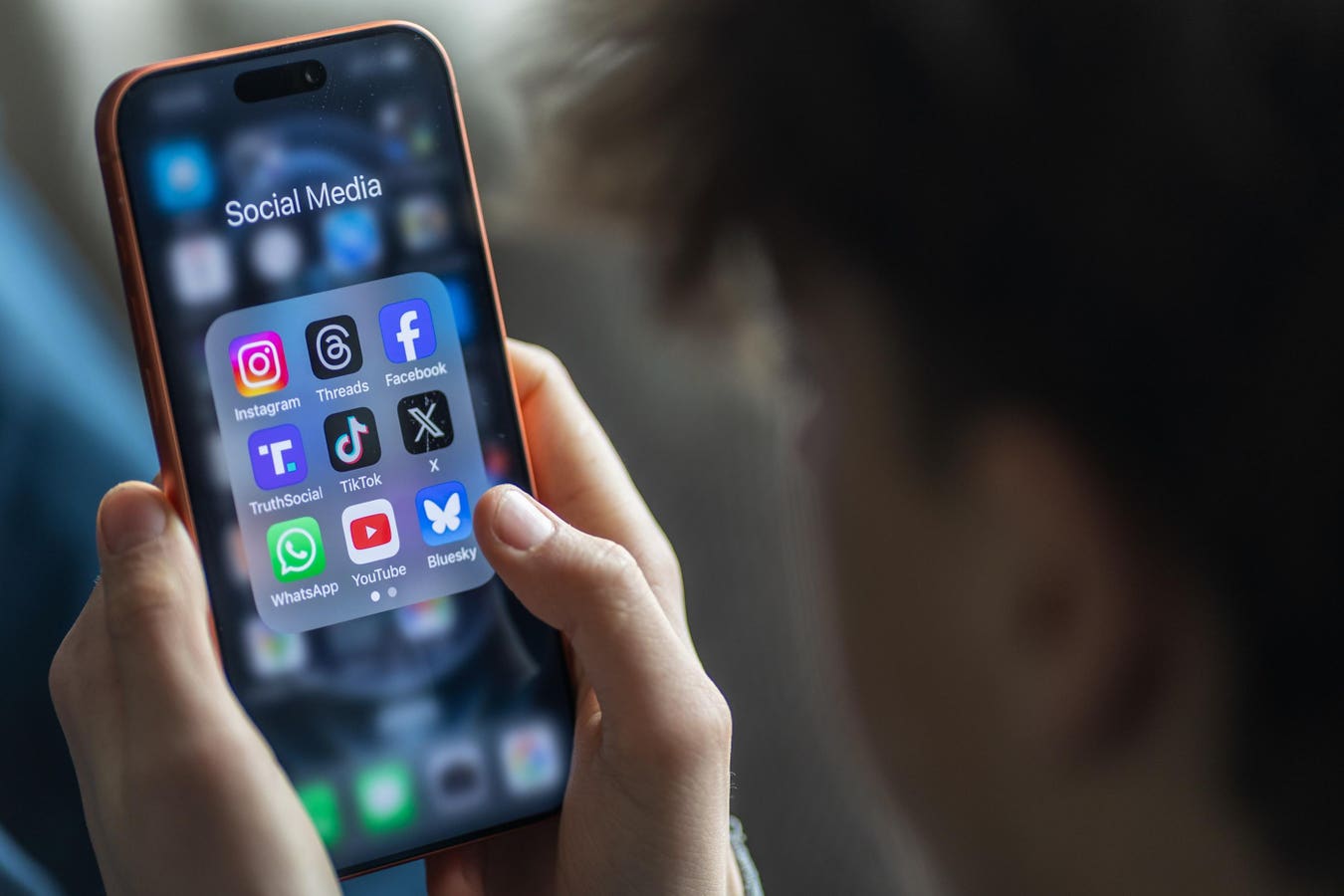
BATH, UNITED KINGDOM – MARCH 29: In this photo illustration a 14-year-old boy holds an iPhone screen displaying various social media and messaging apps on March 29, 2026 in Bath, England. (Photo by Anna Barclay/Getty Images)
Getty Images
Excessive screen time for kids, which includes social media scrolling, texting on phones and gaming, can be harmful according to a new surgeon general advisory published by the department of Health and Human Services. The advisory warns that screen use often begins before a child’s first birthday, indicating the need for interventions early in life.
As there is no currently confirmed Surgeon General within the Trump administration, the new advisory was brought forth as a collaborative effort by the department of Health and Human Services.
Although screen and social media and their health effects have been widely debated, the science surrounding screen use is increasingly nuanced. Health outcomes from screen use depend on a number of factors; including child age, the content being viewed and whether digital use displaces other activities such as sleep, learning and social interactions.
One of the strongest concerns supported by research involves mental health. A large study that looked at over 10,000 teenagers published in The Lancet found greater social media use associated with online harassment, poor sleep, low self-esteem, body weight dissatisfaction and increased depressive symptoms. Sleep disruption remains one of the clearest biological concerns. Research published in JAMA Pediatrics found that children who use screens before bedtime consistently experience shorter sleep duration and poorer sleep quality. As the surgeon general advisory indicates, poor sleep is associated with worse academic performance, mood instability and impaired concentration.
Increased screen use can also result in displacement, where time spend on digital media curtails time spent in social interaction, physical activity, reading and enjoying outdoor nature. Research shows increased screen time reduces the amount and quality of interactions between children and their caregivers which may stunt future social and emotional growth.
A growing body of evidence also shows that screens, and in particular social media, can significantly affect the development of the growing brain in a teenager. Frequent social media use can result in distinct changes in the amygdala, which is a part of the brain that regulates emotions. This suggests that the brain could be susceptible to external influences like social media.
Despite all the risks with screens, research also points to clear tangible benefits of screens. Educational media can support learning, literacy and problem-solving. Research consistently shows that interactive educational programs on screens may improve vocabulary acquisition and student engagement, and games can improve problem-solving skills for children.
Another clear benefit of screens is social connection. Online communities may help adolescents who feel socially isolated, including children with disabilities, chronic illnesses or mental health struggles. Research also shows that moderate screen use can enhance social connection and allow socially-anxious individuals to practice communication skills in a comfortable environment.
Screens and social media have become integrated within the life of nearly all kids and teens in America. There is no “one size fits all”, and screen use exists on a spectrum. Educational videos on screens differ dramatically from endless scrolling on Instagram. In addition, technology plays a central role in modern education, communication and childhood in general. For public health, the challenge for families and policymakers is learning how to maximize the educational benefits of screens while minimizing the harms tied to overuse and mental health.
The new surgeon general advisory calls for delaying screen use from an early age, discussing screen use expectations between caregivers and children, creating regular screen-free times during the day and providing alternatives so screen time is not the default when children are bored.