

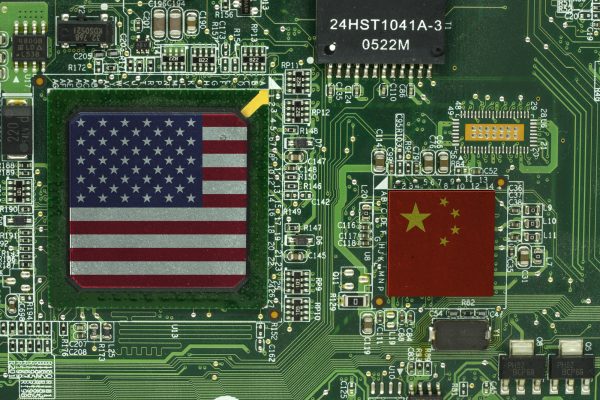
The Framework for Artificial Intelligence Diffusion, introduced by the Biden administration just days before it departed office, incorporates measures designed to make developing frontier AI models off-limits to all countries in the world except the United States and a select group of allies. Given that AI capability is rapidly becoming the main determinant of economic and military power, this implies a new, two-tiered world order, in which a small group of countries dominate the rest. However, it is very unlikely to work, and may produce results that are opposite to those intended.
The framework divides the countries in the world into three groups. The first group consists of 18 U.S. allies that have explicitly aligned themselves with Washington in their stance and policies toward China, particularly in the area of export controls. The second group includes China and other countries regarded as adversaries by the U.S., such as Russia, North Korea, and Iran. The third group, which is the largest, comprises the rest of the world.
At the heart of the Framework for Artificial Intelligence Diffusion are the national restrictions on the acquisition of Graphical Processing Unit (GPU) chips. Training generative AI models, such as OpenAI’s GPT series, involves a staggering number of mathematical operations. Current top models have undergone training processes involving operations reaching 10^26 – that is, 100 trillion times 1 trillion – in number. Carrying out so many operations in a reasonable time frame requires high-speed and parallel execution, which is made possible by GPUs.
The top GPU providers in the world, with Nvidia at the very top, are U.S. companies. Chinese GPUs lag behind in capacity and other metrics, and most top-end generative AI models developed in the country also rely on Nvidia GPUs. The lagging performance of the Chinese GPUs is at least partially due to U.S. chip sanctions, which, in addition to blocking the purchase of top-end GPUs by Chinese entities, restrict Chinese access to tools, materials, and services needed to build them domestically. In fact, the primary goal of the chip sanctions is to prevent Chinese companies from GPUs needed to effectively develop AI models. The new framework includes various measures to tighten these sanctions on China.
What is surprising about the framework is that it also introduces restrictions on top-end GPU access for the third group of countries – those not considered adversaries by the United States. The restriction is formulated in terms of the total cumulative processing power of top-end GPUs a country may acquire during the three-year period beginning in 2025. Limits after 2027 will be determined through an annual review process. Expressed in terms of the top Nvidia GPU widely used in model training – the A100 – it comes to about 50,000 GPUs.
To put this in perspective: the recently completed data center of xAI, Elon Musk’s AI company, has 100,000 of these chips, and other major U.S. players have plans for data centers with chip counts in multiples of this number. The framework leaves an open door for some relaxation of the restriction, stating that “under certain conditions” the quota may be increased up to 100 percent.
Hence, for most countries in the world the framework limits the AI computational power in an entire country to a fraction of that of a single top U.S. company. The logic of the restriction is given in the decision: “This licensing policy will enable end users in these destinations to develop any AI models short of the frontier.” In other words, it prevents these countries from developing state-of-the-art generative AI models.
The companies headquartered in the third-group countries may apply for “National Validated End User” status, which enables them to acquire GPUs that do not count against their country’s national quota. To apply for this status, their government must have reached an agreement with the United States, and they must satisfy certain technical and non-technical conditions.
However, their acquisitions are subject to quarterly quotas set for the three-year period, which, according to the framework, “represent clusters approximately 12 months, or one generation, behind the cluster size BIS [the Bureau of Industry and Security, part of the Department of Commerce] believes will be needed to train the most advanced dual-use AI models.” Even if they find a way to do so with resources available to them, the decision explicitly forbids companies in this status from using their GPU capacity for building frontier-level models.
Entities in third-group countries could have used cloud-based GPU services provided by companies headquartered in the United States and first-group countries to develop advanced AI models, but these providers are also explicitly prohibited by the framework from allowing this.
Thus, the framework blocks all the paths for companies, universities, research organizations in all countries – except the United States and its 18 aligned allies – from competing in the development of advanced generative AI models. What is the implication of this? Biden’s remarks to the United Nations General Assembly on September 24, 2024, quoted in the text of the Framework document – “AI will transform our ways of life, our ways of work and our ways of war” – points to the answer.
Even though it has been only about two years since ChatGPT was first launched, a flurry of such models have already acquired human-like capabilities in mental tasks such as coding, writing, analyzing data, doing research, and aiding in new drug and material discoveries. These capabilities are no doubt being employed today to build command and control systems that analyze high volumes of global data for quick and effective decision making in times of conflict. These models are being used to train robots to perform tasks, both civilian and military, more effectively than humans. We are moving toward a world where the only thing that matters is AI capability. The openly stated goal of the framework is to ensure that the United States and its close allies have sustained superiority over the rest of the world in this area. This implies superiority in all aspects of life.
But could this framework work? It’s very unlikely. Although newly announced, the framework has already become technically unworkable.
Just a few days after its announcement, a Chinese company, DeepSeek, introduced a new open source model. The model is comparable to the top state-of-the-art existing models in performance yet trained with a fraction of the computation power used by these models. While the U.S. big tech companies are investing in data centers with hundreds of thousands of top-end GPUs, DeepSeek had trained the model using just over 2,000 GPUs with lower communication speeds that had been produced by Nvidia especially for China to comply with the U.S. sanctions. The company shared the code, parameters of the model produced in the training process, and a detailed technical report providing information on details of the implementation process, for anyone to use pretty much as they want.
This means that the 50,000 GPU limit imposed by the Framework, determined based on the amounts of computational power used by U.S. big tech companies, is not at all a constraint on other countries in their ability to develop top and models. The framework has not yet come into effect and may be updated to account for this development, but it is obvious that unless set at unacceptably low levels, similar technological developments are likely to render such limitations ineffective over time.
More concerning for the United States is the political competition from China. A couple of months ago, as the outgoing Biden administration was preparing this framework, China’s Ministry of Foreign Affairs announced the “AI Capacity-Building Action Plan for Good and for All.” The plan, in an approach diametrically opposite to that of the U.S., states the readiness of China to “actively cooperate with all countries, especially the fellow developing countries” to help them in building AI capability, human resources, and infrastructure, developing AI models, and applying them for economic and social development.
This is an attractive offer, but one many countries would hesitate to take up today, because of two factors working together against it. For one thing, the new Trump administration would likely not respond favorably to such a move. If it is in effect, this framework would likely be used as a carrot and stick mechanism to encourage countries to align with the United States rather than China.
According to the framework, increasing the country GPU quotas by 100 percent and giving companies the National Validated End User status are government decisions. Such decisions would likely not be made in favor of a country cooperating visibly with China. On the other hand, currently U.S. allies like Israel and Singapore are included in the third group of countries. These and possibly other countries would likely be moved to the first group if they would agree to align themselves firmly and explicitly with the United States’ China stance and policies. Conceivably, a third group country cooperating too deeply with China in AI would face the prospect of being moved to the second group, cut off completely from U.S. AI resources.
The second factor making China’s offer less attractive is the fact that Chinese GPUs today are technically inferior to the U.S. ones. They are also likely not produced in volumes high enough to meet domestic needs and supply other countries. Under these conditions today, a third group country may find it too risky to obtain from China what is withheld by the United States or cooperate closely with China on AI.
But Chinese companies, despite increasingly restrictive export controls on IC chips and chip-making equipment and materials since the first Trump administration, have managed to steadily improve their GPU offerings. They have also enhanced their AI model development capabilities and developed methods to make better use of their relatively scarce GPU computational resources, closing the gap with U.S. companies. As this process continues, Chinese companies should be able to provide other countries with good enough GPUs at sufficient volumes along with methods and processes for more efficient use of computational resources in the coming years. This would make the Chinese offer a viable way out of the second tier of the three-tier world the Framework for Artificial Intelligence Diffusion presents, and would likely be taken up by many countries. This is probably the opposite of what the architects of the Framework had in mind in competition with China.
Withholding technology to maintain an advantage has become a defining feature of U.S. competition policy in AI. Over the last two presidential terms, China has faced increasingly strict technology restrictions aimed at ensuring it remains behind the United States in AI development. Now, the new framework seeks to keep almost the entire world at least “one generation behind” in AI technology. However, as the DeepSeek incident demonstrates, this approach has not worked for China and is unlikely to succeed for the rest of the world. Instead, this policy risks delivering significant losses for the United States – in terms of international political capital, company revenues, and market share – while achieving little else.
The rationale often cited for these restrictions is the potential for AI technology to be misused by bad actors. However, keeping the rest of the world behind in AI development does not address this issue. The technology available today already has the potential for misuse, and this risk will only grow over time – regardless of whether the world is one step behind the U.S. or not. The real solution lies in fostering cooperation between countries, both as producers and users of AI technology. If nations are locked in a struggle for dominance, collaboration, and hence, the possibility of addressing these challenges, will not be possible.
Countries around the world have a lot more to think, discuss, and cooperate on related to AI than its potential misuses. AI is a great force multiplier, both for mental and physical work. In mental work we are already experiencing almost daily increases in productivity. With AI enabled robots, a similar process is about to begin for physical labor. This could mean a world of abundance, but it can also mean over-supply of labor and severe downward pressure on wages, maybe to the point of leaving large segments of the world population unemployed. Such a process would impact first and foremost the developing counties, which traditionally have relied on their supply of low cost labor for economic development. Whether AI leads to a utopia or a dystopia will depend on how its impacts are managed. Global cooperation is needed to ensure that the world moves toward the first of these possible states rather than the latter.
DeepSeek’s new model provides a valuable opportunity to highlight the benefits of cooperation in AI. The announcement of the new model was likely a source of deep concern for some; here was a relatively small Chinese company leaping ahead of the U.S. big tech, building a top-end AI model much more efficiently, despite years of technology sanctions on the country. But for many all over the world, it was a moment of joy. It had suddenly removed the capital investment barrier for participating in the AI race, reducing the required GPU investment from millions of dollars to tens of thousands of dollars. Now not only a handful of big tech companies, but many smaller ones, universities, research organizations, could participate in development of such systems. With the model, its parameters, hardware configurations, detailed information on development methods and experiences available, anyone could start using and building upon it. This increase in the number and diversity of participants means faster improvement in model capabilities, accelerated productivity improvements, better applications, and lower prices for users worldwide.
Neither DeepSeek nor China invented open-source in AI; the incredible rise of AI owes a lot to sharing of knowledge and open-sourcing at various levels of models by companies like Google and Meta. Sharing and cooperation are key to unlocking the benefits of AI and ensuring it is used for the good of humanity.