

Specialized counseling services for LGBTQ+ youth will return to the 988 Suicide & Crisis Lifeline by the end of the year, the Trump administration confirmed last month. But young people looking to “press 3” for that support may encounter an altered experience, as federal health officials want to ensure the services comply with President Trump’s executive order last year that essentially denies the existence of transgender and nonbinary identities.
The Trump administration shuttered the LGBTQ+ youth specialty services last July, but soon after, a congressional appropriations bill directed $33.1 million toward reinstating the line. The law indicates that services should support all LGBTQ+ youth.
But the Trevor Project, a suicide prevention group that has operated its own LGBTQ+ youth hotline in some form since 1998 and responded to about half the calls to 988’s specialized line from its inception in 2022, may not be part of the restored service due to a technicality in the call for applications, the Associated Press recently reported.
Nevertheless, the Trevor Project submitted a proposal to provide the restored services, according to a statement provided to STAT from Mark Henson, the group’s vice president of advocacy and government affairs. It has not received direct confirmation of its eligibility, but “regardless of the decision, we remain deeply committed to the importance of specialized services for LGBTQ+ youth, and are eager to support anyone providing crisis services on 988 or otherwise,” Henson wrote.
Advocates worry that if specialty services are altered to exclude transgender youth in some way, it will be worse than nothing at all.
Aaron Almanza, executive director at the LGBT National Help Center, said he worries that if trans youth call the crisis line for support and are “told they’re incorrect, that’s going to cause more people to spiral. … The biggest fear that I have is that it’s going to kill them.”
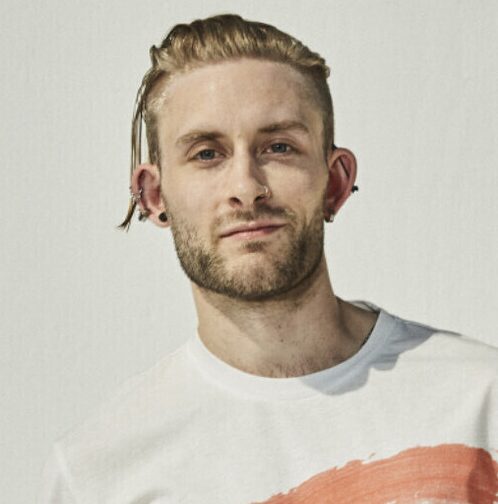
Alex Boyd began volunteering on the the Trevor Project’s independent suicide hotline in 2019. By 2022, he was one of a few staff members at the organization working on the launch of specialized LGBTQ+ services with 988. “Maintaining trust in the experts who do work with trans young people every day is the most important thing,” he said in an interview. “When there are external individuals or entities coming into that space and limiting what can or can’t be covered within what we know to be best for LGBTQ young people, that’s going to cut off the opportunity for quality care at the end of the day.”
A year after the Trump administration shut down 988’s “press 3” option, Boyd, the Trevor Project’s director of crisis intervention, spoke with STAT about the unique challenges that crisis counselors face trying to help LGBTQ+ youth, and why the services are so important right now.
The conversation has been edited for length and clarity.
We don’t yet know how the Trump administration may try to reinstate 988’s specialized LGBTQ+ services while complying with last year’s executive order. But advocates have told me they’re worried that training for 988 counselors may be impacted, or that counselors could be prohibited from affirming trans identities when people call in. What would be the risk if counselors are restricted in that way?
It’s not that somebody’s gender identity will always come up in the span of the conversation. It’s not that we have to know if somebody identifies as a man or a woman or as a gender fluid nonbinary person, for example. But so many of their environmental factors and the ways in which they receive support are contingent on them experiencing safety, them experiencing support around that identity, and feeling able to be open and authentic with themselves.
Sometimes their crises are originating in challenges around their gender identity — maybe they’re a trans or nonbinary person who’s not out, and they are looking for that explicit affirmation of their identity so that they can go through some of that internal reflection with us around what that means for them. But if it’s not directly the presenting issue that somebody’s coming to us with, it’s often at the core of the reason why they’re having some family dynamic challenges that are coming up, or some relationship challenges, or challenges with their job or financial security. They are looking to a service like ours to get validation that they don’t deserve to be mistreated, whether directly or indirectly, based on their identity, and find a place where they don’t have to shield themselves or filter themselves in any form, but can just be fully authentic about their identity and have the level of transparency with us that they need to have.
What are the common types of calls you get from young trans people?
Many of the challenges that trans and nonbinary young folks are experiencing aren’t so dissimilar to the larger LGBTQ community. But I think specifically what is most exacerbated for trans and nonbinary folks — one is resources, specifically towards medical support. And not only gender-affirming health care, which is fundamental to their ability to be themselves and to be healthy, but also other avenues of care.
I was just on the line observing a conversation with a young person who had a really poor experience in a hospital setting that had nothing to do with gender-affirming care. It was just a surgery that they had to go through, and they had a really negative experience of being misgendered and identified as a different gender identity.
This person shared near the end of the conversation that they had reached out to us first when they were a preteen, and they’re now in their early 20s. It had been nearly 10 years of them intermittently reaching out to us when they were feeling unsafe. They now live alone, they’re an adult. But due to the medical challenges they were experiencing, they had to rely on family for the first time in some years, and that family had been abusive in the past. They hadn’t been supportive of this person’s identity, and it had actually perpetrated harm. I share that because it’s not a dissimilar story from something that we see often, which is young adults forced to rely on systems that are harmful to them in order to be healthy in other regards.
Are there other calls to the hotline that have stayed with you over the years?
I’m thinking back to a conversation where a young person had reached out to us, having actually attempted to take their life already. They were reaching out saying that they regretted that action, and they were trying to figure out what to do. They were deeply fearful around calling 911 or calling emergency services in their area, which is a really frequent concern. Our key priority in that conversation was around building rapid rapport and trust with them so that we can remain connected because there’s always the risk that disconnection happens, and then our opportunity to support is lost.
With that individual, we were able to establish rapport, understand the level of harm that had already been inflicted on themselves. That rapport was breached at one point, because they were getting really activated by the idea that they didn’t want 911 there, and they actually closed their interaction with us unexpectedly. They reached back out to us about 20 minutes later and wanted to try again. We were able to convince them to engage in an emergency services outreach and we reached out to emergency services on their behalf. We were able to deescalate — they had actually started engaging in self harm in the moment as well. And we were able to get confirmation that emergency services had arrived at their location and were directly treating them about 30 minutes after that.
That sounds like the harrowing type of emergency call that people might imagine a suicide hotline handles. But how can a counselor support someone in a situation like the first caller you mentioned?
If there are thoughts of either suicide or self harm, we’re really trying to address those and the root causes behind those thoughts specifically, in a situation where there’s environmental factors, i.e. unsupportive family. Often we’re trying to understand how reasonable it is for them to separate from those supports — can they distance themselves from an individual who’s perpetrating harm on them? Sometimes they can’t, if that’s their household, for example, and otherwise they would be homeless. It’s about putting the cards in the caller’s hands to understand what they feel capable or empowered to do, and how we can increase that comfort, maybe with reaching out to additional supports. Also: identifying what kind of coping strategies exist so they can withstand their environment, or whatever is stressing them; what kinds of professional resources exist that are accessible to them?
What are the common mistakes that new counselors tend to make when working on the suicide hotline?
There’s often an assumption of what different supports are accessible to folks outside of a crisis service. We might be trained to refer to therapists and medical settings that are in their area, but that individual might be located in a rural place where there’s limited access. They also might not be somebody who has the traditional support system around them of parents, close friends, or in a school setting. And when we start to realize that those avenues of support don’t exist for someone, there’s a lack of creativity sometimes in putting it in their hands to help us understand their experience.
What sort of logistical work does it take to establish these specialized services on a hotline?
First and foremost is the operational reality that you are having to build up technical processes and operations that are going to alter what might be a single stream of volume into multiple streams of volume, for example. And then the most impactful consideration in order to inform that is getting people in place. Training for crisis work — even if folks have done crisis work for three years in the past, say — still requires some amount of training to ensure that there’s policy alignment, there’s best practices being refined, and, especially for a subnetwork population like an LGBTQ youth population, making sure that’s tailored to the audience people are going to serve. For us, that is about a two- to three-month period to get people in place. So when you think about a world where there’s a lot of stopping and starting of a subnetwork, for example, you’re losing two to three months each time you’re having to start.
One of my core concerns is that so many resources are going toward figuring out how we’re going to operate a service, or how we’re going to build a service — or how we’re going to close a service, as with last year. And there’s so much energy that’s lost to truly understand and hear directly from our LGBTQ young people and ground ourselves in what the needs are. There’s a lot of unseen work that is being impacted, especially over these last few years.
If you or someone you know may be considering suicide, contact the 988 Suicide & Crisis Lifeline: Call or text 988 or chat 988lifeline.org. For TTY users: Use your preferred relay service or dial 711 then 988.