

WASHINGTON — The Trump administration, which in recent months had avoided public discussions of vaccine policy because of concern around the political repercussions, is changing course.
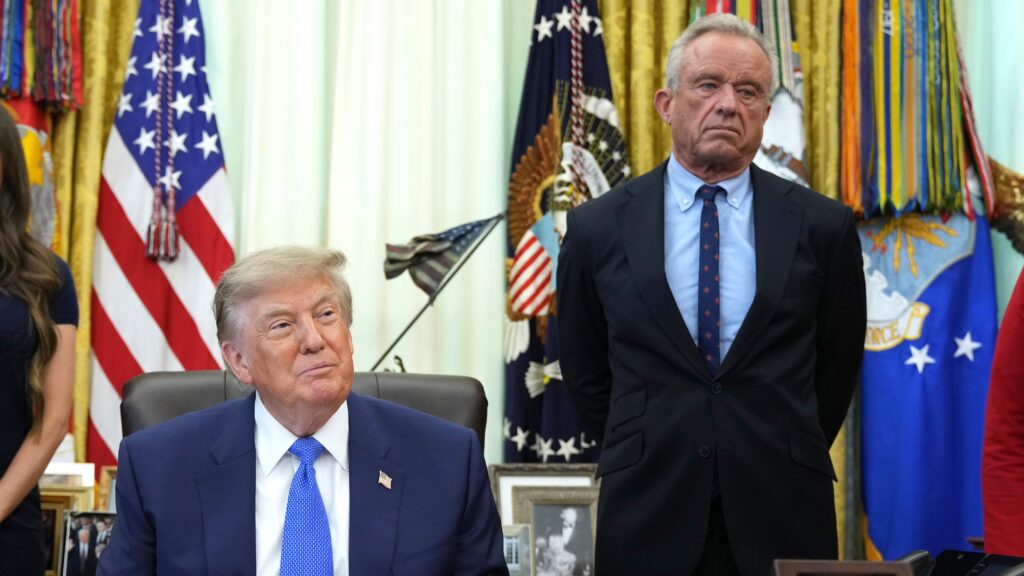
Speaking from the Oval Office, President Trump on Monday unveiled a new executive order as he and his top health officials presented a new, skeptical government approach to vaccines, making extraordinary claims without evidence to support the remade federal agenda.
“That’s a big one in my book,” Trump said after signing the order.
The executive order lists vaccines to be recommended for all children, those at high risk of infection, or just in consultation with a clinician — a stark change from the usually public, scientist-led process of determining the federal government’s approach to immunization issues. The new “Gold Standard Childhood Vaccine Recommendations” were instead made in consultation with the president’s advisers and relied on comparing the U.S. system to those in other countries. (The White House did not immediately answer questions about why that approach was taken and who advised the president on the order.)
The order recommends all children get 11 vaccines instead of the 18 previously recommended by the federal government — and would spread out the doses over a longer time, the president said. The administration did not provide immunological evidence for the changed schedule.
The order was a response to a court stalling previous changes to vaccine policy, Heidi Overton, a health policy adviser at the White House, said.
The order also calls for the MMR vaccine, which protects against measles, mumps, and rubella, to be broken up into three vaccines. That wouldn’t be possible, experts say, without years of work and investment to make a change not supported by evidence. Still, the president said without evidence that the vaccine could be “quite lethal” in its combined form, despite the shot being repeatedly proven safe through large-scale studies. Overton later clarified that the administration recommended the shot for all children.
Though Trump admitted to not knowing the cause of rising autism rates, he and other officials connected the vaccine order to their efforts to understand and stop the growth of the disorder.
Trump said parents could still get their children vaccines if they wish and that insurance would continue covering the shots.
The president directed the federal health department’s Task Force on Safer Childhood Vaccines to issue a report on how to implement the order. Health secretary Robert F. Kennedy Jr. said the agency had already launched “unprecedented” research efforts in vaccines.
The order may not necessarily translate into real changes in vaccination practices — at least not at the national level. Hospitals and doctors have chosen to ignore previous vaccine recommendations from the Trump administration, arguing federal officials aren’t offering evidence to back up policy overhauls.
It’s the latest in a series of actions from the administration returning to highlighting concerns — even those at odds with established medical guidance — with current vaccination practices.
Earlier this month, Kennedy lashed out during an interview on CNN over vaccine and public health policies. Days before the appearance, the Wall Street Journal reported that Trump was pushing for more actions on vaccines. In May, the president signed an executive order pressing federal health agencies to continue changing the nation’s framework.
The Trump administration was previously skittish about publicly touting its changes to vaccine policy. A Trump pollster presented evidence that “vaccine skepticism is bad politics,” and the administration focused on health care affordability over the sweeping changes it was overseeing across federal shot regulations. At the time, one White House official said the administration was “done” with its work on vaccines.
Now, officials say, that’s changing.
Asked if there’s been a shift, Calley Means, a senior adviser at HHS, said in a text message: “Gloves are off.”
The shift, if effective in changing vaccinations across the country, could have profound effects on the health of Americans, especially children. The administration has considered far-reaching policies that could upend the vaccine market — though the most extreme ideas have yet to make it into federal policy.
Kennedy has for years been critical of vaccinations, sharing debunked theories about the shots and warning parents to keep their kids vaccine-free. Trump himself also has a history of expressing doubts about vaccine safety. (Scientists and doctors have repeatedly used large bodies of evidence to show the safety and effectiveness of the shots when approving them.)
Kennedy led the Make America Healthy Again movement that was made up in part by other vaccine skeptics — many of whom were concerned by the administration sidestepping the issue publicly. The shift may be seen as a win for MAHA leaders who have worked to build support in the administration to not shy away from the issue. Trump thanked “MAHA moms” in particular when introducing the order on Monday.
The shift also presents a potential challenge for the incoming CDC director, Erica Schwartz.
Schwartz, during her Senate confirmation hearing just last month, assured lawmakers she would “follow the science” — but didn’t directly answer questions about whether she would stand up to administration leaders if necessary.