

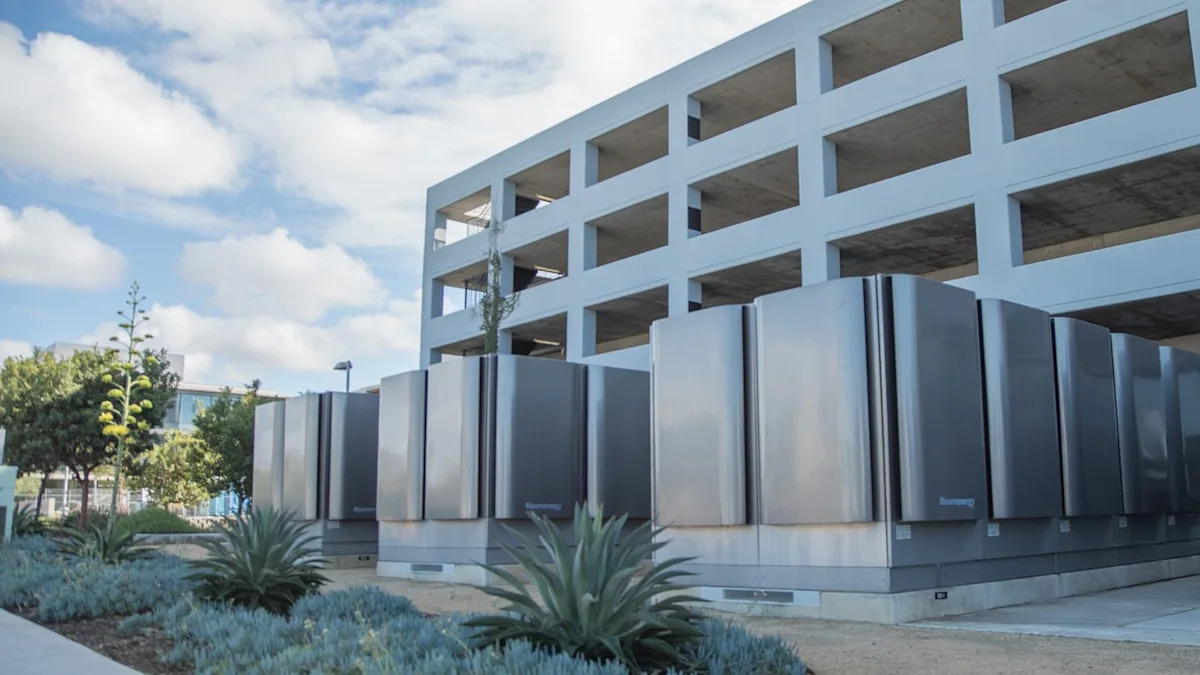
Bloom Energy (NYSE: BE) is a clean energy company that makes solid oxide fuel cell systems. These fuel cells, to put it simply, chemically remove electrons from natural gas and route them through a circuit to produce electricity. The cells live in giant boxes — Bloom Boxes — that can be used as mini on-site power plants for data centers, factories, and other facilities that can’t wait years to gain access to a grid connection.
This advantage — on-site power generation — has become enormously valuable in the age of artificial intelligence (AI). Bloom’s share price is up 136% so far in 2026 and over 344% over the past year.
Missed Nvidia in 2009? This Rare Signal Is Flashing Again. In 2009, a “Double Down” signal flashed for a little-known chipmaker called Nvidia. For the first time in years, that same “Total Conviction” signal is flashing for a company 1/100th the size of Nvidia. Continue »
That’s a huge run for any stock. And yet the numbers underneath that rally suggest there’s plenty of room for further growth.

Bloom is filling a gap in the grid
To frame Bloom’s opportunity properly, it helps to understand a significant mismatch at the heart of the AI build-out.
In a nutshell, power-intensive facilities, like data centers, are being built faster than the U.S. grid can expand to accommodate them. As a result, the developers of these facilities can’t build them just anywhere; they have to pick places where there’s enough power to support their projects. And even then, there could still be a delay between when a data center is constructed and when it can actually get power.
Depending on the grid is cumbersome, and data centers tend to increase a community’s electricity bills due to the enormous amount of power these server farms guzzle.
In short, it would be best if these AI factories could generate their own power. Bloom Boxes, which can be installed within 90 days, are exactly the kind of energy solution they need.
Bloom’s growth is enormous; so are expectations
That preamble leads me to the opportunity. Few companies can offer what Bloom does. And it’s showing up not only in today’s revenue but also in what analysts are expecting over the next two years.

Bloom generated about $2 billion in total revenue in 2025. It has already produced about that much (roughly $1.8 billion) through the first two quarters of 2026, and it projects it will finish the year with $3.9 billion to $4.2 billion, which would roughly double last year’s revenue.
Analysts are expecting that figure to more than triple over the next two years, but that’s a generous estimate for a company with a pipeline like Bloom’s. The company entered 2026 with a roughly $20 billion backlog, but that figure has likely gone up. CEO KR Sridhar recently commented that Bloom’s backlog was “growing faster than revenue.” That could be a problem — Bloom’s manufacturing capacity could be limited — but it’s not a bad problem when your company is profitable.