

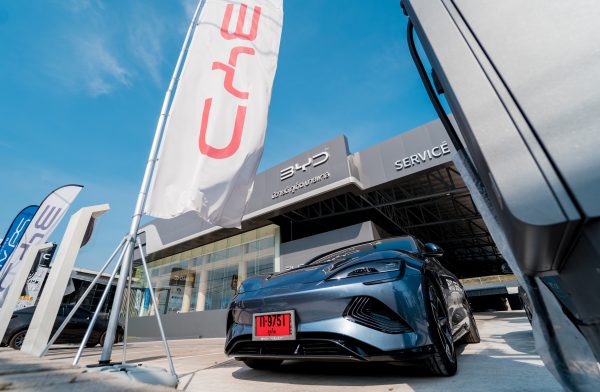
The data clearly illustrates a rapid growth in China’s electric vehicle (EV) exports. In 2023, the total export value of Chinese pure electric vehicles surged by 70 percent, reaching $34.1 billion. Meanwhile, governments in Europe and the United States are increasingly scrutinizing China’s expansion in the global EV market, seeking to employ trade measures as a counter.
In March 2024, the Biden administration declared Chinese electric vehicles a risk to U.S. national security. During her visit to China in April, U.S. Treasury Secretary Janet Yellen highlighted the issue of “overcapacity,” criticizing China’s excess production in green sectors as a threat to the U.S. electric vehicle and solar industries.
Meanwhile, in October of the previous year, the European Union initiated an anti-subsidy investigation into imports of pure electric vehicles from China, and it is likely that anti-subsidy duties will be imposed on Chinese automotive companies in 2024.
Amid signs of weakening domestic demand, China is deeply concerned about the European and U.S. crackdown on its electric vehicles, which could significantly reduce its EV exports.
However, the approaches taken by the European Union and the United States to suppress Chinese electric vehicles differ, highlighting clear divergences. Moreover, there are notable differences in the tactics and effectiveness of their respective measures against Chinese EVs.
First, the objectives of the EU and the U.S. diverge significantly. The EU aims to maintain a level playing field in the market, while the U.S. seeks to preserve its leading position in the global electric vehicle industry.
The EU is the largest recipient of Chinese EVs, accounting for nearly 40 percent of China’s electric vehicle exports. Furthermore, it is projected that by 2024, vehicles manufactured in China will constitute one-fourth of all car sales in Europe. This indicates that Chinese EVs hold a unique market position in Europe and have made a significant impact on parts of the traditional European automotive manufacturing industry, posing a threat to job markets in the EU. Approximately 14 million people are employed directly or indirectly in the automotive sector in Europe, representing 6.1 percent of the EU’s workforce.
In contrast, the United States has not become a major destination for Chinese EV exports. In 2023, direct exports of electric vehicles from China to the United States amounted to only $368 million, and the U.S. domestic electric vehicle market is still largely dominated by local brands. The Biden administration has not yet repealed the tariffs imposed on Chinese products by the Trump administration, which include an additional 25 percent tariff on top of the standard 2.5 percent import duty on vehicles. This has significantly hindered Chinese automobiles from entering the U.S. market.
Therefore, the true objectives behind the EU and U.S. actions to restrict Chinese electric vehicles are fundamentally different. The EU’s goal is to preserve the order of the Eurozone market, while the U.S. aims to capture a significant share of the global electric vehicle market and maintain its leadership position.
Second, the approaches differ significantly. The EU’s policies toward Chinese EVs are based on transparent investigations and trade tools. Initially, the investigations were launched by the European Commission, not based on complaints within the European automotive industry, indicating the Commission’s proactive role in this matter. The EU is currently conducting an investigation into Chinese electric vehicles that may last up to 13 months, reflecting careful deliberation and a commitment to procedural integrity.
In contrast, the U.S. approach involves abruptly securitizing economic matters, reflecting a consistent logic in dealing with Chinese companies: whether addressing Chinese smartphones, social media platforms, or e-commerce, the U.S. government has emphasized risks related to data security. Despite the limited impact of Chinese EVs on the U.S. market, the Biden administration perceives internet-connected vehicles from China as a national security threat, due to their operating systems potentially transmitting sensitive information to the Chinese government. Subsequently, the Commerce Department initiated a “security threat investigation,” which may lead to new regulations or restrictions on vehicles manufactured in China.
Thus, the EU’s measures against Chinese electric vehicles are grounded in legitimate trade policy procedures, requiring lengthy investigations, whereas the U.S. has politicized and framed the issue of Chinese electric vehicles as a security concern, using an ambiguous and biased investigation process with a pronounced political slant.
Finally, the tools and effects of policies differ. The EU is likely to impose anti-subsidy duties on Chinese electric vehicles this year, potentially increasing the current tax rate from 10 percent, with the specific additional rate yet to be determined but likely to exceed 20 percent. Additionally, the EU may also consider reducing import quotas, imposing fines, and restricting Chinese EVs from entering public procurement markets. Following the publication of the anti-subsidy investigation, Chinese EV companies might face complex licensing applications and could be required to disclose subsidized research and development and assets.
Although the EU has a plethora of policy tools at its disposal, the legitimacy of the investigative process and potential retaliatory measures leave it uncertain whether the EU will swiftly conduct an “anti-dumping investigation” against Chinese electric vehicles and rapidly implement a series of policies.
Amid an economic contraction of 0.3 percent in 2023, Germany is highly concerned about potential retaliatory tariffs from China. German Chancellor Olaf Scholz recently visited China to seek economic cooperation between Germany and China. Rumors suggest that China’s commerce minister and President Xi Jinping will also soon pay visits to France to resolve some trade disputes.
It would be irrational for Europe to escalate trade tensions with China rapidly in 2024. After all, the return of Donald Trump to the U.S. presidency remains possible, and EU-U.S. trade relations could face setbacks as a result.
For China, the trade protection tools adopted by Europe could severely dampen the momentum of electric vehicle exports, a major concern for both the Chinese government and businesses, given that Europe is a primary destination for Chinese EVs. Therefore, during Xi’s upcoming visit to Europe, discussions on electric vehicle subsidies and issues of overcapacity are expected to be extensive.
However, the range of policy tools available to the United States for restricting Chinese electric vehicles is relatively limited, and their impact on Chinese EVs has been less significant given the small scale of Chinese automotive exports to the United States.
The U.S. Department of Commerce is capable of initiating anti-subsidy and anti-dumping investigations against Chinese electric vehicles at any time. Additionally, there are signs that the Biden administration is considering imposing further tariffs on China. On April 17, U.S. Trade Representative Katherine Tai announced plans to counteract China’s non-market policies and practices using new tariffs and other trade tools.
Congress is also advocating for a substantial increase in the tariffs imposed on Chinese EVs, which are already as high as 27.5 percent. Radical lawmakers in Congress are clearly opposed to allowing Chinese electric vehicles into the U.S. market; for instance, on February 28, Republican Senator Josh Hawley of Missouri proposed imposing a tariff of up to 100 percent on electric vehicles imported from China. Fellow Republican Senator Marco Rubio of Florida has suggested a tariff of $20,000 on each electric vehicle produced in China and imported into the United States.
Considering the potential for Chinese electric vehicles to penetrate the U.S. market due to their cost advantages, the Biden administration might adopt even stricter measures, possibly banning Chinese EVs entirely from the U.S. market based on findings from investigations into “security threats.”
Chinese EV manufacturers are well aware of the challenges of entering the U.S. market, and the imposition of tariffs by the U.S. on Chinese electric vehicles was anticipated. Exports to the U.S. represent only a small fraction of their overseas market, which means the impact of U.S. trade tools on Chinese electric vehicles is relatively minor.
Additionally, unlike other Chinese industries that are restricted by the U.S. government, China’s EV sector is almost independent of U.S. technology and raw materials. Therefore, the common U.S. tactics of export controls and investment restrictions are less effective in curbing the global export of Chinese electric vehicles.