

When Donald Trump announced his new tariff rules for more than 180 countries on April 2, what he termed as “Liberation Day,” it sent shockwaves across the global trade landscape.
Like other regions, South Asia, a region of over 2.04 billion people, whose economies rely heavily on exports to the United States, will be deeply impacted by Trump’s tariffs. Governments in the region will need to respond quickly to ensure that their already struggling economies do not sink further.
The new tariffs for South Asian countries range from 10 percent to 44 percent. A 10 percent minimum tariff will be imposed on all countries. In the case of countries with large U.S. trade deficits, Trump has levied tariffs at half of what the trading partner country imposed on U.S. imports, though the calculation formula has been disputed.
India, the region’s largest economy, exported $77.5 billion worth of goods to the U.S. in 2024, with average U.S. tariffs of under 2 percent. Bangladesh, the second-largest South Asian exporter to the U.S., had an average tariff of about 15 percent on its goods. Bangladesh’s apparel exports to the U.S., made up primarily of ready-made garments (RMG), rose by 0.75 percent year-on-year in 2024, reaching $7.5 billion.
Likewise, Pakistani, Sri Lankan, and Nepali goods imported to the U.S. drew modest tariff rates, generally falling below 10 percent, depending on the product categories. These lower tariffs gave the region a price advantage over competitors in Southeast Asia, Latin America and parts of Africa.
However, under Trump’s new policy, India faces a 26 percent tariff on its goods, while Bangladesh, Pakistan and Sri Lanka have been slapped with 37 percent, 29 percent, and 44 percent tariff, respectively. As for countries like Nepal, Bhutan, Maldives, and Afghanistan, whose export volumes to the U.S. has been small, their goods will face a universal 10 percent tariff, which still means higher barriers than before.
These dramatic changes could hurt economic stability in several of these countries, particularly since many of them are developing countries. What is more, the tariff hikes come at a time when they are already grappling with inflation, political upheaval, youth unemployment, and post-COVID recovery.
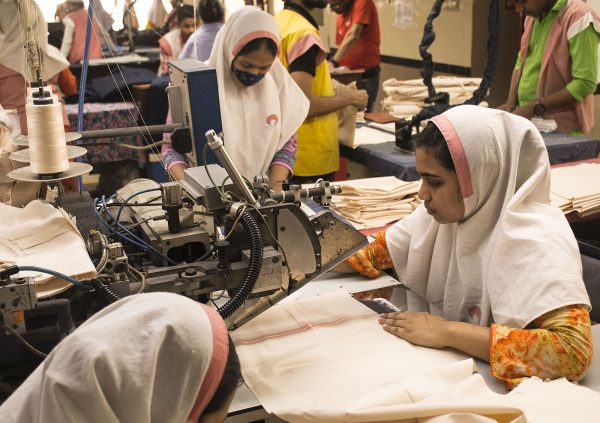
Bangladesh is perhaps the most vulnerable. Its economy is deeply tied to its garment sector, which employs more than 4.1 million workers, mostly women, and earns most of its foreign income from U.S. and EU markets. The U.S is Bangladesh’s single largest market. A 37 percent tariff makes Bangladeshi products less competitive compared to those from countries like India or Vietnam.
While exact financial losses are yet to be calculated, local exporters and trade associations have expressed strong concern. Many fear that U.S. buyers will reduce future orders or look for cheaper alternatives elsewhere, which could affect factory jobs and wages. Bangladesh is undergoing a political transition following the ouster of Sheikh Hasina on August 5 last year. As a result, it has been experiencing significant social unrest, particularly in the RMG (readymade garment) sector. Workers have been on strike over wages.
Indian goods face 26 percent tariff under Trump’s new rules. It is expected to have damaging effects on the Indian gems and jewelry sector. The U.S. is a key market for this sector, accounting for nearly $10 billion or 30.4 percent of the country’s total annual exports in this category, valued at $32 billion. The jewelry sector is preparing for a significant decline in exports due to steep U.S. tariffs
India’s third-largest export to the U.S. after engineering and electronic goods, the gems and jewelry sector supports millions of jobs across the country. However, this sector has already been under pressure of late due to weak demand from China, with overall exports declining by 14.5 percent to $32.3 billion in the 2023–24 fiscal year. Smaller exporters may not have the resources to absorb these new costs. Many Indian manufacturers are also recovering from global inflation and currency depreciation, so this trade pressure could delay their recovery.
However, overall, the impact of tariffs on India could be different from that on Bangladesh as it has a more diversified export basket that includes pharmaceuticals, jewelry, automotive parts, machinery, RMG and electronics.
Despite the tariff burden, a new window of opportunity could open up for India’s exports to the U.S., as Trump’s tariff rate for India is comparatively lower than the rates for key competitors in the apparel market — Bangladesh, Sri Lanka, China (34 percent), Vietnam (46 percent), and Cambodia (49 percent). This creates a potential competitive window for India’s RMG sector, which has long trailed behind Bangladesh and Vietnam in the U.S. market. In 2024, India’s RMG exports to the U.S. stood at approximately $4.2 billion, behind Bangladesh’s $7.34 billion.
With Bangladesh and others losing the price advantage due to steep tariffs under the new rules, Indian manufacturers, especially mid-sized and large-scale exporters, can position themselves as a cost-effective and reliable alternative. India already saw an 11.5 percent increase in RMG exports for the month of January 2025 compared to January 2024, when exports grew by 7.6 percent compared to January 2023. So, India can harness the opportunity amidst this chaos.
The impact of the tariff hike could impact Pakistan significantly as its economy is fragile and is facing multiple crises, including high inflation, rising fuel costs, a depreciating rupee, and low foreign exchange reserves. The textile industry is one of its few strong sectors, and it earns a big share of its dollars from U.S. exports. The 29 percent tariff will now put Pakistani exporters at a disadvantage. Even a small drop in orders could lead to job losses and economic instability in urban centers like Faisalabad and Karachi.
Sri Lanka, still rebuilding after its 2022 economic collapse, has been slapped with the highest tariff — 44 percent — in the region. Many of its apparel factories, too could struggle to stay in business. The U.S. is Sri Lanka’s top apparel market, accounting for over 40 percent of the sector’s total exports, which exceeded U.S. $5.5 billion in 2023. Even though Sri Lanka has had good relations with China and India in recent years, these countries cannot replace the demand from American buyers overnight. The risk of order cancellations, layoffs, and further debt burdens has now increased.
Smaller South Asian countries — Nepal, Bhutan, Maldives, and Afghanistan — are also affected, though not as severely. These nations have lower export volumes to the U.S., and the new 10 percent flat tariff applies to all goods.
Maldives exports to the U.S. comprise mostly of seafood. The impact of the 10 percent tariff will depend on whether American consumers are willing to pay higher prices for Maldivian seafood or switch suppliers. For countries like Nepal and Bhutan, which export crafts, RMG, leather and tea in small quantities, the concern is more about future trade expansion becoming harder.
Trump’s new tariff rules mean higher prices, reduced exports, and possibly job losses across industries. Bangladesh’s RMG sector, India’s various export sectors, and Pakistan and Sri Lanka’s textile hubs are all at risk. While some countries may adapt over time through new markets or improved trade deals, the short-term impact could be painful. The region must now act fast to protect its industries, workers, and economic future.
However, not all hope is lost. While South Asian exporters now face steep tariffs, their key competitors in Southeast Asia and China have also been affected, some even more severely. Vietnam, for instance, now faces a 46 percent tariff on its exports to the U.S., including electronics, textiles, footwear, and furniture. Vietnam is the second largest RMG exporter to the U.S market. Cambodia, whose economy heavily depends on RMG, footwear, and travel goods, is facing an even higher 49 percent tariff rate. Indonesia, too, has been hit with a 32 percent tariff on major categories such as apparel, electrical machinery, rubber, and palm oil products. These sectors directly overlap with South Asian exports, especially in garments, footwear, and consumer goods. This sharp rise in tariff burdens across the board reduces the competitive pricing gap that previously gave Southeast Asian countries an edge over South Asia.
U.S. buyers, who are sensitive to cost increases, may now view South Asian suppliers as equally or even more viable, especially when considering reliability, workforce scale, and product diversity.
This unintended consequence could create an opening for South Asia to retain and even grow its market share if countries act quickly and strategically.
Bangladesh’s RMG sector still holds a strong global position due to its scale, low-cost labor force, and efficient delivery timelines. India, despite current headwinds, offers a broad export mix ranging from pharmaceuticals and leather goods to engineering and jewelry, many of which directly compete with Indonesian, Chinese and Vietnamese exports. Moreover, Sri Lanka and Pakistan, with their well-established textile infrastructure, remain significant players if supported by favorable policy shifts or currency adjustments.
Though uncertainty looms, the fact that global competitors are also being squeezed by these tariffs offers South Asia a moment of relative parity — and with the right coordination, this could be converted into resilience, retention, and recovery.