

• Home
  • Politics
  • Health
  • World
  • Business
  • Finance
  • Tech
  • More
    • Sports
    • Entertainment
    • Lifestyle
What's Hot

Actor Richard Gere Unleashes Deranged Rant on ‘Maniac’ Trump in Norway: ‘Dictatorship of Monsters’

June 3, 2026

Sam Altman and OpenAI Concealed ChatGPT Safety Concerns

June 3, 2026

Exclusive — Aaron Masaitis Explains How Bulgaria Could Be ‘Grand Central Station’ for U.S. Energy to Eastern Europe

June 3, 2026
Facebook Twitter Instagram
  • Contact
  • Privacy Policy
  • Terms & Conditions
Wednesday, June 3
Patriot Now NewsPatriot Now News
  • Home
  • Politics

    Trump Says Congressman Missing For Months Is ‘Working Tirelessly’ In Glowing Endorsement

    June 3, 2026

    Trump-backed Rep. Randy Feenstra loses Iowa governor primary

    June 3, 2026

    Congress Discreetly Moves To Merge US Military Even Closer To Israel’s

    June 3, 2026

    Democrats To Force Vote To Kill Trump’s Slush Fund And Immunity Scheme

    June 3, 2026

    Democrats seek more control over referenda in New York

    June 2, 2026
  • Health

    New Medicaid work requirements ‘not a realistic and successful strategy’

    June 3, 2026

    New Study Shows How mRNA Vaccines Could Transform Cancer Treatment

    June 3, 2026

    The Uncomfortable Truth MAHA Is Exposing About US Healthcare

    June 3, 2026

    How Decision Fatigue Affects Financial Decisions

    June 3, 2026

    The Current Ebola Outbreak Is A Global Threat. A Doctor Explains

    June 3, 2026
  • World

    Exclusive — Aaron Masaitis Explains How Bulgaria Could Be ‘Grand Central Station’ for U.S. Energy to Eastern Europe

    June 3, 2026

    James Carville Floored By Trump’s Latest Message: ‘It’s Very Unique…’

    June 3, 2026

    Zohran Mamdani to Boycott Annual NYC Celebration of Israel

    June 3, 2026

    Bluetooth Network Name Disrupts United Airlines Flight To Spain

    June 3, 2026

    Anti-ICE Radicals Plot to Disrupt Turning Point Women’s Summit in San Antonio Following Bomb Threat Arrest

    June 3, 2026
  • Business

    Patagonia Begs Drag Queen Influencer To Stop Allegedly Using Their Logo

    June 3, 2026

    First Quarter GDP Revised Downward As Voters Fret Over Economy

    May 28, 2026

    Cash Drain On Americans’ Savings Accounts Nears Great Recession Levels

    May 28, 2026

    US Voters’ Confidence In Economy Nosedives To Nearly 4-Year Low

    May 22, 2026

    Elon Musk On Track To Be World’s First Trillionaire After Latest Move

    May 21, 2026
  • Finance

    Behind the Ticker: FMTM MarketDesk

    June 3, 2026

    Dear Microsoft Stock Fans, Mark Your Calendars for June 2

    June 3, 2026

    Fed Chair Warsh makes first hires at central bank, including ‘Project 2025’ author

    June 3, 2026

    Ballard Power (BLDP) Posts Revenue Growth and Third Straight Positive Gross Margin Quarter

    June 3, 2026

    Bass and Pratt will advance in L.A. mayoral race, traders say

    June 2, 2026
  • Tech

    Sam Altman and OpenAI Concealed ChatGPT Safety Concerns

    June 3, 2026

    Five Action Items on AI to Start Right Now

    June 3, 2026

    Disney Employees Reportedly Disturbed by Senior Executive’s Relationship with AI Chatbot: ‘You Are My Son’

    June 3, 2026

    Trump Signs Executive Order Asking for Oversight of New AI Models

    June 3, 2026

    Meta’s Support Chatbot Helped Hijack High-Profile Instagram Accounts Including Obama White House

    June 2, 2026
  • More
    • Sports
    • Entertainment
    • Lifestyle
Patriot Now NewsPatriot Now News
Home»Health»Why Are Care Delivery Models For People With Dementia Developing So Slowly?
Health

Why Are Care Delivery Models For People With Dementia Developing So Slowly?

June 27, 2023No Comments5 Mins Read
Facebook Twitter Pinterest LinkedIn Tumblr Email
Why Are Care Delivery Models For People With Dementia Developing So Slowly?
Share
Facebook Twitter LinkedIn Pinterest Email

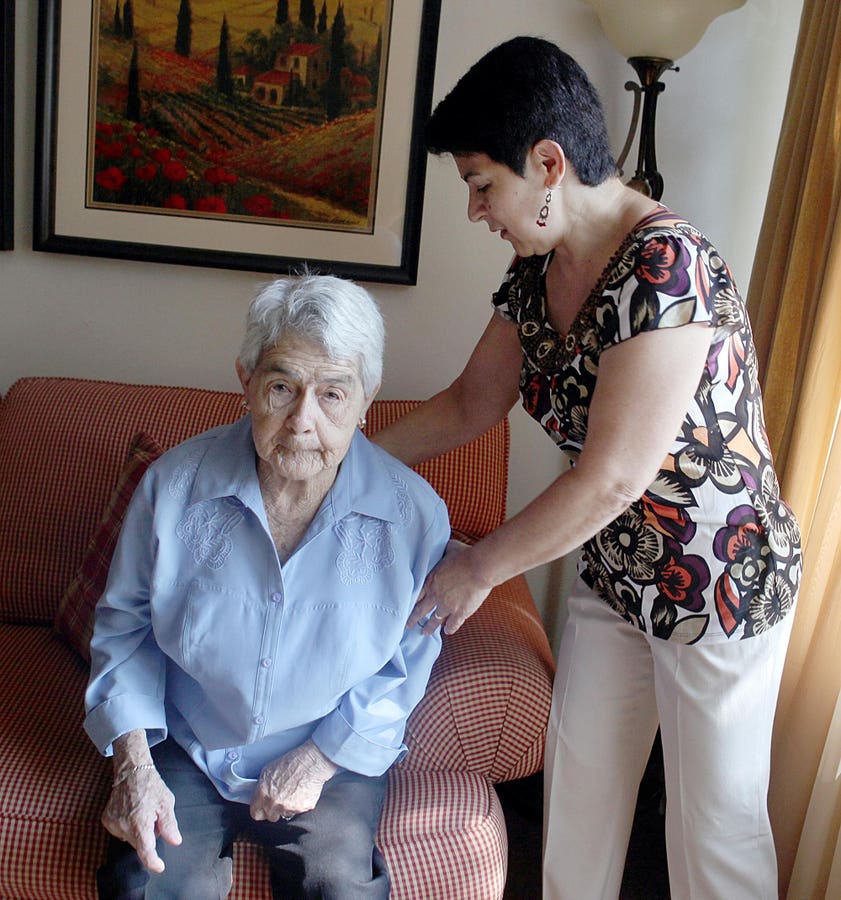
(083110 Brookline, MA) Mayela Fernandez is a full-time caregiver of her mother, Digna Salazar, who … [+] suffers from dementia. (Photo by Angela Rowlings/MediaNews Group/Boston Herald via Getty Images)

MediaNews Group via Getty Images

Enormous attention is being given to controversial drugs aimed at slowing the progression of early-stage Alzheimer’s disease. Yet, a very different set of clinical innovations holds the promise of helping far more people living with dementia and their families in more immediate—and perhaps more effective—ways.

These care delivery models are aimed at breaking down the often-impenetrable barriers between health care and social supports. Their goals: Improve the quality of life for people living with dementia and support their family caregivers by coordinating today’s highly fragmented system of care.

While many of these models show great promise, they have been slow to take hold. Among the challenges: A payment system that is poorly designed to support them. Medicare, for example, generally will not pay for non-medical services such as caregiver training.

In 2019, the Milken Institute identified a half-dozen coordinated care delivery programs for people living with dementia. Each is somewhat different but all show the promise of improving the lives of those living with dementia and their families and lowering health care costs. Interestingly, nearly all are built around care teams led by nurses and non-clinical patient navigators, not physicians. Here are a few examples:

Building A Care Plan

Care Ecosystem, developed by the University of California San Francisco (UCSF) is funded with grants from the National Institute of Aging and operates demonstrations in California, Louisiana, and four states in the Midwest.

It is a phone and web-based support program, where the main point of contact is a care navigator who answers most routine questions. A nurse, social worker, and pharmacist respond to more technical questions. The navigator routinely checks in with families but also responds to calls or online requests for support.

A 2019 study found the model slowed decline in quality of life and reduced emergency room visits for participants. Family caregivers reported lower rates of depression and caregiver burden. There was no significant change in hospital visits and a modest reduction in health care costs.

Just down the coast, the UCLA Health Alzheimer’s and Dementia Care Program (ADC) is a nurse practitioner-based program that provides medical and social evaluations of people with dementia and helps build a care plan. It also provides 24/7 telephone support and family caregiver training.

Analysis of an early version found participants stayed at home for longer, patients and their families reported less depression, and participants’ annual health care costs fell by about $2,400.

Johns Hopkins University created its version, called Maximizing Independence at Home (MIND at Home), where a care team conducts in-home assessments and helps participants build care plans. Using a team including a non-clinical navigator, a nurse, an occupational therapist and a geriatric psychiatrist, it provides education and counseling, referrals to community resources, and training in behavior management skills.

Hopkins created a Medicaid-based pilot program in Texas and a private pay model operated through the Johns Hopkins Home Care Group. An early version helped keep people at home longer, reduced unmet needs, and resulted in a better self-reported quality of life.

Supporting Family Caregivers

The Benjamin Rose Institute (BRI) developed a model that aims to providing coaching and support to family caregivers, either directly or through about 30 participating local organizations.

It is a telephone and email-based system that assesses care needs, helps families develop a care plan, and follows-up to be sure the plan is working well.

BRI, a century-old Cleveland-based non-profit, also created a program called SHARE that engages both those living with early-stage dementia and their care partners in a series of structured conversations about how to manage the progressive brain disease.

Clinic-based care

Emory University’s Integrated Memory Care Clinic may come closest to the ideal of fully integrating medical care and social supports. It is effectively a primary care practice built on in-person visits with advanced practice nurses. The clinic provides a wide range of services, from routine medical exams and immunizations to cognitive assessments, care coordination, caregiver supports, and counseling. It is staffed primarily by nurses, social workers, and occupational therapists.

In not-yet-published research, IMC found that its clinic-based program reduces hospitalizations, inappropriate medication use, and unnecessary medical tests.

The program also includes a Memory Care in the Community program that brings these in-person services to residents of some Atlanta-area senior living facilities for a monthly fee starting at $250.

Because Emory can bill Medicare for its clinical services (though not some of its social supports), it breaks even financially. Many other programs still rely on philanthropy and grants to fund operations.

These programs all show promise. But they count the number of people they have helped only in the thousands at a time when somewhere between 6 million and 7 million people in the US are living with dementia.

These care delivery models will only grow to the scale needed when the health care payors—Medicare, Medicaid, and private insurance—finally catch up with the innovations.

See also  Trans Privilege – ‘Flash’ So Good People Will ‘Forget’ Ezra Miller’s Crimes Production Designer Says
care Delivery Dementia Developing models people Slowly
Share. Facebook Twitter Pinterest LinkedIn Tumblr Email

Related Posts

New Medicaid work requirements ‘not a realistic and successful strategy’

June 3, 2026

New Study Shows How mRNA Vaccines Could Transform Cancer Treatment

June 3, 2026

The Uncomfortable Truth MAHA Is Exposing About US Healthcare

June 3, 2026

How Decision Fatigue Affects Financial Decisions

June 3, 2026
Add A Comment

Leave A Reply Cancel Reply

Top Posts

How Cotopaxi Provides Sibly’s AI-Assisted Coaching 24/7 To Employees

March 21, 2023

Stephen Curry Goes Viral For Hopping On Stage To Sing With Paramore

August 8, 2023

Asian Shares Slip as US Reverses Rally; Oil Steady: Markets Wrap

August 7, 2023

What did Seby Zavala say to Oneil Cruz? Mics pick up insane NSFW rant

April 11, 2023
Don't Miss

Actor Richard Gere Unleashes Deranged Rant on ‘Maniac’ Trump in Norway: ‘Dictatorship of Monsters’

Entertainment June 3, 2026

Hollywood legend Richard Gere criticised Donald Trump on Tuesday, calling the US president a “maniac”…

Sam Altman and OpenAI Concealed ChatGPT Safety Concerns

June 3, 2026

Exclusive — Aaron Masaitis Explains How Bulgaria Could Be ‘Grand Central Station’ for U.S. Energy to Eastern Europe

June 3, 2026

New Medicaid work requirements ‘not a realistic and successful strategy’

June 3, 2026
About
About

This is your World, Tech, Health, Entertainment and Sports website. We provide the latest breaking news straight from the News industry.

We're social. Connect with us:

Facebook Twitter Instagram Pinterest
Categories
  • Business (4,372)
  • Entertainment (4,866)
  • Finance (3,631)
  • Health (2,189)
  • Lifestyle (1,890)
  • Politics (3,427)
  • Sports (4,375)
  • Tech (2,204)
  • Uncategorized (4)
  • World (4,704)
Our Picks

Stocks step higher as markets wait for Fed: Stock market news today

September 20, 2023

Judge Releases Alleged Epstein Suicide Note

May 7, 2026

Trans Woman Who Ran NYC Marathon As Man Soars Past 14,000 Women In London Marathon After Competing In Female Category

April 26, 2023
Popular Posts

Actor Richard Gere Unleashes Deranged Rant on ‘Maniac’ Trump in Norway: ‘Dictatorship of Monsters’

June 3, 2026

Sam Altman and OpenAI Concealed ChatGPT Safety Concerns

June 3, 2026

Exclusive — Aaron Masaitis Explains How Bulgaria Could Be ‘Grand Central Station’ for U.S. Energy to Eastern Europe

June 3, 2026
© 2026 Patriotnownews.com - All rights reserved.
  • Contact
  • Privacy Policy
  • Terms & Conditions

Type above and press Enter to search. Press Esc to cancel.