

• Home
  • Politics
  • Health
  • World
  • Business
  • Finance
  • Tech
  • More
    • Sports
    • Entertainment
    • Lifestyle
What's Hot

Actor Richard Gere Unleashes Deranged Rant on ‘Maniac’ Trump in Norway: ‘Dictatorship of Monsters’

June 3, 2026

Sam Altman and OpenAI Concealed ChatGPT Safety Concerns

June 3, 2026

Exclusive — Aaron Masaitis Explains How Bulgaria Could Be ‘Grand Central Station’ for U.S. Energy to Eastern Europe

June 3, 2026
Facebook Twitter Instagram
  • Contact
  • Privacy Policy
  • Terms & Conditions
Wednesday, June 3
Patriot Now NewsPatriot Now News
  • Home
  • Politics

    Trump Says Congressman Missing For Months Is ‘Working Tirelessly’ In Glowing Endorsement

    June 3, 2026

    Trump-backed Rep. Randy Feenstra loses Iowa governor primary

    June 3, 2026

    Congress Discreetly Moves To Merge US Military Even Closer To Israel’s

    June 3, 2026

    Democrats To Force Vote To Kill Trump’s Slush Fund And Immunity Scheme

    June 3, 2026

    Democrats seek more control over referenda in New York

    June 2, 2026
  • Health

    New Medicaid work requirements ‘not a realistic and successful strategy’

    June 3, 2026

    New Study Shows How mRNA Vaccines Could Transform Cancer Treatment

    June 3, 2026

    The Uncomfortable Truth MAHA Is Exposing About US Healthcare

    June 3, 2026

    How Decision Fatigue Affects Financial Decisions

    June 3, 2026

    The Current Ebola Outbreak Is A Global Threat. A Doctor Explains

    June 3, 2026
  • World

    Exclusive — Aaron Masaitis Explains How Bulgaria Could Be ‘Grand Central Station’ for U.S. Energy to Eastern Europe

    June 3, 2026

    James Carville Floored By Trump’s Latest Message: ‘It’s Very Unique…’

    June 3, 2026

    Zohran Mamdani to Boycott Annual NYC Celebration of Israel

    June 3, 2026

    Bluetooth Network Name Disrupts United Airlines Flight To Spain

    June 3, 2026

    Anti-ICE Radicals Plot to Disrupt Turning Point Women’s Summit in San Antonio Following Bomb Threat Arrest

    June 3, 2026
  • Business

    Patagonia Begs Drag Queen Influencer To Stop Allegedly Using Their Logo

    June 3, 2026

    First Quarter GDP Revised Downward As Voters Fret Over Economy

    May 28, 2026

    Cash Drain On Americans’ Savings Accounts Nears Great Recession Levels

    May 28, 2026

    US Voters’ Confidence In Economy Nosedives To Nearly 4-Year Low

    May 22, 2026

    Elon Musk On Track To Be World’s First Trillionaire After Latest Move

    May 21, 2026
  • Finance

    Behind the Ticker: FMTM MarketDesk

    June 3, 2026

    Dear Microsoft Stock Fans, Mark Your Calendars for June 2

    June 3, 2026

    Fed Chair Warsh makes first hires at central bank, including ‘Project 2025’ author

    June 3, 2026

    Ballard Power (BLDP) Posts Revenue Growth and Third Straight Positive Gross Margin Quarter

    June 3, 2026

    Bass and Pratt will advance in L.A. mayoral race, traders say

    June 2, 2026
  • Tech

    Sam Altman and OpenAI Concealed ChatGPT Safety Concerns

    June 3, 2026

    Five Action Items on AI to Start Right Now

    June 3, 2026

    Disney Employees Reportedly Disturbed by Senior Executive’s Relationship with AI Chatbot: ‘You Are My Son’

    June 3, 2026

    Trump Signs Executive Order Asking for Oversight of New AI Models

    June 3, 2026

    Meta’s Support Chatbot Helped Hijack High-Profile Instagram Accounts Including Obama White House

    June 2, 2026
  • More
    • Sports
    • Entertainment
    • Lifestyle
Patriot Now NewsPatriot Now News
Home»Health»Will Malaria Be The Next Pandemic?
Health

Will Malaria Be The Next Pandemic?

May 6, 2023No Comments5 Mins Read
Facebook Twitter Pinterest LinkedIn Tumblr Email
Will Malaria Be The Next Pandemic?
Share
Facebook Twitter LinkedIn Pinterest Email

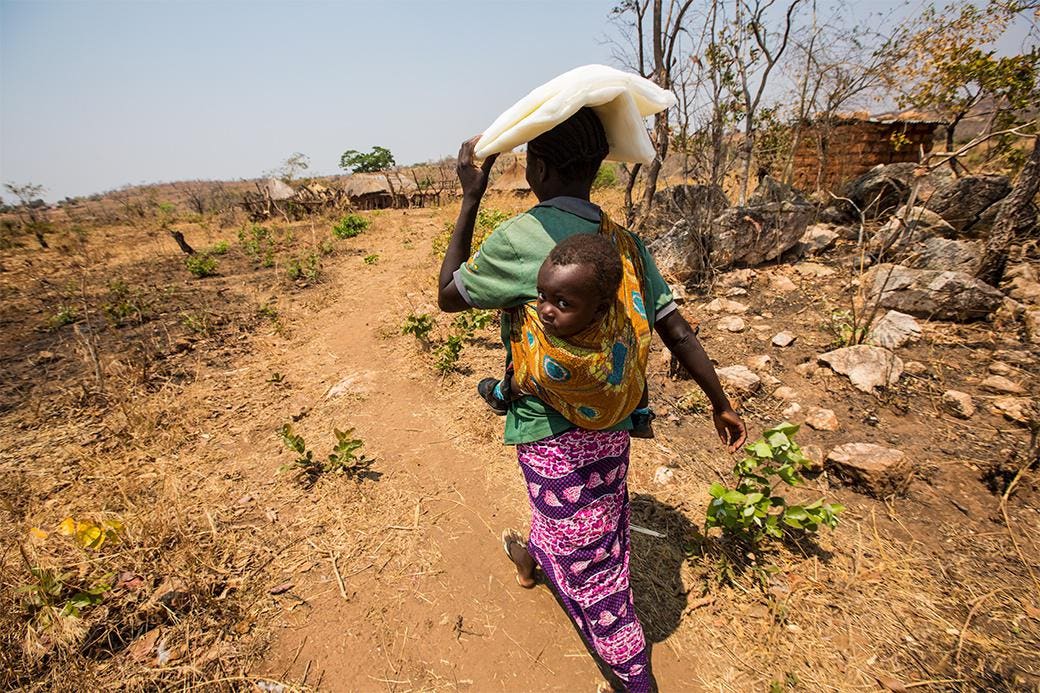
A mother carries home a mosquito net she collected at a distribution point in Mukwela district, … [+] Zambia.

The Global Fund / John Rae

The next global health crisis might not be another pandemic caused by a novel respiratory infection. Instead, we could see climate change dramatically increasing the threat from an existing infectious disease–for example, malaria, a disease that kills one child every minute of every day.

Malaria, like other vector-borne diseases, reacts quickly to changes in climate, with epidemiology of the disease evolving rapidly in response to shifting rainfall patterns and warmer temperatures. Already we are seeing malaria cases at higher altitudes in places like Ethiopia and Kenya, where up to now low temperatures offered protection from mosquitoes. The increasing frequency of extreme weather events, such as violent cyclones and unforeseen floods, lead to sudden surges in malaria infections and deaths. After the devastating floods in Pakistan, malaria infections more than quadrupled. Despite massive efforts, including additional emergency funding from the Global Fund, deaths from malaria soared, far exceeding the number of people who died from drowning or otherwise directly from the floods. Countries like Malawi and Mozambique, hit by Cyclone Freddy in February 2023, know that the floods and stagnant water resulting from such a storm create ideal locations for mosquitoes to breed and can quickly lead to sharp increases in malaria cases.

As always, it’s the poorest and most vulnerable who are the most exposed to such dynamics. There’s already an almost perfect overlap between the communities designated by the Intergovernmental Panel on Climate Change (IPCC) as “highly vulnerable to effects of climate change” and those most heavily hit by malaria. Ninety-five percent of malaria infections and 96% of malaria deaths occur in the World Health Organization’s Africa Region. Children under 5 account for over 80% of deaths, with pregnant women being the most at-risk adults.

Influenced by these environmental changes, we are also seeing shifts in where different species of mosquito live and thrive. For example, Anopheles stephensi, until recently found largely in Asia, has now been identified across multiple parts of Africa. The Anopheles stephensi species adapts more easily to urban conditions than most mosquitoes, and unlike the Anopheles species currently most prevalent in Africa, can carry both types of malaria parasites, Plasmodium falciparum and Plasmodium vivax. So malaria control programs in Africa now have to contend with both a new mosquito and a new malaria parasite.

Of course, climate change is not the only challenge. We are also encountering increasing resistance of malaria-carrying mosquitoes to existing pyrethroid-based insecticides and increasing resistance of malaria parasites to existing artemisinin-based treatments. While there are alternatives, such as dual active ingredient bed nets, these are all more costly.

Conflicts also increase the cost of providing lifesaving health services. Whether in Mali, South Sudan or Myanmar, conflict makes it much more difficult and expensive to fight malaria.

Confronted with such a perfect storm of simultaneous challenges, we face a frightening risk of seeing many of the hard-won gains of the last two decades of fighting malaria rolled back, with infections and death rising across the world, in places already hard hit, in those that thought they were rid of the disease, and in places that never suffered from it.

We cannot let this happen. For a disease like malaria, global warming is like pouring gasoline on a fire. Of course, we must do whatever we can to slow or stop the pace of climate change. But we should also douse the fire. With more money and accelerated introduction of the latest innovations in vector control, diagnosis and treatment, we could drastically reduce the potential for climate change and resistance to cause an explosion in malaria infections and deaths.

Investment in more effective and resilient systems for health is key. Disease surveillance systems, laboratory networks, supply chains and community health workers are vital to defeating malaria. Such capacities and infrastructure are also key to detecting and responding to any future pathogen of pandemic potential. Defeating malaria is not an alternative to investing in better pandemic preparedness, but a path towards it, and one that has the extra benefit of saving hundreds of thousands of children’s lives.

Defeating malaria is also one of the most powerful ways to create greater capacity in rural health systems to counter other diseases. In many rural parts of Africa, malaria already overwhelms local health system capacities. Yet where malaria has been successfully reduced, the same community health facilities are able to step up on other critical services, such as maternal health or chronic diseases like diabetes or heart disease.

For the last two decades, World Malaria Day has been an occasion to celebrate the progress we have made against one of the longest-lasting and deadliest pandemics that humanity has ever faced. Yet this year, it was an occasion to raise the alarm. With climate change and resistance, the fight against malaria will get much more difficult, so now is the time to act decisively–before malaria, arguably our oldest pandemic, becomes the next pandemic to threaten us all.

See also  The Biggest Risk Factor For Death Is Sorely Neglected, But Easily Treated
malaria pandemic
Share. Facebook Twitter Pinterest LinkedIn Tumblr Email

Related Posts

New Medicaid work requirements ‘not a realistic and successful strategy’

June 3, 2026

New Study Shows How mRNA Vaccines Could Transform Cancer Treatment

June 3, 2026

The Uncomfortable Truth MAHA Is Exposing About US Healthcare

June 3, 2026

How Decision Fatigue Affects Financial Decisions

June 3, 2026
Add A Comment

Leave A Reply Cancel Reply

Top Posts

‘Day of pain’: Wirecard boss denies charges in massive fraud trial

February 13, 2023

North Korea Is Desperately Seeking Foreign Currency to Fund Its Military

July 3, 2023

‘Portrait Artist of the Year’ to Debut in Norway, Return to Denmark

September 13, 2023

Zelensky Seeks Tougher Sanctions On Russian Missile Components

June 14, 2023
Don't Miss

Actor Richard Gere Unleashes Deranged Rant on ‘Maniac’ Trump in Norway: ‘Dictatorship of Monsters’

Entertainment June 3, 2026

Hollywood legend Richard Gere criticised Donald Trump on Tuesday, calling the US president a “maniac”…

Sam Altman and OpenAI Concealed ChatGPT Safety Concerns

June 3, 2026

Exclusive — Aaron Masaitis Explains How Bulgaria Could Be ‘Grand Central Station’ for U.S. Energy to Eastern Europe

June 3, 2026

New Medicaid work requirements ‘not a realistic and successful strategy’

June 3, 2026
About
About

This is your World, Tech, Health, Entertainment and Sports website. We provide the latest breaking news straight from the News industry.

We're social. Connect with us:

Facebook Twitter Instagram Pinterest
Categories
  • Business (4,372)
  • Entertainment (4,866)
  • Finance (3,631)
  • Health (2,189)
  • Lifestyle (1,890)
  • Politics (3,427)
  • Sports (4,375)
  • Tech (2,204)
  • Uncategorized (4)
  • World (4,704)
Our Picks

Woman Sues Rudy Giuliani, Saying He Coerced Her Into Sex, Owes Her $2 Million In Unpaid Wages

May 16, 2023

Google CEO acknowledges importance of being default search engine in US trial

October 31, 2023

Amazon Launches Internet Satellites to Compete with Elon Musk’s Starlink

October 11, 2023
Popular Posts

Actor Richard Gere Unleashes Deranged Rant on ‘Maniac’ Trump in Norway: ‘Dictatorship of Monsters’

June 3, 2026

Sam Altman and OpenAI Concealed ChatGPT Safety Concerns

June 3, 2026

Exclusive — Aaron Masaitis Explains How Bulgaria Could Be ‘Grand Central Station’ for U.S. Energy to Eastern Europe

June 3, 2026
© 2026 Patriotnownews.com - All rights reserved.
  • Contact
  • Privacy Policy
  • Terms & Conditions

Type above and press Enter to search. Press Esc to cancel.