

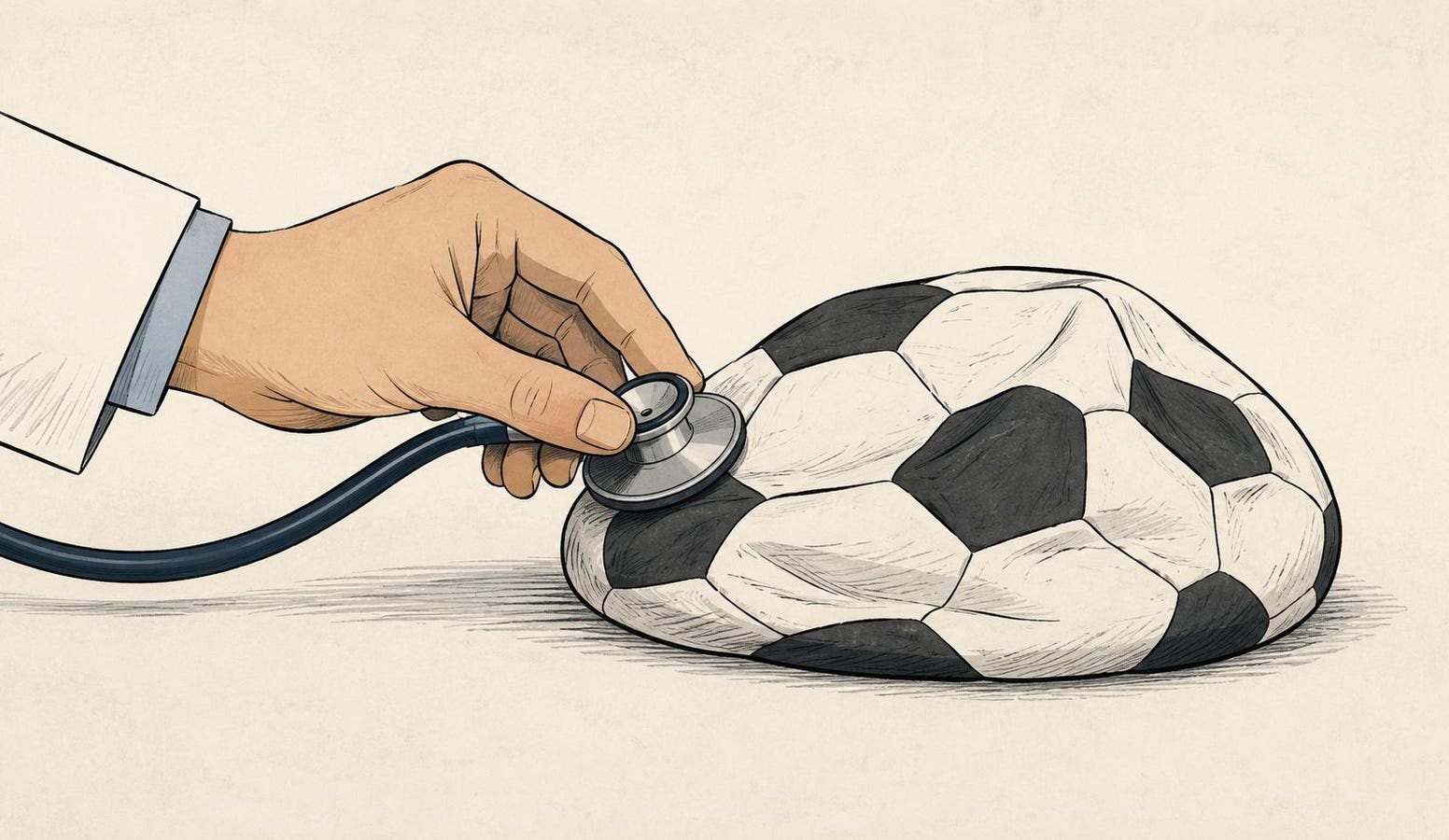
Forty-eight nations entered the 2026 World Cup. Only one, Spain, left as champion. U.S. medicine can learn a lot from the 47 teams that fell short.
Robert Pearl, MD
Forty-eight nations entered the 2026 World Cup. Only one, Spain, left as champion.
The other 47 teams offer important lessons for American medicine. Several World Cup participants had brilliant players, experienced coaches and enormous financial support. France fielded the tournament’s leading scorer, Kylian Mbappé. Argentina had Lionel Messi, arguably the greatest player in history. England reached the semifinal with one of its most talented teams in decades and its own hero, Harry Kane.
None won the championship.
American medicine is similarly loaded with talent and money. The United States has exceptional doctors, world-class hospitals, groundbreaking technologies and per-capita healthcare spending nearly twice that of most other nations.
Yet the results continue to fall short. Care remains unaffordable for millions of families. Access is unreliable. Chronic diseases are worsening. Clinicians are increasingly frustrated.
As I watched the World Cup and considered why immensely talented teams fail, I identified three problems that American medicine shares with those that lost.
Problem 1: American Medicine Has No Clear Strategy
Every successful World Cup team enters a match with a clear, well-understood game plan. Players know how they will attack, how they will defend and how they must adjust as circumstances change.
American healthcare has no comparable strategy for improving quality, expanding access and making care more affordable.
Ask hospital administrators, physicians and insurance CEOs how to achieve those goals, and you will get dozens of answers (many contradictory and most blaming someone else).
In short, American healthcare has an abundance of self-serving corporate strategies but no shared clinical strategy for winning on behalf of the nation’s patients.
Medical care remains fragmented across independent practices, hospitals and competing medical groups. Most doctors are paid through a fee-for-service (pay-for-volume) model. The more visits, tests and procedures they provide, the more they earn, regardless of whether those interventions improve outcomes. Care is rarely coordinated, and physicians have few financial incentives to prevent disease or avoid complications.
During the World Cup, superstar Lionel Messi demonstrated the importance of strategy. At 39, he could not — and did not try to — match younger players stride for stride. He spent long stretches of each match walking, conserving energy and studying how defenders positioned themselves. Then, when space opened, even a crack, he was ready to accelerate. That strategic approach helped Argentina produce repeated late-match heroics and come within one goal of winning a second consecutive World Cup.
Healthcare leaders need to recognize that periods of disruption also create opportunities for action. What was impossible in the past can suddenly become possible. When that moment arrives, timing becomes vital: not too soon, but never too late. Like Messi, leaders must know when to observe and when to sprint.
Doctors have such an opening now. Using generative AI, they can move medical expertise into patients’ homes and make medical care continuous, not episodic. Large language models like ChatGPT, Claude and Gemini can provide patients with immediate clinical guidance and help them achieve control of their chronic diseases.
But technology alone is not a strategy. How it is applied is equally important.
Today, physicians and healthcare organizations are using GenAI almost exclusively to improve documentation, capture billing codes and reduce administrative work. Those applications may increase efficiency and revenue, but they will not transform care.
The greatest opportunity is to use this technology to improve clinical outcomes and make medical care affordable by keeping people healthy and preventing complications. Less administrative work is positive, but the winning strategy will require solving the growing access and cost challenges patients face.
Problem 2: Individual Excellence Cannot Overcome Poor Teamwork
France arrived at the 2026 World Cup with extraordinary individual talent. In the semifinals, Spain defeated it with a more cohesive and collaborative system.
Spain exemplified team excellence. Its players dominated time of possession through coordination and cooperation. They achieved record-setting passing efficacy. And by maintaining possession, they limited their opponents’ opportunities to score. In eight matches, Spain allowed only one goal.
U.S. medicine, by contrast, celebrates individual excellence and organizes care as a series of separate encounters. Hospitalized patients often receive care from multiple specialists. Yet communication among those physicians is rare and frequently fragmented — a recognized threat to care coordination and patient safety.
The traditional office-based model was adequate for the types of acute problems physicians treated in the last century. But today, three-fourths of American adults have at least one chronic disease, and over half have two or more. Managing illnesses such as diabetes, hypertension and heart disease requires continuous monitoring, medication management and coordination among clinicians, not a series of isolated appointments with individual doctors who don’t share a common electronic health record and fail to coordinate medications or clinical recommendations.
That’s why, in medicine, teams are vitally important. Without effective coordination, patients fall through the cracks, chronic diseases remain uncontrolled and preventable complications (including heart attacks, strokes and kidney failure) ensue.
Doctors value autonomy and individual excellence over group performance. But as medicine has grown more complex, no individual physician, regardless of skill, can match the capabilities of a well-coordinated team in increasing longevity and quality of life.
To maximize clinical outcomes, doctors will need to form highly effective medical groups, share information in real time and accept collective responsibility for outcomes. Like Spain, they must function as one team rather than a roster of individual stars.
Problem 3: Doctors Have Surrendered Leadership
England led Argentina 1-0 in the other semifinal before its coach made a fateful decision. Rather than continuing to attack, England became increasingly defensive. Argentina adjusted, found openings and scored twice to advance.
American physicians have made a similar retreat. For decades, doctors helped shape the structure and direction of healthcare. Today, insurers determine which treatments require authorization. Hospital administrators establish productivity expectations. Private-equity firms increasingly influence how medical practices operate.
Physicians complain about these decisions, but they have not organized at sufficient scale to present a worthy counterattack. Retreating further into employment (joining hospitals or insurance companies) will not restore professional autonomy.
Regaining that autonomy and authority will require more than agreements to form a medical group. Physicians must also designate and empower skilled clinical leaders, reach consensus on evidence-based practices and accept financial accountability through capitation.
Under capitation, medical groups receive a fixed amount to care for a population rather than being paid based on the number of visits, tests or procedures they do. This model requires physicians to accept financial risk when care costs exceed that amount. But it also rewards them when they achieve superior outcomes and lower costs for patients through prevention, collaboration and excellent chronic disease control.
This more aggressive approach offers the best path for preserving the profession’s long-standing values while providing patients with clinical excellence, timely access and greater affordability.
The United States has all the clinical talent and resources required to succeed. What its medical system lacks is a clear strategy, coordinated teamwork and effective clinician leadership.
Like the 47 World Cup teams that fell short, American medicine must improve. To win for their patients and themselves, clinicians must come together, agree on a strategic plan, embrace new technology and take responsibility for the system’s performance. As the tournament proved, anything less won’t be sufficient.