

• Home
  • Politics
  • Health
  • World
  • Business
  • Finance
  • Tech
  • More
    • Sports
    • Entertainment
    • Lifestyle
What's Hot

Lynx’s Cheryl Reeve Mourns Pride Night Defeat: ‘We Should’ve Done It For The Gays’

June 23, 2026

Olivia Rodrigo Launches All-Women Music Festival, Will Benefit Planned Parenthood and Other Progressive Orgs

June 23, 2026

Google Invests $75 Million into Hollywood Studio A24 to Develop AI Filmmaking Tools

June 23, 2026
Facebook Twitter Instagram
  • Contact
  • Privacy Policy
  • Terms & Conditions
Tuesday, June 23
Patriot Now NewsPatriot Now News
  • Home
  • Politics

    Vance Takes Center Stage In White House Push To Protect GOP Majority

    June 23, 2026

    House Republicans Threaten Contempt After Dem Cash Cow ActBlue Ignores Subpoenas

    June 23, 2026

    Trump Admin Threatens To Pull Critical Federal Funds Unless States Adopt Election Integrity Measures

    June 23, 2026

    White Democrat Women Dance Across America For Juneteenth

    June 23, 2026

    Joy Reid Claims Black People Aren’t Excited For July 4th, Juneteenth Is The ‘Real Thing’

    June 23, 2026
  • Health

    Home Medical Kits And Antibiotic Resistance—A Preventable Collision

    June 23, 2026

    What To Know About Tests That Promise To Reveal Your Biological Age

    June 23, 2026

    HHS Ebola trial, retatrutide, suicide treatment: Morning Rounds

    June 23, 2026

    This Startup Says It Saves Medicare More Than $2 Million A Week

    June 23, 2026

    7 Signs You Need Physical Therapy (And How To Find the Right Provider)

    June 23, 2026
  • World

    Russia Strike on Apartment Block in Ukraine’s Kharkiv Kills At Least One

    June 23, 2026

    Man Plummets To His Death During Goose Concert At Madison Square Garden

    June 23, 2026

    Macron Rejects Migrant Return Hubs, Claims They Go Against EU Values

    June 23, 2026

    U.S. Attacks Alleged Drug Boat, Killing 2 And Leaving 6 Survivors In Eastern Pacific

    June 23, 2026

    Iran MOU Doesn’t Address ‘Very Important’ Ballistic Missiles, Terror Proxies

    June 23, 2026
  • Business

    Influential Economic Policy Center Bankrolled By Shady Dating App Founder

    June 19, 2026

    Dem Senator‘s 22-Year-Old Son Raises Eyeballs After Raking In $30 Million Investment

    June 19, 2026

    Jeff Bezos Claims AI Boom Will Actually Lead To Labor Shortages

    June 17, 2026

    Are You Gay Enough To Get A California Utilities Contract? Here’s The Test

    June 17, 2026

    Jersey Mike’s Overtakes Chick-Fil-A As Highest Rated Fast Food Chain

    June 17, 2026
  • Finance

    Will Snap’s Augmented Reality Glasses Help or Hurt the Company?

    June 23, 2026

    What Happened to Indonesia’s Booming Tech Sector?

    June 23, 2026

    Houston TX Hot Chicken partners with PizzaExpress for UK expansion

    June 23, 2026

    An Australian View of the New Trump Iran Deal

    June 23, 2026

    MoonPay buys Entendre in digital finance infrastructure push

    June 23, 2026
  • Tech

    Google Invests $75 Million into Hollywood Studio A24 to Develop AI Filmmaking Tools

    June 23, 2026

    Newsguard Wants to Empower AI Censorship, Rates Chinese Propaganda as More Reliable than Conservative Media

    June 23, 2026

    Elon Musk’s SpaceX IPO Spurs Momentum for Orbital AI Data Centers

    June 23, 2026

    Netflix’s Mega Podcast Venture Failing to Earn Fans

    June 23, 2026

    Texas Grandma Killed by Tesla Crashing into Home, Driver Claims ‘Autopilot’ Active

    June 22, 2026
  • More
    • Sports
    • Entertainment
    • Lifestyle
Patriot Now NewsPatriot Now News
Home»Finance»A Higher Education Bubble Stretches China’s Blue-Collar Economy
Finance

A Higher Education Bubble Stretches China’s Blue-Collar Economy

July 19, 2023No Comments5 Mins Read
Facebook Twitter Pinterest LinkedIn Tumblr Email
A Higher Education Bubble Stretches China’s Blue-Collar Economy
Share
Facebook Twitter LinkedIn Pinterest Email
Advertisement

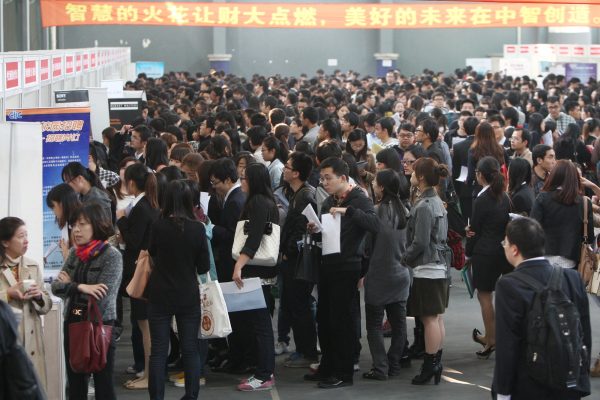
Despite China’s recovery from the depth of the COVID-19 pandemic, the headline jobless rate for young workers between the ages of 16 and 24 remains unnervingly high. In May, youth unemployment edged to 20.8 percent, a new record.

With a record number of 11.58 million students graduating college this summer, the stress is set to worsen.

This gap between a broad, albeit slowing, economic rebound and persistent pressure on youth employment reflects a structurally imbalanced labor market. It is the outcome of a relentless push to expand college education in China that far outpaced economic reform. Without parallel growth in service industries that attract college graduates, the surplus of tertiary degree holders will continue to dampen productivity.

The irony is that the most educated generation in China’s modern history now looks set to become an increasing burden for the country, misplaced in an economy struggling to absorb them. This should not be a surprise, however, because the main rationale driving the college expansion was never really about the utility of education itself.

Rather than a calculated move to transform the workforce, Beijing’s decision in 1999 to substantially expand higher education was chiefly a response to weakened export markets.

Enjoying this article? Click here to subscribe for full access. Just $5 a month.

The leadership used new campus constructions to spur domestic demand in the face of the Asian Financial Crisis. Universities’ need for land and facilities made them the preferred stimulus conduit in the years preceding China’s infrastructure-building frenzy.

Higher education was also a way to divert high school graduates from an already squeezed job market, given that Beijing was simultaneously undertaking large-scale layoffs from state-owned enterprises to prepare for entry into the World Trade Organization.

See also  Sun Cable’s Collapse and the Australian Role in Southeast Asia’s Energy Transition

While signs had already emerged in the early 2000s that recent college graduates would struggle to find suitable jobs, efforts to scale up higher education went into overdrive.

Advertisement

Throughout the decade, the “marketization of education” policy reduced the government’s budgetary outlays for universities, prompting schools to seek profits and raise tuitions.

By the late 2000s, financing the expansion had saddled many universities with heavy debts. But college enrollment was now effectively a measure of political success for local officials. For underprivileged rural populations, education was their ticket to social mobility.

The political logic behind the expansion overwhelmed other considerations. As a result, the acceptance rate among post-secondary institutions in China soared from 33 percent in 1998 to over 92 percent in 2021. Enrollment rates for tertiary education went from just 26.5 percent in 2010 to just under 60 percent in 2022. By comparison, the college enrollment rate for students with high school diplomas in the United States remained at around 40 percent throughout the 2010s.

The higher education boom sharpened the competition for a finite pool of urban white-collar jobs in management and professional services, despite these fields remaining marginal to China’s economic growth.

Regional inequality and enduring Confucian beliefs about manual labor being inappropriate for the educated class also reinforced the preference for office work in large cities, notwithstanding China’s socialist status.

Thus, Beijing’s proven record of salvaging growth by bolstering manufacturing and industrial output has generally not provided sufficient opportunities befitting the expectations of college graduates. The prescription expands factory floors and construction sites – not exactly where the educated young think they belong.

See also  JPMorgan's UK digital bank blocks customers from buying crypto

In 2021, excluding the agriculture-based primary sector, the share of national employment in blue-collar jobs was still around 70 percent, according to official numbers.

Enjoying this article? Click here to subscribe for full access. Just $5 a month.

To address this shortage of corporate jobs, the government must support a relatively underdeveloped service sector.

The World Bank reports that in 2021, service businesses accounted for 53 percent of the annual GDP in the country. That is lower than the world average of 64 percent and far below the 78 percent in the United States. China’s perennial trade deficits in services reflect this comparative disadvantage.

Although services have become the largest source of employment in China since 2011, the progress was largely driven by customer-focused divisions such as delivery and ride-hailing. These are informal, labor-intensive gigs that college graduates likewise tend to eschew.

Advertisement

Recent policy shocks have exacerbated the structural mismatch. Before the pandemic, with decent growth prospects and ample demand for knowledge workers, companies in the platform economy, after-school tutoring, and real estate development used to recruit fresh graduates in droves, tempering the youth unemployment stress to an extent. But all three industries have contracted significantly, having been the target of regulatory tightening in the past two years, and the employment path forward has narrowed further.

Meanwhile, the state’s grip on key parts of the economy is a hurdle to harnessing the educated workforce.

More than 1 million students, for example, obtained a bachelor’s degree in finance each year from 2018 to 2020, according to China’s Ministry of Education. But China’s state bank-dominated financial system lacks the diversity of its Western counterparts, where non-bank institutions play a vital role in raising capital for companies large and small.

See also  Chinese Investors Flee Country’s Market As Beijing Fails To Prop Up Economy

With onerous restrictions on foreign and private firms, the financial field is too guarded to create enough opportunities for the legions of young aspirants. Moreover, the deleveraging campaign amid economic headwinds has forced Chinese banks to face default risks, weak credit demand, and profit losses, all of which hampered their ability to hire.

The fierce competition for white-collar positions is also out of step with national economic imperatives, given the growing rivalry with the United States. For the Chinese leadership, technological self-reliance calls for fast industrial modernization. Washington’s embrace of muscular industrial policies has further cemented Beijing’s own determination to foster advanced manufacturing as a strategic mainstay.

To that end, Beijing is ramping up investment in vocational schools to cultivate skilled laborers to make hardware, manage sophisticated machineries, and oversee increasingly automated assembly lines.

But this threatens to become a “race to the bottom” driven by state intervention, which risks sapping the service sector’s vitality even more. If that turns out to be the case, the economy will continue to have inadequate demand for those trained in humanities and financial markets, despite their supposedly valuable college degrees.

BlueCollar bubble Chinas Economy Education higher Stretches
Share. Facebook Twitter Pinterest LinkedIn Tumblr Email

Related Posts

Will Snap’s Augmented Reality Glasses Help or Hurt the Company?

June 23, 2026

What Happened to Indonesia’s Booming Tech Sector?

June 23, 2026

Houston TX Hot Chicken partners with PizzaExpress for UK expansion

June 23, 2026

An Australian View of the New Trump Iran Deal

June 23, 2026
Add A Comment

Leave A Reply Cancel Reply

Top Posts

Natural Remedies For Enhancing Mental Health And Wellbeing

July 31, 2024

Trump’s Name Is Currently Being Removed From The Kennedy Center

June 15, 2026

Illumina CEO deSouza resigns after proxy battle with Icahn

June 12, 2023

Papua New Guinea Is in a Governance Crisis – and Australia Helped Put It There

September 16, 2024
Don't Miss

Lynx’s Cheryl Reeve Mourns Pride Night Defeat: ‘We Should’ve Done It For The Gays’

Sports June 23, 2026

I’m smoking a Giannis cigar. Meanwhile, these clowns are crying over the gays. (LMAO) The…

Olivia Rodrigo Launches All-Women Music Festival, Will Benefit Planned Parenthood and Other Progressive Orgs

June 23, 2026

Google Invests $75 Million into Hollywood Studio A24 to Develop AI Filmmaking Tools

June 23, 2026

MMA Fighter Sean Strickland Asks Fans to Help Pick His Next Gun

June 23, 2026
About
About

This is your World, Tech, Health, Entertainment and Sports website. We provide the latest breaking news straight from the News industry.

We're social. Connect with us:

Facebook Twitter Instagram Pinterest
Categories
  • Business (4,386)
  • Entertainment (5,268)
  • Finance (3,893)
  • Health (2,331)
  • Lifestyle (1,893)
  • Politics (3,657)
  • Sports (4,624)
  • Tech (2,298)
  • Uncategorized (4)
  • World (5,176)
Our Picks

At The GOP Presidential Debate, Candidates Must Address Healthcare

September 15, 2023

GM, Stellantis dealers and customers face dwindling parts as UAW strike expands

September 23, 2023

‘Spider-Man: Across the Spider-Verse’ Trailer Sneaks in Transgender Flag: ‘Protect Trans Kids’

April 8, 2023
Popular Posts

Lynx’s Cheryl Reeve Mourns Pride Night Defeat: ‘We Should’ve Done It For The Gays’

June 23, 2026

Olivia Rodrigo Launches All-Women Music Festival, Will Benefit Planned Parenthood and Other Progressive Orgs

June 23, 2026

Google Invests $75 Million into Hollywood Studio A24 to Develop AI Filmmaking Tools

June 23, 2026
© 2026 Patriotnownews.com - All rights reserved.
  • Contact
  • Privacy Policy
  • Terms & Conditions

Type above and press Enter to search. Press Esc to cancel.