

• Home
  • Politics
  • Health
  • World
  • Business
  • Finance
  • Tech
  • More
    • Sports
    • Entertainment
    • Lifestyle
What's Hot

Americans’ financial literacy sags to a new low

June 3, 2026

The ASEAN-China AI Center: Innovation Boost or Agentic Disinformation Risk for Southeast Asia?

June 3, 2026

Ex-MSNBC Host Joy Reid Renounces New York Giants After Learning QB Jaxson Dart Supports Trump

June 3, 2026
Facebook Twitter Instagram
  • Contact
  • Privacy Policy
  • Terms & Conditions
Wednesday, June 3
Patriot Now NewsPatriot Now News
  • Home
  • Politics

    Ex-MSNBC Host Joy Reid Renounces New York Giants After Learning QB Jaxson Dart Supports Trump

    June 3, 2026

    Democrats see the stars aligning in Iowa

    June 3, 2026

    Trump Says Congressman Missing For Months Is ‘Working Tirelessly’ In Glowing Endorsement

    June 3, 2026

    Trump-backed Rep. Randy Feenstra loses Iowa governor primary

    June 3, 2026

    Congress Discreetly Moves To Merge US Military Even Closer To Israel’s

    June 3, 2026
  • Health

    Clear Built A $7.7 Billion Business On Skipping Airport Lines. Now It’s Targeting Hospitals.

    June 3, 2026

    New Medicaid work requirements ‘not a realistic and successful strategy’

    June 3, 2026

    New Study Shows How mRNA Vaccines Could Transform Cancer Treatment

    June 3, 2026

    The Uncomfortable Truth MAHA Is Exposing About US Healthcare

    June 3, 2026

    How Decision Fatigue Affects Financial Decisions

    June 3, 2026
  • World

    Trump ‘Much More Popular’ Because He Is ‘Pragmatic’

    June 3, 2026

    State Sen. Scott Wiener, Supervisor Connie Chan Advance In Top-Two Primary For San Francisco House District

    June 3, 2026

    Exclusive — Aaron Masaitis Explains How Bulgaria Could Be ‘Grand Central Station’ for U.S. Energy to Eastern Europe

    June 3, 2026

    James Carville Floored By Trump’s Latest Message: ‘It’s Very Unique…’

    June 3, 2026

    Zohran Mamdani to Boycott Annual NYC Celebration of Israel

    June 3, 2026
  • Business

    Patagonia Begs Drag Queen Influencer To Stop Allegedly Using Their Logo

    June 3, 2026

    First Quarter GDP Revised Downward As Voters Fret Over Economy

    May 28, 2026

    Cash Drain On Americans’ Savings Accounts Nears Great Recession Levels

    May 28, 2026

    US Voters’ Confidence In Economy Nosedives To Nearly 4-Year Low

    May 22, 2026

    Elon Musk On Track To Be World’s First Trillionaire After Latest Move

    May 21, 2026
  • Finance

    Americans’ financial literacy sags to a new low

    June 3, 2026

    The ASEAN-China AI Center: Innovation Boost or Agentic Disinformation Risk for Southeast Asia?

    June 3, 2026

    Global fashion retailer closing all stores after 33 years

    June 3, 2026

    Behind the Ticker: FMTM MarketDesk

    June 3, 2026

    Dear Microsoft Stock Fans, Mark Your Calendars for June 2

    June 3, 2026
  • Tech

    If China Wins the AI Race, They Will Export Repressive Technology Worldwide

    June 3, 2026

    Sam Altman and OpenAI Concealed ChatGPT Safety Concerns

    June 3, 2026

    Five Action Items on AI to Start Right Now

    June 3, 2026

    Disney Employees Reportedly Disturbed by Senior Executive’s Relationship with AI Chatbot: ‘You Are My Son’

    June 3, 2026

    Trump Signs Executive Order Asking for Oversight of New AI Models

    June 3, 2026
  • More
    • Sports
    • Entertainment
    • Lifestyle
Patriot Now NewsPatriot Now News
Home»Finance»A Higher Education Bubble Stretches China’s Blue-Collar Economy
Finance

A Higher Education Bubble Stretches China’s Blue-Collar Economy

July 19, 2023No Comments5 Mins Read
Facebook Twitter Pinterest LinkedIn Tumblr Email
A Higher Education Bubble Stretches China’s Blue-Collar Economy
Share
Facebook Twitter LinkedIn Pinterest Email
Advertisement

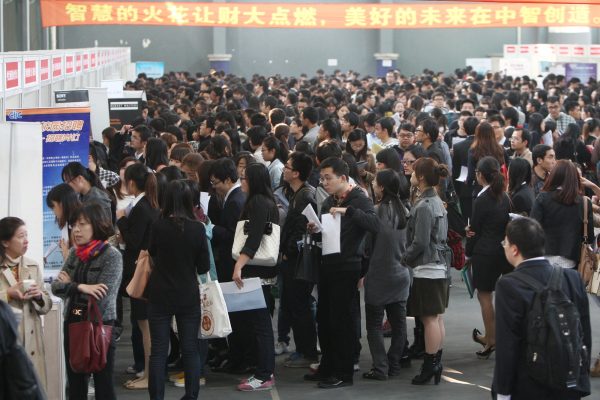
Despite China’s recovery from the depth of the COVID-19 pandemic, the headline jobless rate for young workers between the ages of 16 and 24 remains unnervingly high. In May, youth unemployment edged to 20.8 percent, a new record.

With a record number of 11.58 million students graduating college this summer, the stress is set to worsen.

This gap between a broad, albeit slowing, economic rebound and persistent pressure on youth employment reflects a structurally imbalanced labor market. It is the outcome of a relentless push to expand college education in China that far outpaced economic reform. Without parallel growth in service industries that attract college graduates, the surplus of tertiary degree holders will continue to dampen productivity.

The irony is that the most educated generation in China’s modern history now looks set to become an increasing burden for the country, misplaced in an economy struggling to absorb them. This should not be a surprise, however, because the main rationale driving the college expansion was never really about the utility of education itself.

Rather than a calculated move to transform the workforce, Beijing’s decision in 1999 to substantially expand higher education was chiefly a response to weakened export markets.

Enjoying this article? Click here to subscribe for full access. Just $5 a month.

The leadership used new campus constructions to spur domestic demand in the face of the Asian Financial Crisis. Universities’ need for land and facilities made them the preferred stimulus conduit in the years preceding China’s infrastructure-building frenzy.

Higher education was also a way to divert high school graduates from an already squeezed job market, given that Beijing was simultaneously undertaking large-scale layoffs from state-owned enterprises to prepare for entry into the World Trade Organization.

See also  The Oil And Gas Industry Might Be What’s Keeping Biden’s Economy Humming On Paper Despite ‘Regulatory Assault’

While signs had already emerged in the early 2000s that recent college graduates would struggle to find suitable jobs, efforts to scale up higher education went into overdrive.

Advertisement

Throughout the decade, the “marketization of education” policy reduced the government’s budgetary outlays for universities, prompting schools to seek profits and raise tuitions.

By the late 2000s, financing the expansion had saddled many universities with heavy debts. But college enrollment was now effectively a measure of political success for local officials. For underprivileged rural populations, education was their ticket to social mobility.

The political logic behind the expansion overwhelmed other considerations. As a result, the acceptance rate among post-secondary institutions in China soared from 33 percent in 1998 to over 92 percent in 2021. Enrollment rates for tertiary education went from just 26.5 percent in 2010 to just under 60 percent in 2022. By comparison, the college enrollment rate for students with high school diplomas in the United States remained at around 40 percent throughout the 2010s.

The higher education boom sharpened the competition for a finite pool of urban white-collar jobs in management and professional services, despite these fields remaining marginal to China’s economic growth.

Regional inequality and enduring Confucian beliefs about manual labor being inappropriate for the educated class also reinforced the preference for office work in large cities, notwithstanding China’s socialist status.

Thus, Beijing’s proven record of salvaging growth by bolstering manufacturing and industrial output has generally not provided sufficient opportunities befitting the expectations of college graduates. The prescription expands factory floors and construction sites – not exactly where the educated young think they belong.

See also  China's BYD rides on partnerships to expand EV sales in Southeast Asia

In 2021, excluding the agriculture-based primary sector, the share of national employment in blue-collar jobs was still around 70 percent, according to official numbers.

Enjoying this article? Click here to subscribe for full access. Just $5 a month.

To address this shortage of corporate jobs, the government must support a relatively underdeveloped service sector.

The World Bank reports that in 2021, service businesses accounted for 53 percent of the annual GDP in the country. That is lower than the world average of 64 percent and far below the 78 percent in the United States. China’s perennial trade deficits in services reflect this comparative disadvantage.

Although services have become the largest source of employment in China since 2011, the progress was largely driven by customer-focused divisions such as delivery and ride-hailing. These are informal, labor-intensive gigs that college graduates likewise tend to eschew.

Advertisement

Recent policy shocks have exacerbated the structural mismatch. Before the pandemic, with decent growth prospects and ample demand for knowledge workers, companies in the platform economy, after-school tutoring, and real estate development used to recruit fresh graduates in droves, tempering the youth unemployment stress to an extent. But all three industries have contracted significantly, having been the target of regulatory tightening in the past two years, and the employment path forward has narrowed further.

Meanwhile, the state’s grip on key parts of the economy is a hurdle to harnessing the educated workforce.

More than 1 million students, for example, obtained a bachelor’s degree in finance each year from 2018 to 2020, according to China’s Ministry of Education. But China’s state bank-dominated financial system lacks the diversity of its Western counterparts, where non-bank institutions play a vital role in raising capital for companies large and small.

See also  China tech companies are closely watching ChatGPT's A.I. skills

With onerous restrictions on foreign and private firms, the financial field is too guarded to create enough opportunities for the legions of young aspirants. Moreover, the deleveraging campaign amid economic headwinds has forced Chinese banks to face default risks, weak credit demand, and profit losses, all of which hampered their ability to hire.

The fierce competition for white-collar positions is also out of step with national economic imperatives, given the growing rivalry with the United States. For the Chinese leadership, technological self-reliance calls for fast industrial modernization. Washington’s embrace of muscular industrial policies has further cemented Beijing’s own determination to foster advanced manufacturing as a strategic mainstay.

To that end, Beijing is ramping up investment in vocational schools to cultivate skilled laborers to make hardware, manage sophisticated machineries, and oversee increasingly automated assembly lines.

But this threatens to become a “race to the bottom” driven by state intervention, which risks sapping the service sector’s vitality even more. If that turns out to be the case, the economy will continue to have inadequate demand for those trained in humanities and financial markets, despite their supposedly valuable college degrees.

BlueCollar bubble Chinas Economy Education higher Stretches
Share. Facebook Twitter Pinterest LinkedIn Tumblr Email

Related Posts

Americans’ financial literacy sags to a new low

June 3, 2026

The ASEAN-China AI Center: Innovation Boost or Agentic Disinformation Risk for Southeast Asia?

June 3, 2026

Global fashion retailer closing all stores after 33 years

June 3, 2026

Behind the Ticker: FMTM MarketDesk

June 3, 2026
Add A Comment

Leave A Reply Cancel Reply

Top Posts

‘I Wanted to Write Something Timeless, Not Timely’

September 27, 2023

Nikki Haley Responds To Trump Indictment

June 9, 2023

Dashcam Captures Tesla on Autopilot Smashing into Police Vehicles at 55 MPH

August 12, 2023

The Happiness Model That’ll Change Any Entrepreneurs Life

March 1, 2024
Don't Miss

Americans’ financial literacy sags to a new low

Finance June 3, 2026

American adults have hit a new bottom in basic financial knowledge. On topics like spending,…

The ASEAN-China AI Center: Innovation Boost or Agentic Disinformation Risk for Southeast Asia?

June 3, 2026

Ex-MSNBC Host Joy Reid Renounces New York Giants After Learning QB Jaxson Dart Supports Trump

June 3, 2026

Bill Maher Backs Spencer Pratt For L.A. Mayor: ‘Had Me at Hello’

June 3, 2026
About
About

This is your World, Tech, Health, Entertainment and Sports website. We provide the latest breaking news straight from the News industry.

We're social. Connect with us:

Facebook Twitter Instagram Pinterest
Categories
  • Business (4,372)
  • Entertainment (4,868)
  • Finance (3,634)
  • Health (2,190)
  • Lifestyle (1,890)
  • Politics (3,429)
  • Sports (4,376)
  • Tech (2,205)
  • Uncategorized (4)
  • World (4,706)
Our Picks

Amazon Slashing Hundreds of Jobs in Alexa Unit to Focus on AI

November 20, 2023

Lingering symptoms are common after COVID hospitalization

February 15, 2023

Facebook Lets Authoritarian Cambodian Leader Keep Account After Promoting Beatings

August 31, 2023
Popular Posts

Americans’ financial literacy sags to a new low

June 3, 2026

The ASEAN-China AI Center: Innovation Boost or Agentic Disinformation Risk for Southeast Asia?

June 3, 2026

Ex-MSNBC Host Joy Reid Renounces New York Giants After Learning QB Jaxson Dart Supports Trump

June 3, 2026
© 2026 Patriotnownews.com - All rights reserved.
  • Contact
  • Privacy Policy
  • Terms & Conditions

Type above and press Enter to search. Press Esc to cancel.