

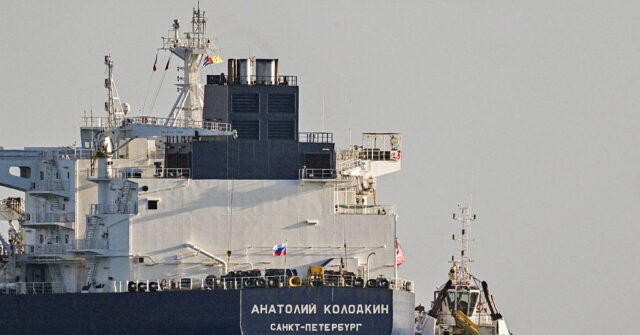
The British government’s aversion to domestic energy extraction is so great that it has decided to create an exemption for imports of oil products manufactured from Russian crude rather than drill its own considerable natural resources.
Britain’s Labour government announced a tough new sanctions package against Russia on Wednesday, but immediately granted exemptions to allow the import of oil products such as diesel and jet fuel refined in third-party nations from oil originally extracted in Russia. While Britain is suffering from an energy crisis and clearly needs to act before domestic hauliers or airlines in the country enter a full-blown fuel crisis over the summer, the decision to turn to Russia rather than drill its own enormous energy reserves has raised eyebrows.
The sanctions exemption was described by the government as a temporary measure to ease the transition to the new sanctions regime, but in fact it is legally in force “indefinitely”, ITV News reports, triggering a chorus of criticism, including from Labour politicians.
Lady Nugee, a senior Labour figure but not one particularly friendly to Prime Minister Sir Keir Starmer, took the side of Ukraine in the matter and pointed to the inconsistency of Britain funding both the Ukrainian military through donations and equipment transfers while also funding Russia by buying its most lucrative export, energy. The politician, also known as Dame Emily Thornberry, said: “They [Ukraine] don’t understand, given that we promised that we would stop this loophole in October, and we still haven’t done it. In fact, it seems to have got worse. People feel very let down”.
The leader of the Conservative Party, Kemi Badenoch, also went on the attack, stating that Britain could increase its self-reliance by extracting more of its own energy. She said the government was “insane” in a statement on Wednesday:
After 18 months of “standing up to Putin” the Labour govt quietly issued a licence allowing imports of Russian oil refined in third countries.
Yesterday Labour MPs voted AGAINST UK oil and gas licences. We are now importing from Russia instead of drilling in the North Sea.
The fact that the United Kingdom relies heavily on energy exports makes it particularly susceptible to energy price shocks, and British electricity prices for both domestic consumers and industrial customers are some of the most expensive anywhere in the world, a major contributing factor to the nation’s cost-of-living crisis and rapid de-industrialisation as businesses flee abroad or simply fail.
As stated by Badenoch, this failure of government is made all the worse by the fact that the United Kingdom sits on large reserves of coal, natural gas, oil, and has never attempted to tap into the shale gas revolution that has made the United States the world’s largest exporter of energy, and on which Britain depends to keep the lights on. On Tuesday, Parliament voted against a proposal to approve new drilling licenses for the North Sea.
While Badenoch’s points landed with weight on Wednesday, the Conservative attack line was dulled by the fact the party is not long out of government itself, and in 14 years of kow-towing to green politics and decarbonisation rhetoric did precious little to improve Britain’s energy security.
The government moved to defend its position on Wednesday afternoon. Trade Minister Chris Bryant said the approach to Russian energy was down to a miscommunication and had been “handled clumsily”.
Britain’s catastrophically expensive buys of energy created abroad, be that Norwegian oil and gas extracted from the same North Sea field Britain also part-owns or ethically questionable and unreliable Chinese solar, has long been a key criticism of the UK from President Donald Trump. Presented as an option to the country as part of a menu of simple fixes that could easily solve some of the largest problems facing Britain — but resisted because they defy Westminster orthodoxy — the President has repeatedly called on Britain to “drill baby drill” and avail itself of abundant cheap energy by sourcing it domestically.
As reported last week, President Trump again reminded Britain of the options it actually has, if its leadership class can get over itself:
Responding to a journalist’s question, President Trump said that while Prime Minister Sir Keir Starmer had serious policy problems, he’s nevertheless “a nice man, actually”, and could turn the country around if he tried. The President said:
“He’s in trouble for two reasons. Energy, and immigration. He’s very bad on energy, he should open up the North Sea. He’s got a goldmine! And he should open up oil in the North Sea and he doesn’t. they have a tremendous value… you know they buy their oil, a lot of it, from Norway? Norway gets it from the North Sea! Not as good an area as Scotland, the UK, so they’re paying Norway a fortune for oil coming out of the North Sea.”
Instead of drilling for its own power — Britain has enormous untapped potential in natural gas, oil, and fracking — the country’s Green extremist energy minister is leaning heavily into predominantly Chinese-made renewables. Wind turbines are the “most expensive form of energy, they kill the birds, they’re unsightly, they’re ruining the landscape”, Trump said, calling for Starmer stop pumping the brakes on domestic energy.
Reflecting on Starmer’s chances of political survival, the President mused “it’s a tough thing” and said “unless he can straighten out immigration, where he’s weak”, the British Prime Minister had little chance.
Despite the high-minded ideals of European nations in confronting Russia with massive energy sanctions, Britain’s approach today of enacting headline-grabbing restrictions while also granting itself exemptions is actually staggeringly common. Europe spent more money on buying Russian energy than on supporting the Ukrainian military in 2025, and, as reported earlier this year, the European Union banned imports of Russian natural gas while also enacting two years of exemptions.