

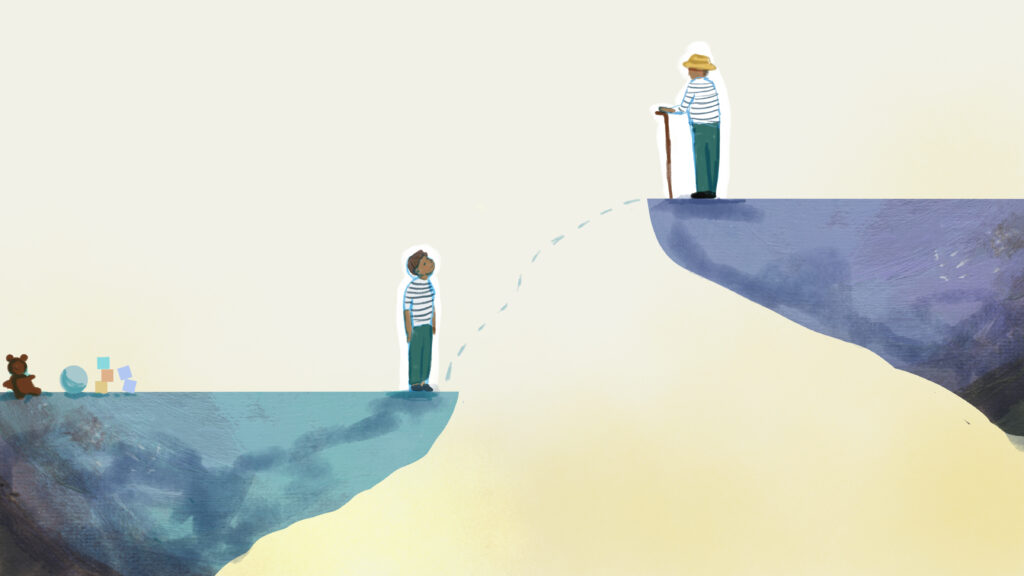
Puberty is an inevitable part of human maturation, and it increasingly appears to hold a key to understanding individuals’ risk for developing poor health outcomes later in life. Research in girls has established a significant relationship between disease risk and the timing of puberty onset.
Early puberty has been connected to a higher risk for illnesses including endometriosis, type 2 diabetes, heart disease, breast cancer, depression, eating disorders, uterine fibroids, and osteoarthritis, as well as all-cause mortality. Many of these health outcomes exist on a sliding scale where the risk increases as the age of puberty onset decreases. On the other end of the spectrum, late puberty has been associated with celiac disease, asthma, and poor sleep, but it’s also protective against some conditions. Both early and late puberty — before 8 and after 13 years old — are associated with early menopause, which comes with its own health risks.
Progress in this field has also clarified how the relationship between puberty timing and disease development works in women. Early onset, for example, exposes the body to hormones like estrogen for a longer amount of time, raising the risk of conditions like endometriosis and breast cancer. In other cases, puberty timing acts as an early warning system — especially for metabolic and cardiovascular conditions like type 2 diabetes and heart disease — because of shared genetic triggers. The connection between mental health conditions and early puberty onset also has a psychosocial component: Girls whose bodies mature earlier are more likely to feel ostracized and bullied, which can have lifelong consequences.
Taken together, this research is providing a detailed roadmap of women’s health that might one day help them to live longer, higher-quality lives. But getting similar health insights for men will require an infusion of investment and new approaches. Due to a significant gender gap in the field, far less is known about male puberty. There were about 1.67 times more published research papers on female puberty than male puberty between 1990 and 2016, and researchers are now calling for this to be rectified. They argue that better understanding the relationship between puberty timing and disease risk in men may enhance identification and prevention of chronic illnesses.
One of the most notable advocates is Anders Juul, a professor of pediatric endocrinology at the University of Copenhagen and head of the growth and reproduction department at Rigshospitalet. Juul has been studying puberty for over 30 years and has become a leading voice in the field. “Increased knowledge on factors regulating timing of male puberty may be the key to understanding long-term health in males,” he said. For a population known to suffer poorer health outcomes across their lifespans, this could be transformative.
Closing the gap
More than half of American male deaths in 2023 were considered premature. Their average life expectancy at the time was 75.8 years, which was 6.5 years less than for men from the longest-lived high-income countries. The leading causes of these early deaths include heart disease, cancer, and diabetes — conditions that have been tied to the timing of puberty.
When these illnesses are not fatal, they can greatly reduce the quality of life, especially after the age of 65, which places a burden of care on close, mostly female relatives. This translates to millions of fathers, sons, and brothers whose lives are diminished or taken too soon, and millions of mothers, daughters, and sisters who are forced to juggle the demanding, unpaid challenges of caregiving. In addition, the five leading causes of American male death cost society an estimated $420.6 billion per year, which includes the cost of treatment and lost income. Addressing men’s pattern of poor health outcomes benefits everyone, and advocates say this makes a compelling case for expanding male puberty research.
One of the primary reasons for the disproportionate focus on female puberty is that breast buds and menarche are clear and easily identifiable signs of pubertal development in girls. Juul said the closest equivalent in boys, spermarche (first ejaculation), is much harder to measure in part because boys may not even know it occurred. When they are aware of it, Juul believes boys are tight-lipped about their bodily changes because society has not celebrated and welcomed boys’ entrance into puberty the same way it has for girls.
Despite these challenges, male puberty research may be facilitated by what’s been learned from studies with females. Research in girls has illuminated the main factors that influence the timing of puberty onset. About 50% to 80% of the variation in timing is controlled by genetics, and about two-thirds of the genetic variants (small changes in DNA) that affect puberty timing are shared between the sexes. Other factors that influence when puberty starts in girls include ethnicity, nutrition, body fat, socioeconomic status, emotional well-being, and exposure to endocrine disrupting chemicals.
What exists so far in the world of male puberty research has identified similar, though preliminary, relationships between puberty timing and harmful health impacts in boys. A 2015 study using data on 500,000 individuals in the UK Biobank found that earlier puberty timing in boys and girls was associated with a total of 48 negative outcomes that included “a range of cancers, cardio-metabolic, gynaecological/obstetric, gastrointestinal, musculoskeletal and neuro-cognitive categories.” The authors noted, however, that much more research is needed to better understand these findings in males.
Other studies have associated early puberty in boys with a higher risk of conditions including heart attack, type 2 diabetes, obesity, depression, and ADHD. A 2024 study also found a strong genetic connection between men’s hair color and their puberty timing: adolescents with red, dark brown, or black hair had “progressively higher” chances of early puberty onset. This may be due to the fact that androgens control pigmentation in the body. Despite a well-established association with early female puberty and the development of breast cancer later in life, the relationship between early puberty and prostate cancer in men remains unclear.
Late puberty comes with its own set of health risks for boys and men, such as anxiety, panic attacks, depression, asthma, eczema, and a higher risk of poor overall health. There may not be as many negative health implications with later puberty, but Elizabeth Shirtcliff, a scientist in the department of psychiatry and behavioral sciences at Boston Children’s Hospital and Harvard Medical School, said it comes with a greater chance of being bullied — which can exacerbate or lead to low self-esteem and mental health challenges.
There is a notable potential benefit for men’s longevity, however. One study found that for every year puberty onset did not occur it translated to a nine-month longer lifespan in men. Progress has also been made in understanding the unique genetic influences specific to male puberty timing — 76 independent genetic variants have been identified so far.
The advancements in male puberty research have been heartening to experts who are focused on enhancing boys’ health outcomes. Jennifer Pfeifer, co-director of the Center for Translational Neuroscience at the University of Oregon, believes that expanding what is known about male puberty provides more evidence for how best to meet the needs of boys.
What is needed next
In 2024, an international team led by University of Cambridge researchers published the largest-ever genetic study of girls’ age of puberty, analyzing DNA from 800,000 women from Europe, North America, China, Japan, and Korea. They found more than 1,000 variants associated with the timing of first menstruation; some directly influenced age of puberty, the authors said, while others worked indirectly, by increasing weight gain. Importantly, the exhaustive list of variants allowed the team to generate genetic risk scores that could be used to predict the timing of girls’ puberty.
One of the authors, Ken Ong, a Cambridge researcher and co-lead of the team that separately identified the 76 genetic signals for male puberty, noted that the National Health Service in England is running a clinical trial of whole genome sequencing at birth for 100,000 babies, and that combining such sequencing results with the puberty risk scores could soon make it possible to identify girls at risk for early or late puberty — and even to intervene to enhance their long-term health outcomes. “This could be important for their health when they grow up,” he said in a university news release.
That possibility doesn’t yet exist for boys, because of the dearth of genetic studies involving male puberty. But using predictions of puberty timing to target interventions that could enhance men’s long-term health is not out of reach, though it will require more clinical longitudinal research. Some such long-term studies have begun. The Copenhagen Puberty Study, led by Juul, started in the 1990s. His work has already identified a phenomenon known as minipuberty, confirmed that average age of puberty onset has decreased, and identified relationships between puberty timing and the risk of mental illness and behavioral conditions.
Now, Juul and his team are focused on better understanding the environmental and lifestyle factors that impact puberty timing as well as the associated health risks that come with off-time puberty onset.
Recent innovations could aid the work being done in this field. A 2023 study successfully used children’s testosterone and DHEA levels, combined with measurements of body hair growth, growth spurt, skin changes, facial hair development, and voice change to develop a highly precise measurement of puberty. It illustrates the value of more comprehensive puberty measurements, especially in males, which Shirtcliff has long advocated. The same team also used this data to develop an artificial intelligence model that calculated the “puberty age” of a child and accurately identified their risk of developing mental health conditions in adolescence.
For men’s health specialists like Lee Ponsky, the director of University Hospitals Urology Institute and a urologic oncologist at UH Cleveland Medical Center, such research has the potential to transform his work one day. Ponsky has dedicated his career to improving men’s health and quality of life. “I would be ecstatic for anything at all that allows us to [better] screen, diagnose, or provide interventions for men that are going to improve outcomes and save lives,” he said. He hopes that clinical research in this area expands so that physicians can understand if this is a viable path for future patient support.
As for what exactly that support would look like, noninvasive practices like lifestyle and behavioral interventions could vastly improve health outcomes both in childhood and beyond. This could mean dietary changes and nutrition education for children with an elevated risk of diabetes, and preemptive mental health support for those with a greater risk of developing depression and anxiety, for example. There is also the possibility of using medication to modify a child’s puberty timing if this kind of intervention is found to be effective. But, ultimately, said Juul, “if we want to take preventive measures, we need to know more.”
STAT’s coverage of health challenges facing men and boys is supported by Rise Together, a donor advised fund sponsored and administered by National Philanthropic Trust and established by Richard Reeves, founding president of the American Institute for Boys and Men; and by the Boston Foundation. Our financial supporters are not involved in any decisions about our journalism.