


On August 7, Abelardo de la Espriella is set to be sworn in as the Colombian president in a process known as “empalme,” however, not without a challenge.
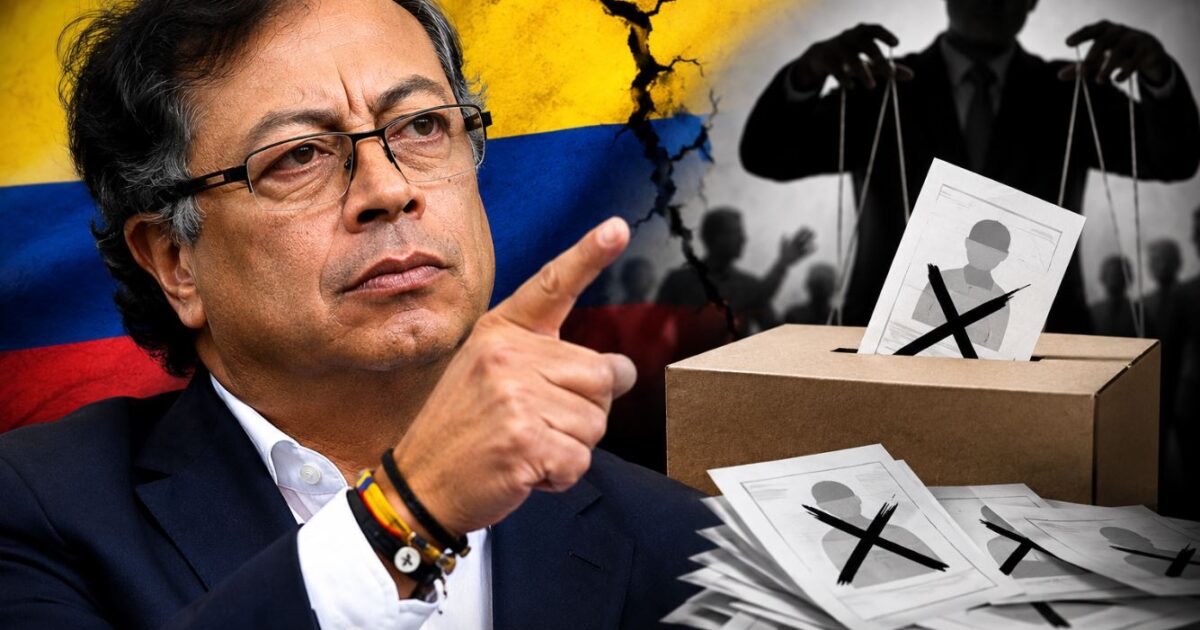
Outgoing president Gustavo Petro, who was not on the ballot and is termed-limited, has challenged the June runoff victory in the Colombian courts following the suspension of “empalme” by de la Espriella earlier this month, according to the AP.
On July 17, Petro sued in Colombia’s Council of State, sitting as its Administrative Litigation Chamber’s Fifth Section. According to the filing, after translation into English, Petro is arguing that election authorities significantly reduced transparency and technical safeguards that were previously used to authenticate and verify official election documents.
Polling station documents, E-14s, no longer include key metadata, timestamps, document identifiers, and other digital features that allow independent verification. Petro has asked the court to compel the production of records to include logs, hash values, version histories, protocols, and other system documentation, in order to determine whether the changes were properly authorized and whether they impaired the verifiability of the election.
Petro seeks the invalidation of the official results, or, alternatively, he is calling for a new canvass or judicial audit, a forensic inspection of the election systems, production of technical evidence, and targeted recounts and corrections where the court finds the results cannot be independently verified.
Aquí se encuentra la demanda de nulidad de la elección presidencial del 2026.
Su lenguaje técnico será explicado en videos que traduzcan hacia la comunicación popular.
Es presentada por los “testigos digitales*, que en número de 70.000 ciudadanos y ciudadanas, lograron…
— Gustavo Petro (@petrogustavo) July 21, 2026
The Gateway Pundit previously reported last month that, immediately following the runoff election, Petro began to call into question the results on social media.
In one of many posts from June, Petro claims that “177,000 votes in favor of Abelardo” came from overseas voters, “especially in the US.”
More recently, President Petro took to X to claim that “they” took down pages where he had posted evidence of “algorithmic electoral fraud carried out in the US.”
In a translated video posted in June, he claimed that “the Bautista brothers’ software, as of the 2018 Council of State ruling stated – is vulnerable to internal and external actions against the vote.” The video purports to show hash files being altered. Here is the original video with English subtitles:
Colombian President Gustavo Petro claimed, before this CIA Note was declassified by President Trump, that “Hash lock” files were changed in files posted by the country’s registrar.
Petro announced a legal challenge to the election results this week.
This video with english… https://t.co/TqWjEiDm7m pic.twitter.com/SMLufCQoJY
— CannCon (@canncon) July 23, 2026
Last week, the State Department released a statement by the members of the Shield of the Americas. In it, they reinforce support for the Colombian election, stating:
We observe with deep concern the recent statements and actions that, without duly substantiated grounds, cast doubt on the integrity of the electoral process in the Republic of Colombia and generate uncertainty regarding the normal course of the institutional transition.
In every constitutional democracy, the sovereign will of the citizens — freely expressed at the ballot box and formalized by the competent electoral authorities — constitutes the sole foundation of the legitimacy of public power. Disregarding the results officially proclaimed by said authorities constitutes a serious disregard for the popular will and for the principles that underpin the Rule of Law.
We reject any action, statement, or decision that seeks to delegitimize the mandate conferred by the citizens, to discredit without basis the competent electoral authorities, or to obstruct the institutional transition, known in Colombia as the empalme process. The transition between governments does not constitute a political concession, but rather a constitutional and institutional duty designed to guarantee the continuity of the State, democratic stability, and the effective fulfillment of the popular will.
We issue a firm call to all Colombian authorities to act in strict adherence to the Constitution, the law, and democratic principles; to respect the results officially proclaimed by the competent electoral authorities; and to guarantee a peaceful, orderly, and transparent transition, in accordance with the highest standards of the Rule of Law.
The post Colombian President Gustavo Petro Challenges Presidential Election – Sues in Colombian Court to Annul Results appeared first on The Gateway Pundit.