

Tim Andrews spent 271 days living with a genetically modified pig kidney before receiving a human kidney transplant in January, giving new hope to patients struggling with dialysis, according to a paper published Thursday in the Lancet.
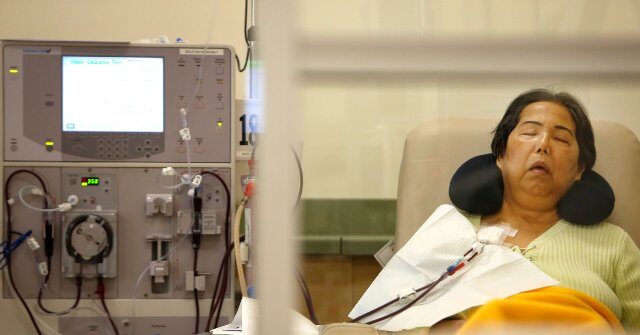
The New York Times reports that Andrews was 66 when diabetes and high blood pressure destroyed his kidneys. He had survived two heart attacks, had no appetite, and was too weak to walk. “I was dying,” he said. His rare blood type made finding a matching human donor kidney even less likely, and he was one of roughly 90,000 people on the U.S. waiting list for a kidney transplant, a list where an average of 11 people die every day, according to the United Network for Organ Sharing.
Rather than wait, Andrews sought out the experimental pig kidney transplant program at Mass General Brigham. “I figured, if I’m going to die, I might as well do something for humanity and be part of this experiment,” he said. In January 2025, he received a kidney from a pig that had undergone numerous genetic edits, including changes designed to prevent severe organ rejection and to inactivate viruses in the pig genome.
The kidney worked. “It gave me life,” Andrews said. But he was hospitalized several times during the nine months he lived with it, and blood clots eventually formed in the organ’s vessels and damaged it beyond repair. The pig kidney had to be removed, and Andrews briefly resumed dialysis. In January, he received a human kidney from a matching donor. He now spends much of the year at a cabin by a pond, where he swims, kayaks and takes short bike rides.
Dr. Leonardo V. Riella, the Lancet paper’s lead author and associate director of the Legorreta Center for Clinical Transplant Tolerance at Mass General Brigham, said the pig kidney worked as a bridge that spared Andrews further damage from dialysis. “Dialysis causes so much wear and tear on our patients that they become too sick to get a transplant, or die while waiting,” Riella said. Patients have told him plainly why they sign up despite the unknowns, he said: “The message from patients, and it was very shocking for us, is that life on dialysis is no life. So they’re all looking for that alternative, which is why so many patients have volunteered and stepped forward, even with all the unknowns of research.”
Mike Curtis, president and CEO of eGenesis, the biotechnology company that produced the pig used in Andrews’s transplant and helped fund the study, said Andrews’s case and one other showed that a pig kidney does not appear to affect how the body later responds to a human kidney. “It doesn’t seem to change how you react to human tissue at all,” Curtis said. That wasn’t a given going in, he added. “Right now, we don’t think there’s any downside of having a pig kidney followed by a human kidney, but when we started this, we had no idea that that would be true,” he said.
Five patients at Mass General Brigham have received eGenesis pig kidneys through an FDA expanded access program for people with no other treatment options. Three of those patients, including Andrews, lived with their pig kidneys for more than eight months, according to a statement eGenesis issued Thursday. One patient died of an unexpected cardiac event shortly after transplantation, and another was transplanted only in June. EGenesis plans to begin a formal clinical trial with 33 patients next year.
The field has moved fast. In March 2024, surgeons at Mass General transplanted the first kidney from a gene-edited pig into a human patient, Rick Slayman, 62, who was discharged two weeks later. Slayman, who had a chronic heart condition, died within two months of an apparently unrelated cardiac event. Before that, the first genetically modified pig hearts were transplanted into human patients in 2022; those recipients had advanced disease and died shortly afterward.
Dr. Muhammad Mohiuddin, a professor of surgery at the University of Maryland School of Medicine and a pioneer in xenotransplantation, spent decades transplanting pig hearts into baboons before taking part in that first pig heart transplant into a human. “I never imagined in my lifetime that I would see the human translation of this,” he said, adding: “The initial progress with nonhuman primates in the lab was slow.”
Read more at The New York Times here.
Lucas Nolan is a reporter for Breitbart News covering issues of AI, free speech, and online censorship.