

When it comes to predicting heart attacks and strokes, what matters the most: a number, a picture, or both?
It depends on the patient, two new trials say, adding to previous research exploring the value of coronary artery calcium (CAC) scans when combined with risk measured by the newly adopted PREVENT calculator. Both tools assess the future chances of serious cardiovascular events, potentially influencing decisions about prescribing cholesterol-lowering statins or other treatments to limit damage to blood vessels leading to the heart and brain.
In borderline cases, calcium could be a tiebreaker. But for most people, there’s no need for the tests, despite their growing popularity as personalized measures of wellness.
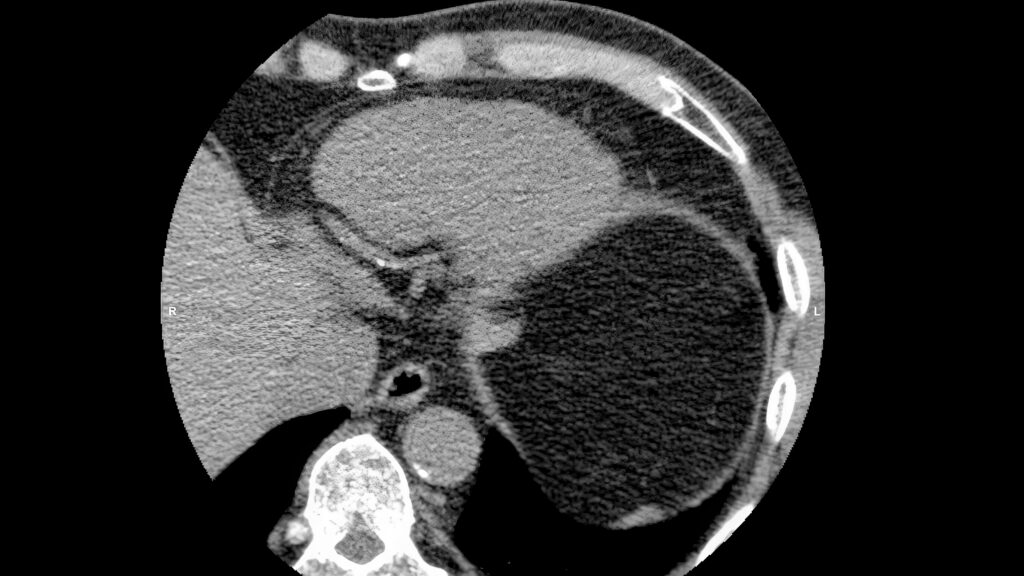
PREVENT risk estimates rely on standard information gathered in a doctor’s visit, while CAC scans, not typically covered by insurance, can cost the patient $100 to $400. But there’s another way to see calcium buildup, hiding in plain sight (almost). CT scans done for other reasons performed just as well as CAC-specific scans when predicting coronary heart disease, cardiovascular disease, and deaths over the next 10 years, research published in Circulation in July concluded.
Whatever the reason for the CT scan, the images can reveal calcium deposits stiffening the arteries, worsening plaques made by excess fats and “bad” LDL cholesterol. (The improvement when doing both tests may be modest, on the order of 1% or 2% in people referred for cardiovascular disease screening.)
The PREVENT equations are designed to flash warning signals about plaque formation. As the foundation for guidelines issued earlier this year by the American College of Cardiology and the American Heart Association, their goal is to identify precursors of serious cardiovascular events by relying on blood pressure, cholesterol, age, family history, and current illnesses such as inflammatory disease, diabetes, kidney disease, cancer, HIV, and certain reproductive conditions.
PREVENT classifies risk over the next 10 years as low (under 3%), borderline (3% to 5%), intermediate (5% to 10%), and high (10% or higher). CAC scores range from 0 to 1,000 or higher, with risk climbing from none at 0, to mild under 100, moderate up to 300, and severe over 300.
Neither PREVENT nor CAC gives a hard-and-fast rule for when to recommend statins, the well-established and affordable medications that can significantly lower cholesterol and disease risk. That’s something doctors and patients should discuss, in conversations that should begin as early as age 30, the guidelines now say.
The ACC-AHA guidelines do recommend using incidental calcium findings to inform decisions on statins for men age 40 and up and women age 45 and up who are living with borderline or intermediate 10-year risk of heart attack or stroke. The 2018 guidelines had suggested them only for people at intermediate risk.
The question prompting the recent research is how.
The two studies appearing in August both examined data following just over 6,000 people age 45 to 79 for 10 years in the Multi-Ethnic Study of Atherosclerosis. They analyzed whether CAC scores made a difference in predicting who would later have a heart attack or stroke. The answer is yes, but only when PREVENT risk is classified as borderline or intermediate.
“Adding CAC to PREVENT for everybody only modestly improves statistical prediction,” Michael Shapiro, co-author of the study published Aug. 18 in the Journal of the American College of Cardiology, told STAT via email. He is a preventive cardiologist at Wake Forest University School of Medicine whose research and practice focus on lipids, atherosclerosis, and prevention of cardiovascular disease.
“The main message is that not everyone needs a CAC scan and CAC zero should not be used as a veto against statin therapy,” he said. “CAC was most helpful as a tiebreaker when a patient was at borderline risk and the statin decision was unclear.”
The JAMA study published Wednesday also found that overall, CAC did not change the predictions made by PREVENT. But in a secondary analysis of people considered at intermediate or borderline risk by PREVENT, a different answer emerged, co-author Nilay Shah, a preventive cardiologist at Northwestern University Feinberg School of Medicine who studies risk prediction for cardiovascular disease, said.
“You get a much more substantial, quote, ‘reclassification,’ meaning people who were in the borderline and intermediate risk category, when they got a calcium score,” Shah told STAT in an interview. “We much better identified those who had a heart disease event later, within the next 10 years, and we much better identified those who didn’t have a heart disease event in the next 10 years.”
In the JACC study, some patients who qualified for statin treatment because their PREVENT risk was 5% or higher had more heart attacks, strokes, or other events, even though their CAC reading was zero.
“CAC may still help explain risk, improve adherence, and guide how intensive prevention should be, but generally should not be used to avoid treatment,” Shapiro said. “Our findings support a guideline-centered role for CAC in the PREVENT era. Mainly, refining risk near the treatment thresholds, helping put absolute risk into context, and informing the intensity of preventive efforts.”
What should patients and their doctors do?
If people already have a calcium score, it should be incorporated into their risk assessment, Harlan Krumholz, a cardiologist and health outcomes researcher at Yale University, told STAT. He was not involved in the studies. Others may want the test, even when it is unlikely to change a decision about starting a statin, because knowing whether coronary atherosclerosis is actually present has value to them and may influence how they think about prevention.
“I would distinguish the value of ordering the test from the value of knowing the result,” Krumholz said. “These studies help us be more disciplined about when to order CAC solely to resolve a treatment decision.”
Patient interest in CAC scans may be growing, perhaps inspired by artificial intelligence-based algorithms that automate opportunistic screening, which got a nod in March in the ACC-AHA guidelines. Shah wonders if something else is at play with CAC images.
“We can estimate somebody’s risk with a calculator, and you get a number,” Shah said. “Or you can actually see an image of your heart and say, OK, that’s actually what’s going on in my heart. I think that appeals to a lot of people because it’s much more tangible.”
STAT’s coverage of chronic health issues is supported by a grant from Bloomberg Philanthropies. Our financial supporters are not involved in any decisions about our journalism.