

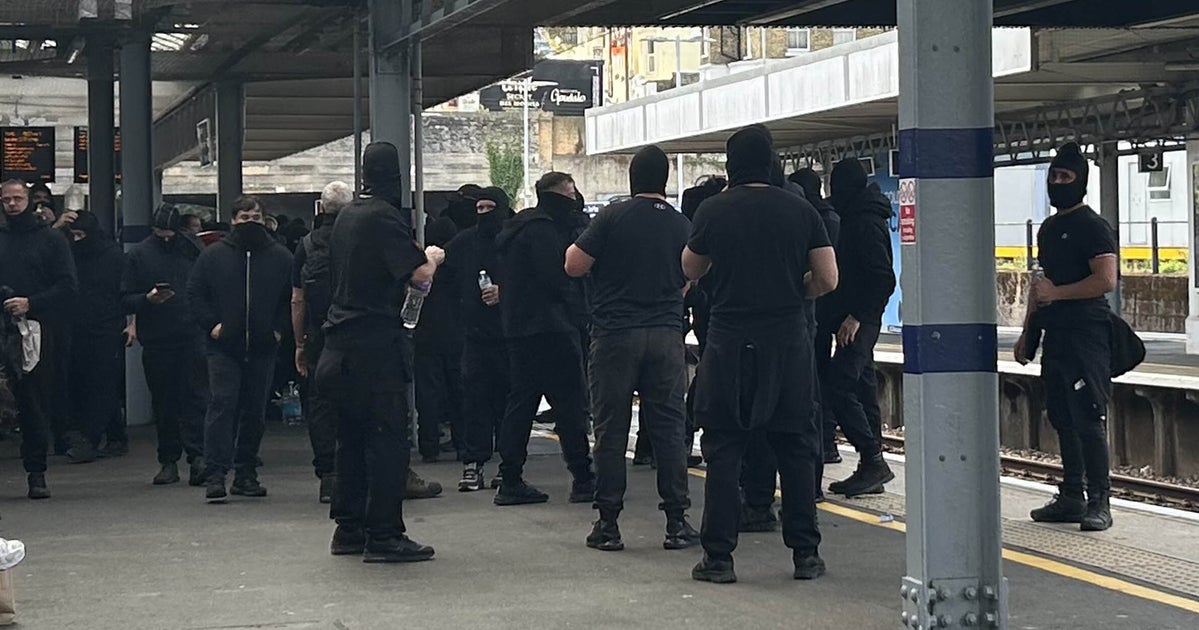
LONDON, Sept 7 (Reuters) – British minister Emma Reynolds condemned hundreds of protesters who blocked streets in the English coastal city of Portsmouth late on Sunday to try to stop the arrival of migrants from France, calling them “thuggish”.
The gathering was the second anti-migrant demonstration in two days, after masked men disrupted traffic in the port of Dover on Saturday, chanting “Stop the boats”, a reference to the vessels carrying asylum seekers across the English Channel.
Oscar Rihll – PA Images via Getty Images
“Perhaps the scale of the protest was something that we hadn’t seen before, but the police have brought this under control,” Reynolds, who is chief secretary to the Treasury, told Sky News on Monday when asked about the protests in Portsmouth.
Successive British governments have faced accusations from opposition parties and anti-migration activists of failing to curb the numbers of asylum seekers coming to Britain, often in overcrowded, inflatable boats.
Reynolds said the numbers had fallen sharply to about 17,000 from January 1 to September 1, down 43% on the same period last year.
CHANGE FROM USUAL MIGRANT ROUTE
The protesters, who were responding to calls from some far-right groups believed to be using messaging systems including Signal and Telegram, were reacting to the arrival of 140 migrants who had crossed to England.
“This is thuggish and intimidating behaviour,” Reynolds said.
When asked about how the protests seemed to be organised very quickly she said that was “a concern”.
Donna Jones, police and crime commissioner for the area, said while the protesters were largely peaceful, the large size of the gathering meant the local force had to draft in officers from other regions to help.
The arrival of small boats in Portsmouth represents a change from the usual route taken by the dinghies which tend to come ashore further east near Dover, where there is a large facility to receive migrants.
“Portsmouth and other parts of southern England are not set up to be able to take and deal with, not just the public order, but also the processing of these people coming into Britain illegally,” Jones told BBC Radio.