

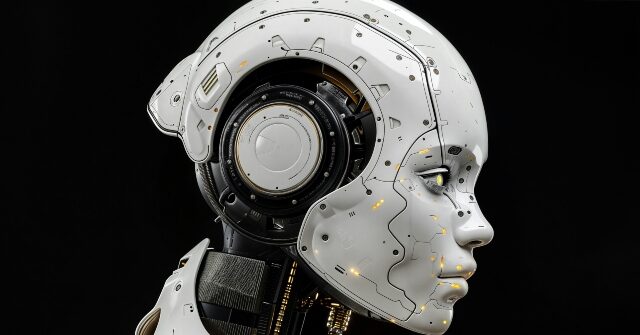
Speaking at a recent event in Mexico City, U.N. Deputy Secretary-General Amina J. Mohammed railed against the evils of “colonialism” and said the benefits of artificial intelligence technology (A.I.) should be re-distributed across the developing world, to prevent the same Western-centric mindset from dominating the key technology of the coming century.
“We have been very good at addressing governance, and science, and all the hardware of the new era of technology, but somehow the ‘human’ in it is slightly missing, and we want to bring different regional conversations about what this would look like,” Mohammed said.
“The human brain remains the most extraordinary engine of intelligence that we know. We do more than process. We create meaning. We carry a sense of responsibility, of grief, of faith, of doubt, and moral imagination,” she said. “But today, humanity stands before a powerful new form of intelligence of its own making.”
“The rise of A.I. forces asks us a complex, perhaps uncomfortable question: What happens to human society when intelligence is no longer solely human?” she asked.
Mohamed said this question should be addressed by bringing “the history, the lived experiences, the wisdom of Latin America and the Caribbean to that defining question” – particularly the region’s negative experience with European colonialism.
“Colonial conquest brought catastrophe and genocide in many cases on a continental scale,” she said. “Entire communities were destroyed, indigenous people were driven far from their lands.”
“The assault was also on memory itself,” she continued. “Languages were suppressed, knowledge gained through millennia of civilization, including in the Maya Codex was deliberately put to the flame. Many traditions rooted in land and community and memory were lost.”
Mohammed said that once they were finished destroying native culture and memory, the colonial powers moved on to “extraction,” using “enslaved Africans” to loot the region of its silver and sugar.
“Wealth flowed to imperial capitals. This was never an exchange between equals,” she said, going on to suggest that the disparity has never truly been addressed because the Third World still supplies the raw materials for production, but imports most of its manufactured goods.
Mohammed invoked Argentine economist Raul Prebisch’s concept of the “center and the periphery,” which finds the world lamentably “centered” around high-tech industrialized nations, which enjoy a permanent imbalance of power over developing countries in their orbit, exploiting them for raw materials and cheap labor.
One of Prebisch’s ideas was that the periphery would never catch up to the core, because the core nations had too much of a head start on industrial development, and when peripheral nations do make progress, they have strong economic incentives to make their exports cheaper instead of improving their own industries or increasing worker wages. The periphery would be forever stuck supplying the core, instead of joining it.
Devotees of this philosophy tend to believe that only strong coercive action by globalist government can break the core-periphery model, and this very much applies to artificial intelligence technology, perhaps the ultimate achievement of the core. Mohammed is far from the only U.N. official or think-tank analyst to worry that A.I. will increase the gap between the global haves and have-nots.
Also, since A.I. was pioneered by Westerners, they worry that it will transmit Western values and language. This is the very fear that motivated Mohammed, who is from Nigeria, to devote so much of her speech to recalling the slash-and-burn evils of Western colonial domination. The deputy secretary-general has been fretting for years that the “power” of A.I. is concentrated in too few hands, away from the wise “leadership” of transnational organs like the United Nations.
“A.I. offers Latin America and the Caribbean an opportunity to break that pattern and to lead the way for many other regions in the same circumstance. But it can go in either direction. It can help address the inequalities and the development deficits the region already faces, or it can reproduce them at greater speed and scale,” she said in Mexico City.
Mohammed worried that A.I. is being trained on “written material,” implicitly of a Western-centric nature, and is therefore missing out on the “systems of knowledge sustained through oral traditions” in other cultures. She urged the developing world to form coalitions, including “indigenous leaders, artists, and educations” in addition to bureaucrats and academics, to “ensure that A.I. capabilities are shared here, shared here, and directed towards the lives of people.”
Mohammed only skimmed the surface of the movement to “decolonize A.I.,” which is obsessed with the dominant position of American companies like Facebook and Google, but rarely seems critical of Communist China’s no-holds-barred attempt to take the global leadership position in A.I. technology.
In theory, A.I. could provide great opportunities for the “periphery” to catch up with the “core.” There is no reason a gifted group of African researchers could not create A.I. with African languages and perspectives and the decolonization movement frequently celebrates such efforts when they make headlines.
In practice, this spirit of hopefulness is almost entirely smothered by a gloomy conviction that a few central powers will dominate A.I. development and centralize even more of the world’s wealth in their hands – and since “decolonization” activists almost never train their fire on China, they are contributing to the possibility that the future of A.I. will be dominated by the most paranoid, oppressive, intrusive, and ruthless government in the world.